In recognition of World Oral Health Day, Align Technology’s Dr. Mitra Derakhshan explains how the company’s R&D treats tooth movement and patient hygiene as inseparable goals.
By Orthodontic Products Staff
For World Oral Health Day, the conversation around orthodontics is increasingly shifting from a purely aesthetic focus to its crucial role in long-term patient health. While malocclusion is often framed as a cosmetic issue, its impact on periodontal health and hygiene is significant. Misaligned teeth can create challenges for effective cleaning, increasing the risk of plaque buildup, gum disease, and tooth decay. For Align Technology, addressing these clinical realities is a core component of its product development philosophy.
According to Mitra Derakhshan, DDS, MS, Executive Vice President and Chief Clinical Officer at Align, the company’s approach is built on a foundational principle. “At Align, we treat tooth movement and oral health as inseparable,” she says. “Our R&D is grounded in biomechanics and biomaterials science and informed by insights from millions of Invisalign cases, so we can define optimal force systems, refine predictability, and support a healthy oral environment during daily wear.”
BEYOND AESTHETICS: PLANNING FOR HYGIENE
Orthodontic treatment planning has a direct impact on a patient’s ability to maintain oral hygiene. Derakhshan emphasizes that malocclusion affects not just aesthetics but also function and long-term periodontal stability. Crowded or misaligned teeth can make brushing and flossing difficult, creating areas where plaque and bacteria accumulate.
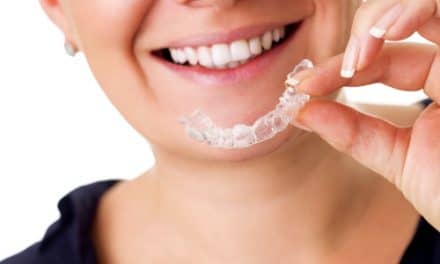
Invisalign treatment plans are designed with this in mind, aiming to create an oral environment that is easier for patients to maintain. “Invisalign treatment is prescribed by Invisalign trained doctors, and plans are designed to support optimal occlusion and tooth positioning that can facilitate hygiene access throughout care (e.g., relieving crowding to aid brushing/flossing), while enabling removal of aligners for routine oral hygiene and professional cleanings,” Derakhshan explains.
This approach is supported by peer-reviewed studies that, according to Derakhshan, report patients treated with clear aligners can demonstrate lower plaque and gingival inflammation compared to those with fixed appliances.
DESIGN INFLUENCED BY CLINICAL REALITIES
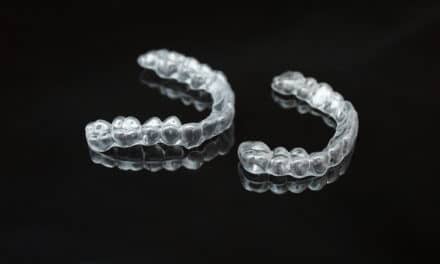
The physical design of the Invisalign system—from its materials to its clinical features—is influenced by the need to support patient comfort and hygiene compliance. The goal is to deliver predictable results without adding unnecessary complexity that could impede daily oral care.
“SmartTrack material and SmartForce features are designed to deliver controlled, predictable forces while supporting comfort during treatment—important for day-to-day hygiene compliance under a doctor’s guidance,” Derakhshan notes.
She also points to innovations intended to simplify the patient experience, such as the SmartForce attachment-free aligner activation feature. This technology helps minimize the number of attachments required for certain movements, which can make the aligners more comfortable and easier for patients to clean around. “We continue to refine mechanics to reduce unnecessary intraoral complexity where appropriate,” she adds.
THE FUTURE OF INTEGRATED ORAL HEALTH
Looking ahead, Derakhshan sees even greater opportunities to merge orthodontic treatment with broader oral health management. Advances in digital technology are making it possible for clinicians to adopt a more holistic view of patient care from the earliest stages of treatment.
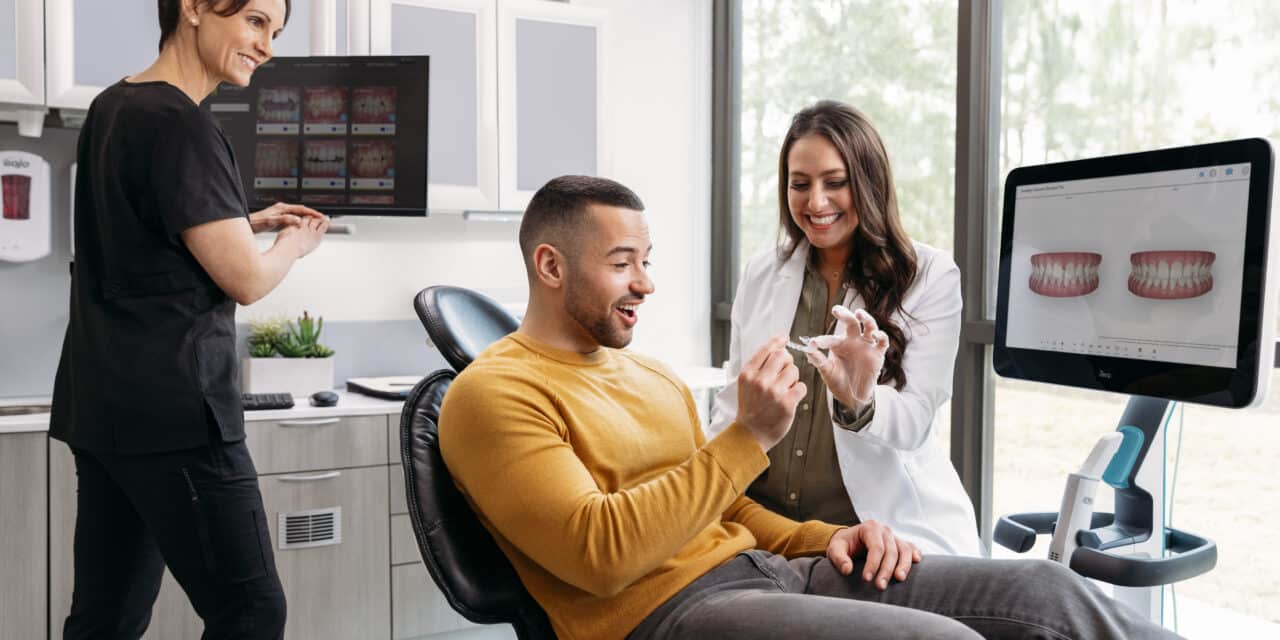
“Advances in digital diagnostics, visualization, and planning can help clinicians identify caries risk, tooth wear, and periodontal concerns earlier, tailor staging, and align hygiene guidance to patient needs,” she says.
This vision is complemented by ongoing materials science research aimed at enhancing the patient experience. Continued innovation in areas like SmartTrack material and SmartForce features, Derakhshan says, will “further enhance fit, comfort, and tooth movement in support of sustained daily hygiene and efficient, doctor directed care.” OP
Photo: Align Technology