Dr Rooz Khosravi describes the thinking behind using licensed dentists in remote support roles inside his orthodontic practice.
Remote staffing in orthodontics has traditionally been associated with front-desk support, billing, or outsourced call centers. But one Washington state orthodontist is testing a more unconventional idea: placing licensed dentists into remote, non-clinical support roles focused on correspondence, records management, and digital workflows.
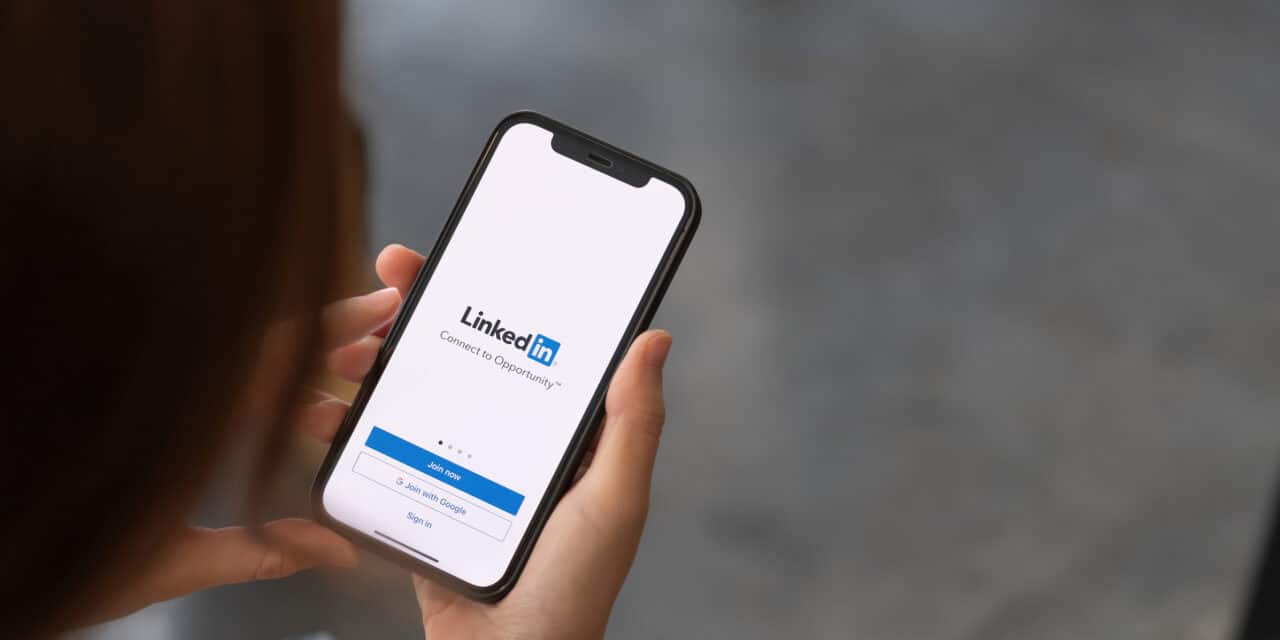
The position Rooz Khosravi, DMD, PhD, MSD, advertised on LinkedIn in January was not for chairside care or independent treatment planning. Instead, it called for an internationally licensed dentist to help draft patient and referral correspondence, upload and organize digital records within the practice management software, process patient photos and convert CBCT 3D images to 2D panoramic and cephalometric images, and support administrative and digital case workflows—work that sits between clinical understanding and operational execution. Longer term, according to the ad, the role could expand into virtual monitoring and assisting with draft treatment plans under orthodontist oversight.
In addition to running his two-location boutique practice PORTH, Khosravi serves as a clinical associate professor at the University of Washington and COO at OrthoBerry, a patient experience platform. He sees this remote staffing model using licensed dentists as an evolving experiment inside his own practice—one designed to protect his time for treatment planning, direct patient care, teaching, and projects outside the practice while building more intentional internal systems.
After sharing the opportunity on LinkedIn, Khosravi, who is board-certified and also serves as the U.S. Ambassador for the European Aligner Society, received more than 200 applicants and identified at least 30 strong candidates, highlighting substantial interest in alternative career pathways for dentists globally. In this interview, he discusses what motivated him to create the role, why he looks internationally to fill it, and what orthodontists should realistically understand before considering a similar approach in their own practices.
Orthodontic Products: What gap in your practice were you trying to solve when you decided to create a remote dentist role—especially one focused on administrative and digital support rather than chairside care?
Rooz Khosravi, DMD, PhD, MSD: The honest answer is that I was the bottleneck. Between my clinical practice, academic responsibilities at UW, and my role as COO at OrthoBerry, I have a finite number of hours—and I was spending too many of them on tasks that were important but delegatable. Writing referral letters to dentists, reviewing charts, managing correspondence. These aren’t complex tasks, but they require clinical judgment and kept piling up.
I’m a firm believer that treatment planning and direct patient care should stay with me—that’s not something I’m willing to delegate. But that means I need to protect my cognitive bandwidth for exactly that work.
I had tried distributing these tasks across my clinical and admin teams, but they were already managing highly diverse responsibilities. Cal Newport talks about “attention residue” in Deep Work—the cognitive cost of constantly switching between unrelated tasks. My team was experiencing exactly that. Everyone was busy, but efficiency suffered because no one could go deep on anything.
When I looked at my task management system and saw columns full of items only I could clear, I realized the problem wasn’t effort—it was structure. I needed someone whose dedicated focus was this specific category of work, and who had the clinical foundation to do it without constant oversight.
OP: You’ve been open about hiring internationally licensed dentists. What led you down that path, and what advantages have you seen compared with hiring domestically for similar support roles?
Khosravi: I was trained as a dentist in Iran and have worked with internationally trained dentists and specialists for over 20 years. I also teach dental students at UW. What I’ve observed is simple: there are smart, methodical, detail-oriented clinicians everywhere, and there are sloppy ones everywhere. Geography of training doesn’t determine quality.
Once I accepted that premise, the economics became obvious. Major companies build teams of 500 people outside the US—why couldn’t I do the same on a smaller scale? I can compensate an orthodontist in South America or India at a rate that’s less than what I pay a local assistant, and that compensation has significant value in their economy. It’s a genuine win-win.
To be clear, this only applies to digital and administrative workflows. You can’t delegate hands-on treatment, and frankly, I’m not interested in delegating treatment planning either—I know some colleagues disagree, but I believe that’s the orthodontist’s responsibility. This role is purely administrative support.
The other advantage is time zone difference. It opens up my bandwidth for the work I find most valuable—writing, book chapters, research, teaching, building software with engineers. I work 70–80 hours a week, but I love what I do. This structure lets me spend those hours on the things that energize me.
OP: Some orthodontists might assume administrative or records-based work doesn’t require a dental license. Why was it important to you that this role be filled by a trained dentist?
Khosravi: It comes down to what I need to teach versus what I need them to already know.
I can train someone to understand my decision-making process, my preferences, how I think through cases. I’ve been doing this for over a decade, and as an associate professor of orthodontics at UW, teaching clinicians to think systematically is something I know how to do.
What I can’t do—and don’t want to do—is teach someone the fundamentals of dentistry or orthodontics from scratch. I’m not starting an ortho school. When I hire a trained dentist, or better yet an orthodontist, the foundational knowledge is already there. They understand occlusion, they can read radiographs, they know what they’re looking at in clinical photos. The nuances of orthodontic records aren’t foreign concepts.
Try training a non-healthcare admin to understand those nuances and you’re starting from zero. It’s not impossible, but it’s inefficient and limits how far they can grow in the role.
What I need is someone who shares my values and has the clinical baseline—then I can focus on shaping how they think, not teaching them what teeth are.
OP: How has having dentists involved in correspondence, records management, and digital workflows changed the way your practice operates day to day?
Khosravi: The simple answer is that things actually get done in an appropriate timeline now, and I can focus on what matters most each day.
But I want to be honest—this is still a work in progress. I’ve built two de novo practices over the last eight years, both optimized for lean operations and efficiency. I’ve learned that every position in my practice takes two to three years to fully develop. I started this remote dentist journey about a year ago, and I expect we’ll have a truly solid system in another year or two.
I’ve also been proven wrong on some of my initial ideas along the way. That’s part of the process.
What I can say is that my definition of success isn’t more revenue. Success to me is being able to do what I love without unnecessary stress. This role is a piece of that puzzle—it’s helping me protect my time and attention for the clinical and creative work that energizes me. The full impact will become clearer as the system matures.
OP: You mention that this role can evolve into treatment planning and virtual monitoring. How do you think about career pathways for remote dentists within a private orthodontic practice?
Khosravi: I’ll be direct: I sign every treatment plan. My practice is called Personalized Orthodontics for a reason. My decision-making process looks simple in my mind but it’s actually quite complex—I’ve attempted to systematize or “clone” it before and the output wasn’t what I needed. So full treatment planning stays with me.
That said, there’s room for involvement in drafting treatment plans that I then review and finalize. And virtual monitoring is absolutely delegatable. I’ve had my seasoned orthodontic assistant monitor care virtually for some time. A remote orthodontist can do this with the right guardrails and clear protocols.
As for career pathways, I think about it in phases. The first six months are about syncing how we think—building shared understanding. The next six to 12 months, we build systems together. After about 18 months, we optimize. By two years, we’re running smoothly.
Here’s the key: I’m building a system, not just filling a seat. If the person in the role leaves, the next person moves through these phases faster because the infrastructure exists. I’ve done this with my lab coordinator, marketing, scheduling coordinator, and financial coordinator positions. This role is no different—it’s a long-term investment in building something sustainable.
Could this evolve into a virtual associate orthodontist? It’s very doable. I have mixed feelings about it, honestly. I train orthodontists, and I’m emotionally close to these young talented clinicians. Part of me worries that a purely remote role might limit their future opportunities. But as a model, it absolutely works.
OP: What concerns do you hear most often from peers when you talk about hiring remote, international dentists—and how do your real-world results compare to those assumptions?
Khosravi: The concerns I hear are valid. Communication challenges, legal considerations, quality control, trust—these are all real. I don’t dismiss any of them.
But I want to reiterate something: I don’t delegate treatment planning. This is an administrative role to support me. When people hear “remote dentist,” they sometimes assume I’m outsourcing clinical decisions. I’m not.
As for the hiring process itself—it’s complex. You need a solid system and you need to be brutally honest about what you actually need. I’ve optimized my communication systems multiple times. Sometimes it clicks quickly with a hire; sometimes it fails. You learn, you optimize, you get smarter in your screening for the next hire.
This is an iterative process. You can’t just decide one day that you’re going to do this and start hitting home runs. You’ll get your home run in two years. It’s like preparing for the Olympics—there’s no shortcut.
The peers who are skeptical aren’t wrong to be cautious. But their assumption is often that this can’t work at all. My real-world result is that it can work—it just takes patience, honest self-assessment, and a willingness to learn from what doesn’t go well.
OP: From a leadership standpoint, what systems or cultural shifts were necessary to make remote clinical support work effectively in a boutique, two-location practice?
Khosravi: On the systems side, we use Berry Tasks for task management and everything lives in Notion. We have clear SOPs for every task. Asynchronous video recording has been essential—it allows for clear communication without requiring everyone to be online at the same time.
Being from Seattle, I think about it like Starbucks: how do I deliver a consistent experience to my patients? What do I need to have in place to deliver that consistently, all day, every day? That’s the mindset behind the systems we build.
As for cultural shifts—my team is very diverse, and honestly, they can work with anyone. The remote team member goes through the same process as everyone else. There’s no separate category.
Our core value is simple: we respect people from any background, any color of skin, any ideology. We need more human dignity in our divided country today, and we nurture that in my practice. If that doesn’t sit well with someone, they’re not part of this team. That’s non-negotiable.
When that foundation is there, integrating a remote clinician from another country isn’t a cultural leap—it’s just an extension of who we already are.
OP: For orthodontists considering a similar hire, what’s the biggest mindset shift required to successfully integrate licensed dentists into remote, non-traditional roles?
Khosravi: The biggest mindset shift is accepting that this is a long game, not a quick fix.
Step one isn’t hiring—it’s understanding your own system. Spend two to three months documenting what you do, what can be delegated, and what absolutely cannot. Most orthodontists skip this and wonder why the hire doesn’t work out.
Then start small. Build small systems first. Don’t try to hand off everything at once.
Here’s the hard truth: your first three or four hires are there to help you build the system, not to immediately lighten your load. If you go in expecting relief on day one, you’ll be frustrated and quit. You have to accept the dip—the initial period where it feels like more work, not less. You’re investing effort now for returns later.
If you keep at it, it works. But you have to stay committed through the struggle. Most people give up right before it clicks. OP
Photo: ID 227009531 © Natee Meepian | Dreamstime.com