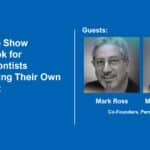


For orthodontists who have developed their own product and are ready to take the entrepreneurial leap into bringing it to market, trade shows can often feel like a necessary but uncertain investment. But what if the true return on investment is determined long before the exhibit hall doors open? In this episode of the Orthodontic Products Podcast, host Alison Werner speaks with Mark Ross and Michael Ventriello, co-founders of Personify Group, a commercialization and branding firm serving the dental and orthodontic industries. The conversation explores the psychology of trade show attendees and why exhibitors should view these events as consideration engines, not conversion machines.
Ross and Ventriello explain why doctors walking past your booth are often on the defensive and how companies can break through that barrier by building credibility and relevance prior to the meeting. They emphasize that a strong foundational brand story and a clear unique selling proposition must be in place before investing in a booth.
For orthodontists bringing their own innovations to market, the guests offer practical advice—from aligning with an everyday user as a personal business KOL to seeking out shared table space in designated innovation areas.
Finally, the pair discuss the critical need for alignment between sales and marketing teams and highlight Personify’s newly launched trade show ROI guide and interactive ROI calculator, designed to help exhibitors measure and maximize their event spending.
What You Will Learn From This Episode
-
Why trade shows should be treated as consideration engines to open doors, rather than immediate sales drivers.
-
The psychology behind attendee behavior and how pre-show marketing helps soften the defensive instinct of doctors walking the floor.
-
The importance of establishing a solid brand story and unique selling proposition before reserving booth space.
-
Strategies for startups and orthodontist-inventors to exhibit effectively, including utilizing innovation kiosks and developing grassroots KOLs.
-
How to properly align sales and marketing efforts to ensure a seamless transition from booth demonstrations to post-show follow-ups.
Chapters
Guest Bio
Mark Ross and Michael Ventriello are the co-founders of Personify Group, a commercialization, branding, public relations, and demand generation firm serving the dental industry.
Podcast Transcript
Alison Werner (00:06)
Trade shows can feel like a necessary evil. Write the check, staff the booth, hope for the best. But what if the real return on that investment isn’t happening on the show floor at all, but in the months before it opens and the weeks after it closes? And what if the doctors walking past your booth aren’t ignoring you out of disinterest, but out of a defensive instinct everyone falls into the moment someone tries to sell them something? Welcome to the Orthodonic Products Podcast. I’m your host, Alison Werner In this episode, I’m speaking with Mark Ross and Michael Ventriello, co-founders of Personify Group.
A commercialization and branding firm serving the dental and orthodontic industries. We discuss why they consider trade shows consideration engines, not conversion machines, the psychology behind why attendees walk the floor on the defensive, and what actually makes someone stop at one booth and walk past another. We also dig into Personify’s newly launched trade show ROI guide and interactive ROI calculator.
And talk through what orthodontists bringing their own product to market or small to medium sized companies planning their next show should be doing right now to improve their return. Here’s our conversation.
Alison Werner (01:11)
Mark, Mike, thank you so much for joining me. It’s great to see you again.
Michael Ventriello (01:15)
Great.
Mark Ross (01:15)
Nice to see you.
Michael Ventriello (01:16)
Thanks for having us.
Alison Werner (01:17)
Yeah. Okay. So to get started, can you just tell our audience a little bit about Personify Group and how it works, how you came to focus specifically on brand growth for dental and orthodontic companies?
Michael Ventriello (01:31)
Mark, you wanna leave with that one?
Mark Ross (01:33)
Sure. Well I a while back got my my sea legs with Cadent and ITERO in launching those products. and that was early on when digital impression was first taking off. So you learn a lot about the audience when you’re one of the early adopters and one of the your the your essentially a pioneer in that space. And
They eventually were bought by Invisalign and the rest is history. Invisalign took off and the platform that allowed that to take off was the speed in which digital impression taking worked. And so that that kind of tied
Michael Ventriello (02:12)
Yeah.
Mark Ross (02:13)
tied everything up in a nice pretty ribbon and they took off and and so that was my background in it. I’ve been marketing for thirty-five years, almost forty years in Dental. so I’ve
I’ve been involved with a lot of companies, startups, companies that have been were already established. I mean, you know, very, very diverse types of companies from Zenith to Cell and Dental to to to isolite and care stream and we currently are working with Vivartis. and and and probably around
There must have been about fifty other companies in between all of that. So lots of expertise in there.
Michael Ventriello (02:56)
And I would say my background is parallel in a lot of ways to Mark’s. we were competitors at one point. We used to run into each other when we were pitching clients, we would see each other at shows. sometimes we were working on the same accounts and we didn’t realize it until recently we were looking at our respective portfolios and it was like
Wait a minute, you were working with them as well. But the reason why that happened is very often his agency would get the creative part of the account. My agency got the PR part of it, which is what I headed up. So, we both have different backgrounds. We we we we do overlap in a lot of ways, but I bring up the PR expertise to the partnership primarily.
Alison Werner (03:50)
Yeah.
Okay. So talk to me. you know, our audience is typically orthodontists who are in private practice and some of those have decided to create a product that they have either brought to market or they’re bringing to market. Talk to me about how you work with those types of clients and how that kind of fits into this new direction you’re going in. We’re working with them on going to trade shows, getting to that level to take their product to a trade show.
Michael Ventriello (04:17)
Well, it all starts with the brand story. And that’s something you know, Mark and I both believe in. You have to have a foundation that’s that’s believable, credible, rooted in fact. And you know, you have to build that story and explain to your your market what it is you you do, why you’re different, and why people should believe in your offering.
So there’s a lot of groundwork that goes into that. regarding trade shows, there are there are two things that happen simultaneously. You have the startup who doesn’t have much experience with a trade show, so they may not go into it fully prepared, and then you have veteran exhibitors who
look at it as a necessary evil in a way because they go, Yeah, we go to the shows, we spend a lot of money. We don’t know if we’re getting the most out of them. And to both of those audiences, we say you can increase your ROI if you follow a certain methodology.
Mark Ross (05:37)
Alison, if you really look at the audience, the orthodontist walking on the show floor, there’s a psychology there. Typical of most trade shows, is v it’s very similar to walking into a mall or into a store and somebody comes up to you and you’re like, Well, I’m not really ready to talk yet. In a trade show, if a company looks at it as a consideration engine,
as an opportunity to have a discussion as as a door opener and they’re not like jumping on on a customer or reaching out, hey doctor, what are you doing? Do you do X, Y, and Z? Typically people are they’re not going to relate to that type of relationship in a on a in on a show floor. They’re walking around and if something strikes their their eye, their attention, if
Perhaps they received a a program, an email or pr something in print, or they saw something somewhere that was of interest, they may seek you out. And that’s really an important goal for anybody that’s going to spend money in in a trade show is to find that sweet spot to build a ROI
Michael Ventriello (06:45)
Yeah.
Mark Ross (06:49)
with qualified leads. Not leads that just walk by and they’re looking for a pen or a squeeze toy or or popcorn.
You want somebody that’s interested in your product so that you can really devote the right kind of attention and and look at that as a possible prospect because even if they’re interested in your product, there are others very similar products that are out there. And so you really have to be able to find something that’s unique about your message. And that goes back
Alison Werner (07:19)
Mm-hmm.
Mark Ross (07:19)
to the building brand story, a unique selling proposition, those
Alison Werner (07:23)
Right.
Mark Ross (07:24)
kinds of things.
Alison Werner (07:25)
Yeah. Well, I was gonna ask you, because you do you have used that phrasing before of you you consider trade shows consideration engines, not conversion machines. And you already explained what you mean by that, but talk to me a little bit more about how exhibitors are maybe measuring that ROA ROI on attending the wrong way.
Mark Ross (07:45)
Well, if you go thinking that you’re going just to
Michael Ventriello (07:50)
Let me
Mark Ross (07:50)
be there because you have to be there, you’re already off on the wrong foot. If you’re
Alison Werner (07:53)
Mm.
Mark Ross (07:55)
you’re going and you know you’re spending ten, twenty, fifty, a hundred thousand dollars once you bring a team and you you figure in the the the travel, entertainment,
Michael Ventriello (08:07)
Yeah.
Mark Ross (08:08)
food, the the team itself.
you’ve got to look at what that ROI should be. And we’ve actually built an engine online for that if on our website. You can actually do all of the figuring right there and come away with a tool that is something that’s actually something you can use and use internally for for your own means. figuring out what the ROI is, you’ve really got to
look at everything, every cost. And then you’ve got to figure out what does it take if we’re gonna go to the show. Even if you br if you break even, that’s not so bad. Because a lot of companies don’t even don’t even reach that point. But if you break even with sales and the sales you can’t look at the show in show as sales. There’s a continuum beyond the show.
Alison Werner (08:57)
Mm.
Mark Ross (08:58)
And the better companies know that and and and the or the smarter companies or the experienced companies or the ones that
actually listen sometimes, they they know that there’s the way to grow their business goes beyond the actual booth itself. And it really begins there. You want to have something that introduces them to your brand, makes them familiar, creates a need, or they provide some sort of relationship with an audience there. The audience shows up, they see, they talk. They will come to you if they’re interested in your
product. You know,
Michael Ventriello (09:35)
Mm.
Mark Ross (09:36)
think you’re going to do otherwise. Look, booth design factors in big time. The messaging, what is said there, should not be feature-based. It should be benefit-based. And that’s probably the kid key differentiator. And it should be something that that that audience in that show can relate to.
Michael Ventriello (09:57)
in in many ways, a trade show is like a relay race where, you know, at the at the at the beginning you have your, you know, pre show marketing, you have your your emails, you know, have digital edge, you might do some geofencing, and that’s all a consistent message to convince people to get to the booth. You know, you’re
You’re going to promise them something. If they go to the booth, they’re going to see a solution to their problem. Once they get to the booth, that’s the next part of the relay where your sales staff, your booth personnel have to answer that question that you promise to answer, either
Alison Werner (10:45)
Right.
Michael Ventriello (10:46)
through a demonstration.
Mark Ross (10:47)
psychologically they’re in a
defensive mode when doctor is walking down the aisle, they’re kinda like, Don’t come to me, don’t you know, I’m just looking
Michael Ventriello (10:53)
They kind of like.
Mark Ross (10:57)
until they see something that they’re very much interested in.
Alison Werner (11:00)
Yeah.
Mark Ross (11:02)
there’s too much to pay attention to.
Michael Ventriello (11:04)
Yeah. And then and the next part of the relay is, after the meeting, after they leave, you have you have to follow up with the qualified leads that you had at the at the booth, the ones that you had a conversation with that asked, questions germane to your solution and really wanted to dig deeper. And you have to give them the opportunity to continue that conversation after the meeting.
That’s that’s where the conversion happens many times.
Alison Werner (11:35)
Yeah.
Okay. Mark, I wanna go back to what you said there about, you know, attendees walking on the floor often in that defensive mood. How should exhibitors adjust to that or how should how should they respond to that kind of
Mark Ross (11:51)
Well, you’re not really competing with other companies at the show. You’re competing with an instinct by the buyer to keep walking. it’s a general human, basic human
Michael Ventriello (12:01)
yeah.
Mark Ross (12:03)
instinct. we all know it. Again,
Michael Ventriello (12:04)
yeah.
Mark Ross (12:05)
you walk into a show into a f
As a man, you walk in and you go to a men’s suit suits the selling suits and somebody comes right up to you and you’re like, I’m just looking. Even if you know what you want, even if you have questions, right off the bat you’re it you’re not ready. And and and women I know are they go through this everybody goes through the same exact and it’s not a gender thing. It’s a it’s simply
Alison Werner (12:27)
Yep, same thing. Yep. Mm-hmm.
Mark Ross (12:31)
we’re defensive until we’re not until we’re ready to actually say, you know what?
I’m ready to talk. I do have a question. you want to soften that instinct prior to a show, if you can. Email, social media, different me, there are different means to reach your audience before they come to the show. During the show itself, the best you can do is to have the right message up on, you know, overall the story.
Has to be correct. And not just it’s a v it’s a visual verbal story. It’s the right branding, but it’s not just logos and things like that. It’s that one salient thought that somebody’s gonna go, I need that. Or I don’t know about that. I never heard about that. Well, that’s new. You know, innovation certainly leads the way. People want to look for something new, but when you have something that someone else offers.
you you are then in a different pattern of sales. You’re you’re now talking about something maybe that’s promotional or a new way to use it or or a line extension. the so you’re always trying to find that sweet spot.
Alison Werner (13:50)
What in your in your experience, what actually makes someone stop at one booth and walk right past the other then?
Mark Ross (13:58)
You’ve got relevance and credibility.
So with relevance, they re there’s in the booth an opportunity became relevant to the person walking by, the doctor walking by the booth. either affects their workflow, their patients their practice, their profitability. supporting that though in some credible way, it could be a testimonial quote from a KOL, it could be that there are different ways to do that. There are
could be white papers or research and not that that has to be posted on a wall but you want to support your that relevance with a credible position.
Michael Ventriello (14:45)
And that credibility.
Mark Ross (14:45)
How does it make how does it
make the how does it make the doctor’s life better, the practice better, and the patient’s experience better?
Michael Ventriello (14:54)
And
a lot of that credibility needs to be front-loaded. You can’t you can’t build credibility in a moment of the meeting. You really have to build into the meeting. So that would be a pre-show press release or trying to get, an interview prior, prior to the show. can you have one of your KOLs
speak at the meeting, which, that could be a year or two years out. But, these are things that that require some sort of planning where
That helps your booth become a destination, not something where they stumble onto. And that
Alison Werner (15:32)
Mm, okay.
Michael Ventriello (15:33)
always helps if someone’s already aware that I heard about this. I want to see the demo because I read the pre-show press release or I saw an interview. And you know, every every dental meeting nowadays, you you go through the exhibitor list online and you could highlight the different exhibits you want to visit.
And it makes a short list for you.
Alison Werner (15:59)
Yeah. Yeah.
Michael Ventriello (16:01)
All that happens b beforehand.
Alison Werner (16:03)
Yeah. Yeah, I actually wanted to back up a bit and s ask, you know, what what’s the lead time
Michael Ventriello (16:09)
Yeah.
Alison Werner (16:11)
before you go to a trade show? How do you know that you’re ready? What should you have in place before you even get there? If ’cause you just talked about the fact that like if you wanted to be a speaker, that’s a year or two out.
Michael Ventriello (16:22)
Mm-hmm.
Alison Werner (16:22)
What how long are we talking here? Or what’s realistic?
Mark Ross (16:25)
That’s a great question.
honestly, if you wanna exhibit at a show, you have to sign up for that show the last time the show operated.
Alison Werner (16:36)
Right.
Mark Ross (16:36)
You kinda have to get on early. Otherwise, they do take on last minute they do sell booths at last minute, but you’re not in desirable locations. So, you know, kinda want to be in there early and they and shows the the the exhibit halls.
do favor those that come every year. So that
Alison Werner (16:56)
Mm-hmm.
Mark Ross (16:57)
you’re kind of competing with that. As far as the marketing pre-show, that’s something you want to get get a handle on. Like four months ahead, three months ahead. There are things that we can do a month ahead. but it’s nice if you plan your your your trade show program throughout the for the following year. Like right now,
Michael Ventriello (17:16)
Mm-hmm. Yeah.
Mark Ross (17:18)
you should have a program set up for 2027.
And if you don’t, it’s still not too late. You can still go to Chicago, you can still go to Yankee, you can all the key orthodontic shows. They’re they’re all they’re all available. You just have to give it the more time you give it, like anything else, the more planning you do, the more opportunity
Michael Ventriello (17:37)
Yeah. You know, then
Alison Werner (17:37)
Mm-hmm.
Mark Ross (17:40)
you have to to market before the show starts.
Michael Ventriello (17:44)
and and sometimes we don’t have a perfect runway, you know, to to get every done everything done. you know, even with even with speakers. It’s like, okay, we can’t have our own speaker, you know, they already planned twenty twenty seven already. But sometimes you could look at who is speaking and maybe they might mention your product if it’s
germane to their their topic. and it would have to be very, you know, factual. There, you know, there there are CE accreditation issues. But sometimes a KOL, if they view themselves as being responsible for imparting the latest and greatest information to the audience, they might incorporate something about your product in their in their talk.
And that and that’s a win.
Alison Werner (18:40)
I wanna c wanted to ask you just to talk a little more in depth about this new trade show ROI guide that you have put out there. What what can readers expect from that or how do they use this tool?
Mark Ross (18:54)
It it allows you the guide the guide is pretty good. It allows somebody to kind of organize their thoughts internally with their team so that they can plan appropriately. And it it it discusses what you can do beforehand. It discusses what you can do during the show, it discusses how to follow up on the show, it talks about behavior.
Which is really the key component here.
Alison Werner (19:23)
Yeah, it sounds like it.
Mark Ross (19:26)
and you know, if you’re if you’re on the website you’re downloading it, the we have that calculator that’s right there. And you can really plan out every
Alison Werner (19:33)
Right, I was gonna ask you about that. Yeah.
Mark Ross (19:34)
single co cost right down to the dollar.
Alison Werner (19:37)
Mm.
Mark Ross (19:37)
And you can look at there are different variances. if you’re looking to do X amount of marketing, you can put a marketing dollar in there and you can actually look at what how that might help.
i how it helps increase the percentage of leads and sales beyond that.
So th the guide is very very helpful. It’s easy to read. It’s and straightforward.
Alison Werner (20:00)
What does a true sales and marketing alignment look like at a trade show for a company that probably doesn’t doesn’t necessarily have a dedicated marketing team versus one that does?
Mark Ross (20:12)
Do you want to do that Mike?
Michael Ventriello (20:12)
Well
Yeah, in some ways if there isn’t a dedicated team, it might be easier because you don’t have two different
Alison Werner (20:20)
Yeah.
Michael Ventriello (20:22)
departments.
and a lot of times there’s a little bit of you know a a silo between marketing and sales and you know who owns what, who does what, who drives sales, is it marketing or the or the sales team? but both departments need to be on the same page of what you know what is the message, what are the
Product attributes that are going to be highlighted. And these are these are the benefits, not the features, not the bells and whistles. What does it do for the practitioner and the patient? And trade show is really a great example of where sales and marketing either work well together or they don’t.
Alison Werner (21:13)
Mm. Okay.
Michael Ventriello (21:15)
Because it’s re it’s really where they dovetail.
Mark Ross (21:18)
Well the companies that that know their sales and marketing teams are in discussions early on and they’re defining objectives and goals for the show, they’re talking about the audience. there obviously sales is saying we have to hit these metrics. And marketing’s like well, we see the we see what the we know
based on experience that the show may or may not be an in-show sale. So what do we do together to align to have a continuum beyond the show? So there’s look, they’re having a conversation. What do we do before the show? What do we do? do we send are we sending emails? what are we doing graphically to get our point our benefits across? Are we doing demos? Are we doing what is the conversation?
That the sales reps have on the show floor. What are the KOLs that they’re bringing to the booth or that are speaking elsewhere? What are they bringing? And because a lot of times the great KOLs, right after they break, there’s a mob of people coming over to a booth because they’re interested because they were talking they learned about a new product. then the if somebody comes to the show, you bit the conversation with sales.
has to be the something that
Creates a relationship and allows the company to have a relationship beyond. Again, because most products you’re not selling in a show. If it’s a if it’s expensive equipment, you don’t want to be a if you’re basing it on price and it’s a show-only promo, that’s that’s one thing. we don’t recommend that. We do recommend pro promos, but price, but when you base them on price, you’re pretty much
effect having a negative effect long term on your brand. but what do you do after the show? How do you follow up? What is fulfillment look like? are you continuing on the brand experience that somebody had in the booth with the sales rep in the marketing, in the messaging?
So that sales and marketing alignment is very, very key.
Michael Ventriello (23:31)
and another part of this that sometimes falls outside of sales and marketing, but I think I think it’s a a part that they all share and benefit from is the education. So, you know, a lot of companies will focus on selling a product.
Into the practice, but then they’re not putting that much effort into teaching the practitioner and the team how to use that product, how to integrate it into the workflow, how to use it consistently and have a positive effect on the patient experience. And this is especially important with products that have some sort of a consumable.
component which after you sell in a device say and you want to make continuing sales on the disposable aspect of the of that device, if it’s not being used, you’re not gonna have those those you know after sale continuing sales, so to speak.
Alison Werner (24:39)
Yeah.
Yeah. I I would assume a lot of people who are gonna listen to this, you know, from our audience are orthodontists who have developed a product on their own. They’re a startup or a very small company with maybe one product in mind. What are some of the things those types of companies get wrong about going to a trade show?
Mark Ross (25:02)
their expectations. If they’re not made aware of what to expect by someone in the industry that has knowledge as to what they could expect, what their opportunities are, how to maximize th the their their involvement, then, you know, they’ll be like, well that didn’t go well or, you know, and there’s a there’s a lot of blame game if you don’t do well, you know, like on the venue.
they they don’t do anything to draw traffic. I I’m a big believer in that it’s up to every individual company to draw traffic in their in in their own unique way. we work with the investment community with a lot of startups and they
Michael Ventriello (25:44)
Yeah.
Mark Ross (25:46)
there are situations where they have an innovation area where new products are being introduced. I would recommend that a a a new company
that a a founder seek out those situations where they don’t have to get a booth, they can get a table and they could share in a in a in an area, a kiosk in an
Alison Werner (26:08)
Right.
Mark Ross (26:08)
area where there are other innovations. Because you know the innovation does drive a lot of of business and traffic to the booth. Most people are familiar with whatever’s out there already. It’s it’s the new stuff that they’re really looking so that
mean just about
Alison Werner (26:24)
Right.
Mark Ross (26:25)
everyone says, What am I gonna find that’s new here? So if you’ve got
Alison Werner (26:27)
Yes, exactly.
Mark Ross (26:28)
something that that’s new, you gotta make sure you’re found in one way, shape or form.
Michael Ventriello (26:34)
And that the the new innovation that you’re showing is actually
going to solve a problem. And that has to that has to be articulated.
and you know you have to nail that down before you even go to the meeting. So
I you know, I would say
Some entrepreneurs rush to the trade show when they haven’t really done the foundational marketing that they should. You know. And sometimes it’s it’s better to miss a meeting, you know, that’s coming up in a couple of months and be prepared for the one coming up the next year. There are a lot of things you could do that aren’t trade shows that can help you build your brand, your credibility.
and make that trade show when you do when you do exhibit more successful.
Alison Werner (27:27)
So for an Orthodonist or a small to medium company planning to bring a product to the next meeting, what’s the first step they should take right now to improve their return and where does the show flow fit fit into that plan?
Mark Ross (27:46)
If
If they haven’t really developed a brand story, a unique selling proposition,
A linear message that is easily articulated and then understood. they shouldn’t be looking at going being involved, as Mike said. They should they’re better off waiting till they are there with that. Once they’ve got that, I would recommend that before you do show flow and you do a booth, that you go to that show.
And you walk around and you see what others are doing and learn from that. Once you’ve got that level of experience, you’re a little bit more prepared and you have a better understanding of what to expect when you do visit and do have a booth. and then you it’s a good time to network with other companies that have a product that may be adjunct to what you are offering and share space.
Alison Werner (28:46)
Mm.
Mark Ross (28:47)
You’re allowed to do that and it makes total sense to do that. But it the more you know, the better the better you are. But if you do want to spend money and you are prepared to go to a show and present at the show, it I would totally recommend that you align you align with a user as a k as your own personal business KOL. It doesn’t have to be the most famous guy, it can just be one of your very happy users.
Alison Werner (29:16)
Right.
Mark Ross (29:16)
And you
can start to help develop your own KOLs.
Michael Ventriello (29:20)
Nothing.
Mark Ross (29:21)
And again, because that talks to the credibility that I mentioned earlier. The experience about if you if you I come to a booth and there’s somebody there that says, I wasn’t using this a year ago and it changed my practice, you’re going to be you’re gonna listen a little more and then you know, you create a better
Michael Ventriello (29:37)
Mm-hmm.
Mark Ross (29:38)
opportunity there.
Michael Ventriello (29:40)
And some and sometimes the fact that they may not be, someone who’s on the lecture circuit all the time, sometimes that that actually adds some credibility because they say, okay, he here’s a Main Street orthodontist, just like me. This is his real world assessment of this product. I’m gonna listen to him, I’m gonna pick his brain,
I know he’s he’s in his practice every day or what.
Alison Werner (30:07)
Yeah. Well, for listeners who wanna find the ROI guide and the interactive ROI calculator, where’s the best place to go and how can they get in touch with you guys if they want some more information?
Mark Ross (30:21)
Well you can go to personifygroup.com, learn a bit a little bit more about the company. You’ll see trade show, show flow. There’s a pull down there. It tells you a little bit about the you know what we offer. It the guide is there. You could just download the guide, open it up, save it as a PDF, and send us an email. You can there are different ways to contact us there.
And just reach out. We we you know the it’s no cost to give us a call and learn a little bit.
Michael Ventriello (30:54)
Mm-hmm. And and our basic response email is info at personify group dot com. you know, we could we could use that as a starting point, we could set up a a quick call. But there are, you know, resources on the website that are that are free to use.
Alison Werner (31:13)
Yeah. Well, Michael, thank you and Mark, thank you so much for taking the time to talk to me. I appreciate
Michael Ventriello (31:19)
Thank you. A pleasure.
Mark Ross (31:19)
Alison, thank you. It’s great speaking
to you again.
Alison Werner (31:22)
Yes, definitely. We’ll do it again soon.