
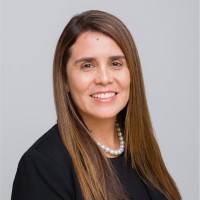
Veronica Acurio, president of orthodontics at Envista, discusses the company’s strategy for unifying digital workflows across every treatment modality—and why fixed appliances can no longer be left out of the conversation.
By Alison Werner
For more than six decades, Ormco has been synonymous with fixed orthodontic appliances. But as the industry accelerates toward digital workflows, the company is working to redefine what that legacy means in a modern practice. Under the leadership of Veronica Acurio, president of orthodontics at Envista, Ormco is positioning itself not just as a bracket-and-wire manufacturer but as a platform company—one that connects aligners, fixed appliances, and lab services through a single digital ecosystem.
In a recent conversation with Orthodontic Products, Acurio outlined how Ormco’s 65-year history isn’t something the company is preserving but rather the foundation that allows it to rethink how care is delivered. That rethinking, she says, is driven by the economic and operational realities facing today’s orthodontic practices.
“Historically, orthodontists operated as solely manual hands-on practitioners. Today, macro pressures like rising inflation, labor shortages, and tight practice margins mean doctors must act as efficient enterprise leaders without compromising patient care,” Acurio says.
A Unified Platform Across Modalities
The orthodontic industry has long framed its digital evolution as a choice—aligners or brackets, digital or traditional. Acurio sees that framing as outdated and counterproductive. Ormco is one of the few global companies providing an all-in-one platform across every treatment modality: brackets, wires, aligners, and digital bonding, she says.
“The future of orthodontics isn’t about picking a side; it’s about unified digital connectivity,” Acurio says. “Practice owners shouldn’t have to manage fragmented vendor software or compromise clinical outcomes just to modernize their workflows.”
That vision is taking shape through the integration of Ormco’s portfolio—Spark aligners, Damon Ultima brackets, and AOA Lab appliances—into a single digital ecosystem so doctors can plan, manage, and execute comprehensive care from one platform. On the clinical side, the integration acknowledges that modern cases are rarely one modality from start to finish. A patient might begin with brackets, transition to aligners, or require custom lab retention. Clinicians need a single software interface that supports multi-modality treatment planning without forcing them to re-enter patient data or switch software platforms, Acurio says.
Bringing Digital Workflows to Traditional Brackets
While competitors have concentrated their digital investments primarily on aligners, Ormco has taken a different approach: digitizing its traditional bracket lines. The recent expansion of Ormco Digital Bonding to include systems like Mini Diamond and Orthos reflects a deliberate strategic choice.
“While clear aligners had gone fully digital, millions of fixed-appliance cases were still tied to manual, chair-intensive bonding procedures,” Acurio says. The barrier, she notes, was not that clinicians rejected digital precision. “The market was forcing them into an unnecessary compromise. To get digital efficiency, legacy software platforms required doctors to abandon the trusted bracket systems and traditional mechanics they had spent decades mastering.”
By extending digital bonding workflows to established bracket lines, Ormco aims to give clinicians a way to reduce chair time and enable delegation without overhauling their clinical philosophy. “Brackets still account for a large share of global cases, and leaving them analog creates an operational bottleneck,” Acurio says.
Meeting Analog Practitioners Where They Are
A significant segment of the orthodontic market still relies on manual bonding, and Acurio is careful to frame Ormco’s digital push as an invitation rather than an ultimatum. “We recognize that analog bonding is a highly refined skill developed over years of hands-on practice,” she says. The hesitation to change, she explains, isn’t necessarily a lack of interest in technology — it’s a concern about risk: learning curves, operational disruption, and whether a new workflow will deliver a meaningful return on investment.
Ormco’s strategy centers on incremental adoption. Ormco Digital Bonding allows practitioners to maintain the biomechanics and bracket systems they already use while shifting placement steps to digital planning and indirect bonding jigs. Meanwhile, EtchFree Bonding, showcased at the recent AAO Annual Session, removes the traditional acid-etching, rinsing, and drying steps from the bonding process. Feedback from clinicians at AAO was overwhelmingly positive, particularly around the potential to reduce workflow friction, according to Acurio.
“By streamlining both digital treatment setup and chairside execution, we can help practices reduce staff stress, free up chair time, improve efficiency, and increase capacity without requiring clinicians to abandon the clinical expertise and workflows that have made their practices successful,” she says.
Defining Digital Leadership in Fixed Appliances
For Acurio, true digital leadership in the bracket-and-wire space goes beyond simply digitizing an analog process. It means delivering measurable operational improvements. She points to three areas where a digital-first approach to fixed appliances makes a tangible difference: treatment predictability through accurate digital-to-clinical transfer that reduces mid-treatment course corrections; staff empowerment by transforming doctor-heavy procedures into delegable tasks; and throughput acceleration by reducing bonding time and increasing daily patient volume.
“Digital leadership, at its core, is about empowering clinicians to maintain full diagnostic and treatment control, giving them the digital tools to scale their business without ever compromising clinical standards,” Acurio says.
A Company Transformed
A decade ago, the orthodontic market evaluated products as standalone components—individual brackets, wires, aligners, or lab appliances. Today, Ormco’s focus has shifted to connecting those proven product lines into a software-driven ecosystem. Around half of the company’s R&D now goes into the software layer that integrates its hardware tools into a single, seamless workflow, Acurio says.
The company’s go-to-market approach has also evolved, expanding from clinical mechanics to total practice efficiency. Ormco continues to offer its doctor-to-doctor education programs through flagship events like the Ormco Forum, but now pairs that with hands-on, in-office clinical specialists to ensure practice teams can successfully adopt digital workflows without operational downtime.
Looking ahead, Acurio sees orthodontics becoming increasingly digital, data-driven, and connected. “Ormco’s strategy is to lead this transformation through a unified digital treatment platform, a seamlessly integrated workflow, and a trusted ecosystem of partners that connect every treatment modality, every workflow step, and every stage of the patient journey,” she says. OP
Photo: ID 109829294 © Melpomenem | Dreamstime.com
Alison Werner is chief editor of Orthodontic Products.