The diagnostic framework expands on traditional methods by including facial appearance, jaw position, and joint health to guide orthodontic treatment planning.
A research team led by Gang Shen, BDS, MDS, PhD, chief scientist of GS Technology at Smartee Denti-Technology, has published a new diagnostic framework titled “A New Classification System for Malocclusions with Facial Convexity” in the 2026 Volume 1 issue of the Journal of Aligner Orthodontics (JAO).
Expanding Traditional Diagnostics
While the traditional Angle classification system focuses primarily on molar relationships, the new research integrates additional elements into the diagnostic process. These include facial appearance, mandibular position and morphology, depth of the curve of Spee, and temporomandibular joint (TMJ) health.
The study investigates the mechanisms behind distinct facial convexity subtypes and proposes specific treatment strategies based on clinical indications and biomechanical principles.
Mandibular Morphology Analysis
The research introduces mandibular morphology analysis, which evaluates the overall contour of the mandibular body and the degree of symphyseal concavity using lateral cephalograms.
The paper notes that leveling the occlusal curve is a prerequisite for achieving the desired mandibular repositioning effect. It also advises that the necessity of tooth extraction should be evaluated based on this refined diagnostic classification.
“This classification system bridges the gap between initial diagnosis, treatment planning, and long-term clinical outcomes,” says Shen, lead author and chief scientist of GS Technology at Smartee Denti-Technology, in a release. “By identifying specific mandibular morphologies, practitioners can make more informed decisions between conventional extraction therapies and mandibular advancement repositioning.”
Clinical Application and Technology
The classification system serves as the theoretical foundation for Mandibular Advancement Repositioning Technology (MART) and Smartee’s GS product line. This includes the S8-SGTB, a specialized appliance designed for treating facial convexity.
Radiographic follow-up data from the study indicates that MART, when implemented via systems like the S8-SGTB, can facilitate adaptive TMJ remodeling. According to the researchers, this provides a non-surgical alternative for achieving sustainable mandibular repositioning in adult patients.
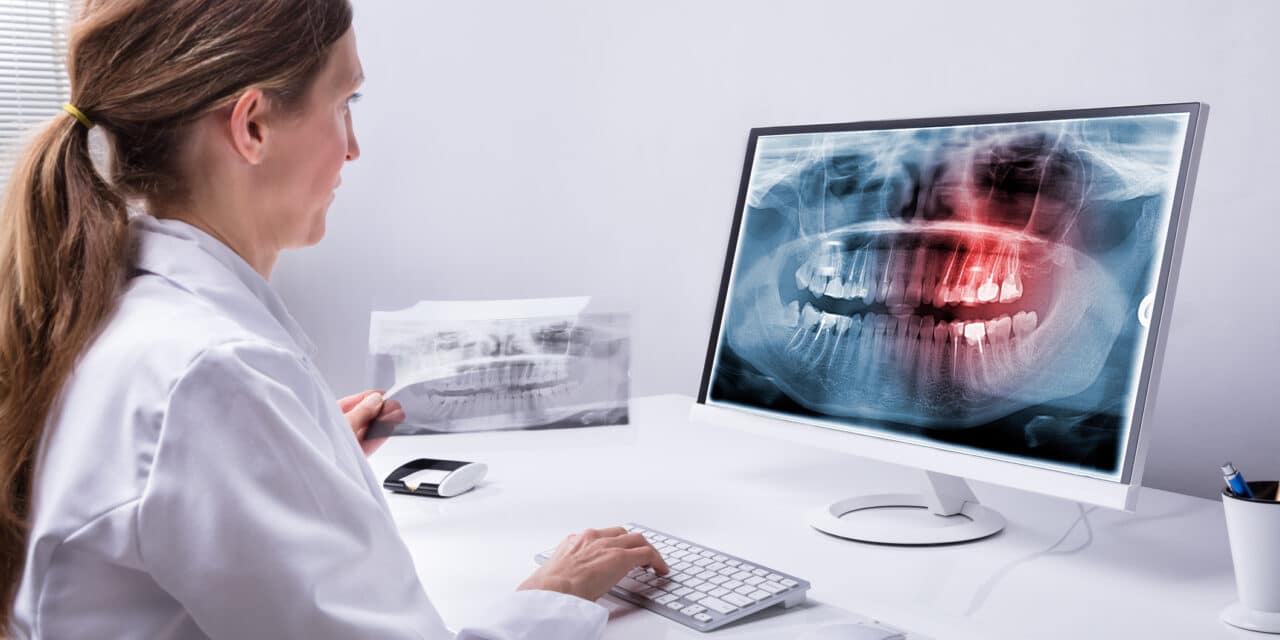
Photo: ID 126289894 © Andrey Popov | Dreamstime.com