
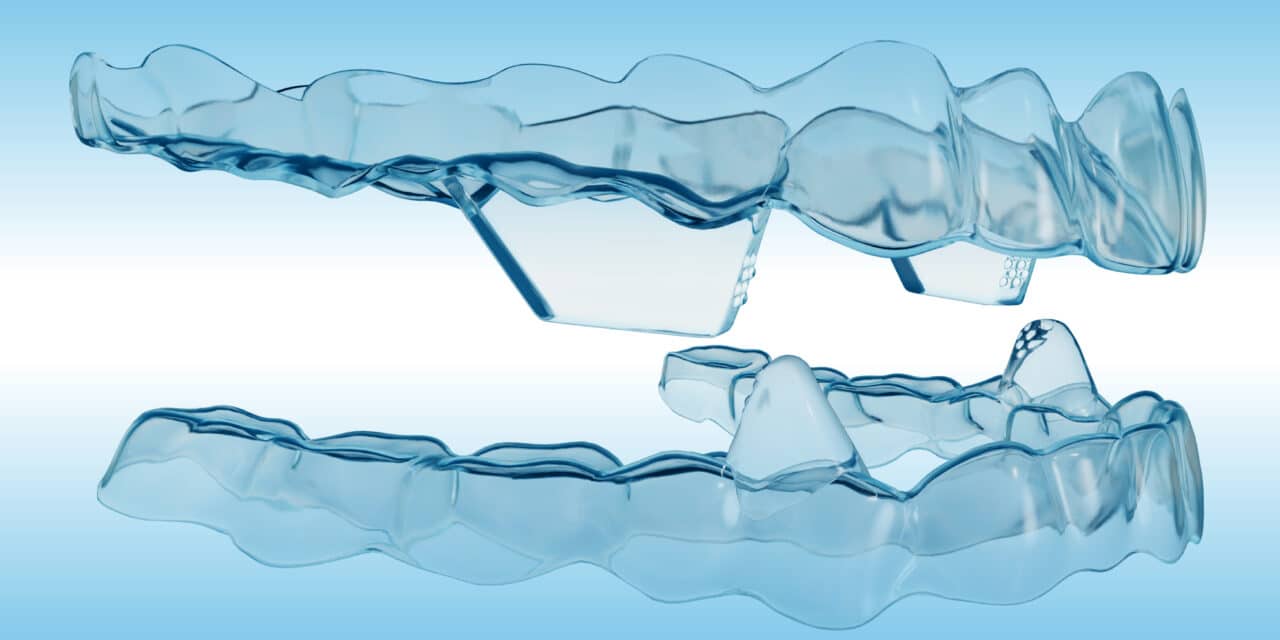
The clear aligner manufacturer entered the U.S. market four years ago, but its clinical features, like the angelButton, bring nearly a decade of real-world refinement to orthodontic practices.
By Alison Werner
When a medical device or clinical tool enters a new market, early adopters often bear the burden of the testing phase, working through the inevitable learning curve of a first-generation product. For Angel Aligner, which entered the United States orthodontic market four years ago, the strategy has been to bypass that phase entirely.
While the brand may be a relatively recent addition to the North American landscape, the company itself has a 23-year history in clear aligner therapy. Operating in over 60 countries and reporting more than 2 million treated cases globally, Angel Aligner is positioning its U.S. entry not as a startup launch, but as the introduction of a mature, heavily vetted clinical system.
“Angel is not a new aligner brand,” says Jason Tabb, vice president and general manager of North America for Angel Aligner. “We introduce Angel by leaning into our established global track record. For U.S. orthodontists, that translates into immediate access to a mature partner with a reliable, evidence-backed system designed for easy adoption.”

THE VALUE OF CLINICALLY PROVEN FEATURES
A primary example of this deferred-entry strategy is the angelButton. Highlighted recently at the 2026 American Association of Orthodontists (AAO) Annual Session, the feature offers orthodontists flexible elastic use with placement options directly integrated into the aligner, eliminating the need for a separate bonding step.
While U.S. practitioners are just beginning to integrate the tool into their daily workflows, the angelButton has actually been utilized globally for seven years. According to company data, the feature has been used in more than 460,000 cases, with over 100 million buttons integrated into aligners worldwide.
For the practicing orthodontist, this extensive international history removes the friction of trial and error. The tool allows for flexible placement across buccal and lingual surfaces, as well as posterior and anterior segments, with the goal of reducing emergency appointments for patients who might otherwise experience debonding issues with traditional attachments.
“After seven years in the market, the key advantage is that angelButton gives doctors a clinically proven solution with flexibility of placement,” Tabb explains. “Instead of ‘testing’ a new feature, U.S. orthodontists can plug into a clinically proven solution that simplifies treatment, meaningfully expanding the scope of treatment with aligners.”
ITERATIVE DEVELOPMENT OVER A DECADE
This reliance on long-term clinical feedback is also evident in the company’s A6 Mandibular Advancement feature. Angel Aligner introduced the fourth generation of this trusted Class II treatment option to the U.S. market.
Over 11 years of development, the company reports the system has been used to treat more than 70,000 cases. Rather than releasing a static product, the manufacturer has used international case data and direct doctor feedback to continuously refine the system’s biomechanics.
The current iteration features dynamic sizing and optimized placement of blocks, allowing practitioners to simultaneously align teeth while addressing mandibular positioning.
“The A6 Mandibular Advancement system is a strong example of our philosophy that clinical innovation is continuous,” says Tabb. “Over 11 years and four generations, each iteration has been shaped by direct doctor feedback, research, and designed for predictable outcomes. Each generation has expanded the range of treatable cases while improving predictability and patient comfort.”
ADDRESSING GAPS IN ADOLESCENT TREATMENT
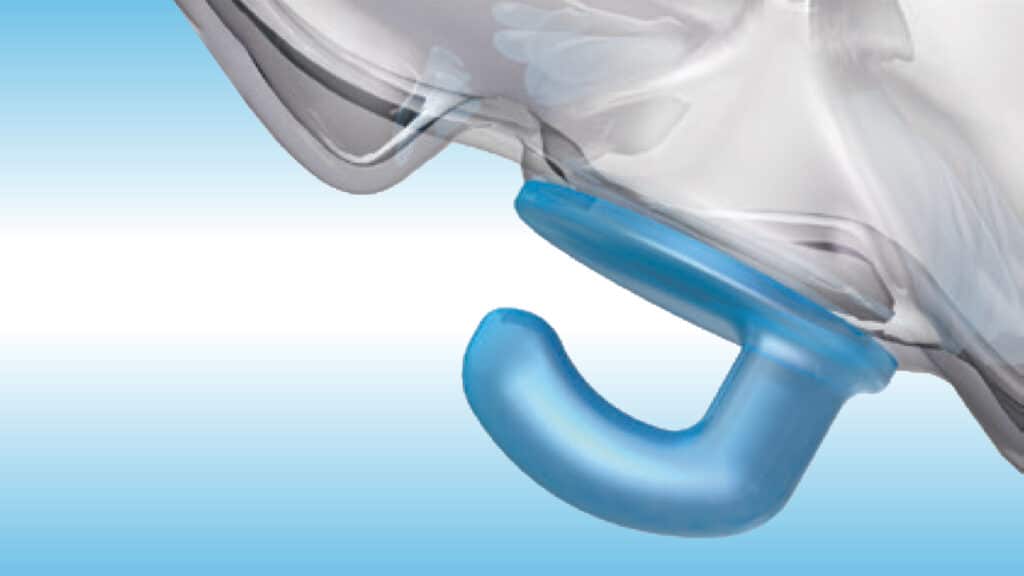
While features like the angelButton and A6 system represent years of refinement, the company is also rolling out newer innovations designed to address specific clinical gaps. In 2024, Angel Aligner launched the angelHook, an integrated feature designed specifically for maxillary protraction in growing patients.
Part of the company’s KiD aligner system, the angelHook is engineered to withstand 20 Newtons of force (approximately 2,000 grams) when used in conjunction with a facemask. The feature targets skeletal Class III malocclusions, an area that has traditionally required orthodontists to rely on multiple appliances outside of clear aligner therapy.
“It gives orthodontists the ability to address skeletal Class III malocclusions using protraction face mask in combination with clear aligners,” Tabb notes. “This innovation solves the need to use multiple appliances. From a day-to-day workflow standpoint, it is designed to keep things simple and help with patient compliance.”
Since its introduction, the angelHook has been utilized in more than 2,000 cases, providing an alternative for complex pediatric treatments that historically required traditional fixed appliances.
MEETING NORTH AMERICAN CLINICAL DEMANDS
As these established tools integrate into the North American market, Angel Aligner is observing specific usage trends among U.S. practitioners. While clinical goals remain largely universal, the operational demands of the U.S. orthodontic practice heavily influence how these tools are deployed.
“North American doctors tend to be more focused on efficiencies that deliver predictable results,” Tabb observes. He notes that U.S. practitioners are increasingly leveraging the system’s mature features to push the boundaries of what they treat digitally. “We are observing a trend of doctors expanding the scope of clinical conditions that they treat with clear aligners confidently achieving desired outcomes while meeting their patient’s expectations.”
COMMUNITY INTEGRATION AND DOMESTIC MANUFACTURING
Beyond clinical hardware and software, establishing a lasting foothold in the U.S. market requires organizational integration. Angel Aligner has actively partnered with established industry entities, including the American Association of Orthodontists Foundation (AAOF) and the Mid-Atlantic Society of Orthodontists (MASO) Tiny Changes Recycling Program.
These partnerships are designed to signal a long-term investment in the specialty, moving beyond a simple vendor-client relationship to support education and sustainability within the profession.
“Being part of the U.S. orthodontic community for us is about much more than bringing in another aligner option; it’s about showing up for the specialty and helping move it forward,” says Tabb. “Supporting initiatives like recycling programs ties directly into our sustainability goals, and staying active with professional organizations keeps us close to what orthodontists need and care deeply about.”
To further cement its domestic presence and improve supply chain logistics, the company is also expanding its manufacturing capabilities within the United States. This includes the launch of a new 52,000-square-foot manufacturing facility in Milwaukee, Wisconsin, designed to provide greater supply chain flexibility and faster turnaround times for North American providers.
LOOKING AHEAD
With its foundational technologies now firmly established in the U.S. market, Angel Aligner is turning its attention to future developments. The company plans to release new features in the fall of 2026 aimed at addressing unmet clinical needs, driven by ongoing research and data-driven treatment planning.
“The next phase for Angel is about taking our strong foundation and pushing it even further in partnership with doctors,” says Tabb. “Ultimately, our goal remains the same: provide orthodontists with the tools, service, and support they need to provide excellent clinical results.” OP
Photos: Angel Aligner
Alison Werner is chief editor of Orthodontic Products.