

For most of the last decade, scale won in orthodontics. Dental and orthodontic support organizations could out-spend, out-staff, and out-market independent practices on nearly every channel that mattered. But AI-powered search is quietly rewriting that math—and for the first time in years, independent practices may have a structural advantage over the DSOs and OSOs they’ve been chasing.
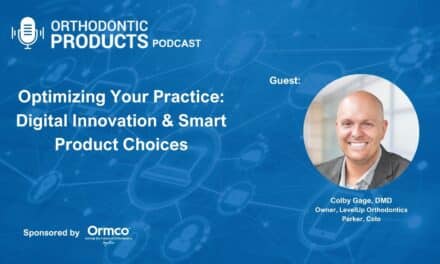
In this episode of the Orthodontic Products Podcast, host Alison Werner speaks with Jeff Slater, chief growth officer at KaleidoscopeAI, the full-service orthodontic marketing agency behind the KAL AI Growth System. Building on his recent Orthodontic Products article, “The DSO Advantage Just Got Smaller. Here’s Why.”, Slater unpacks how AI-powered search is reshaping who gets recommended in orthodontics, why the standardization that made DSOs efficient at scale now works against them in an AI retrieval context, and what practice owners should be doing right now to make sure their practice is the one AI serves up to patients.
Slater explains why AI rewards distinctiveness and penalizes the duplicate, templated content that scale-focused organizations tend to produce across dozens of locations. He details what kind of content AI actually cites, why blogging has re-emerged as a critical signal, and how Kaleidoscope’s AI Visibility Scan audits a practice’s full digital footprint—from website content depth and structured data to Google Business Profile consistency and third-party citations. The episode closes with three concrete moves every independent practice can make this quarter—and Slater’s take on how long this window of opportunity will stay open before DSOs catch up at scale.
What You Will Learn From This Episode
-
Why AI-powered search rewards distinctiveness over scale, and how that structural shift favors independent practices over DSOs and OSOs.
-
What it means for a healthcare keyword to “trigger” a Google AI Overview, and why conversational, question-based patient searches are the ones that matter most.
-
The three core signals AI systems use to decide which practices to recommend: substantive information, Q&A-structured content, and technical elements like schema and structured data.
-
Why a steady stream of recent, descriptive Google reviews is the single highest-leverage move a practice can make—and how often they should be coming in.
-
How long independent practices likely have to establish an AI-visibility head start before DSOs catch up at scale.
Chapters
Guest Bio
Jeff Slater is Chief Growth Officer at KaleidoscopeAI, a full-service orthodontic marketing agency with nearly two decades in the specialty and the team behind the KAL AI Growth System.
Read the Article
Podcast Transcript
Alison Werner (00:06)
For most of the last decade, scale won in orthodontics. Dental and orthodontic support organizations could outspend, outstaff, and outmarket independent practices on nearly every channel that mattered.
But AI-powered search is quietly rewriting that math. When a patient asks ChatGPT or Google’s AI overview to recommend an orthodontist, those systems are no longer serving up 10 blue links. They’re naming two or three practices specifically. And what they’re judging those practices on is easier for an independent to produce than for a DSO or OSO running the same templates across dozens of locations. I’m Alison Werner, and this is the Orthodontic Products Podcast. Today we’re digging into how
AI is reshaping who gets recommended in orthodontics, why the standardization that made DSOs and OSOs efficient now works against them, and what independent practice owners should be doing before that window closes.
Joining me is Jeff Slater, Chief Growth Officer at Kaleidoscope AI and the team behind the KAL AI Growth System. In a recent article for Orthodonic Products, Jeff argued that the DSO advantage just got smaller and that independents have a head start most don’t yet realize they’re sitting on. In this episode, he offers practical advice on how independent practice owners can seize the moment and make sure their practice is the one AI recommends to patients. Here’s our conversation.
Alison Werner (01:28)
Well, Jeff, thank you so much for joining me. I appreciate it.
Jeff Slalter (01:32)
Thanks for having me. Always great to be here, Alison.
Alison Werner (01:34)
Yeah, okay. So your recent article, “The DSO Advantage Just Got Smaller. Here’s Why,”
makes the case that AI powered search is reshaping who gets recommended in orthodontics and that independent practices actually suddenly have a structural edge over the DSOs they’ve been, you know, chasing for years. So we’re gonna spend our time kind of unpacking that argument. So including like what’s actually changed, what practice owners should be doing about it right now and how long the window of opportunity is really gonna stay open. So to get started, take us back a bit, your point
You point out in the article that for most of the last decades, scale was the dominant advantage in orthodontics. So DSOs could
Jeff Slalter (02:13)
Yeah.
Alison Werner (02:13)
outspend, outstaff, outmarket independents on nearly every channel. So what
Jeff Slalter (02:18)
Mm-hmm.
Alison Werner (02:19)
specifically changed with AI powered search that has narrowed that gap? And when did you first realize the ga ground was actually shifting?
Jeff Slalter (02:28)
Yeah, it’s a good question. It really goes back to January of 2025 when our founder, CEO, Mary Kay Miller, she kind of saw the writing on the wall. This AI is picking up steam. It’s not going anywhere. So what’s this gonna look like when it kind of hits the market, hits the broader target audience? So through spring and summer of last year was a lot of research and development, beta testing.
I’m trying to prepare for what was coming. And then around fall and end of 2025, we hit the implementation stage where okay, we have an AI optimization strategy. We understand the criteria. We’ve sussed out how we can deploy this on orthodontic websites, Google business profiles, social media. And, you know, it’s been pretty interesting because it continues to evolve. So I want to be careful today, you know, not to speak in too many absolutes, you know, it’s always this or it’s never that. And by the time someone in your audience hears this podcast, something very easily could have.
Alison Werner (03:17)
Yeah,
Jeff Slalter (03:17)
Could have shifted.
Alison Werner (03:18)
exactly.
Yeah. Okay, so when so let me go back, when do you think when did this power shift happen that D SOs don’t necessarily have the advantage now?
Jeff Slalter (03:31)
Yeah, it really depends on market. I would say really in earnest in 2026, right? This year it’s picked up even more momentum. And I’m sure your listeners have seen AI overviews and AI recommendations in their own searches, whether they’re testing for orthodontic visibility or maybe it’s just their own personal lives, things that you know, questions that they’re looking to find answers for. So it’s definitely picked up a lot of momentum, and we continue to see studies of, you know, healthcare queries trigger AI overviews at a really high rate.
And the general consumer adoption of AI in their everyday lives to do their research and make their purchasing decisions, it only continues to grow, which to be fair, want to qualify that. You know, Google is still pretty dominant. The majority of online search activity is still Google searches, and not all Google searches will trigger an AI overview. So when we’re talking about healthcare queries and they can trigger, it doesn’t mean that they always will. It just means that there’s an AI overview associated with that keyword.
Alison Werner (04:30)
Okay, ’cause I was gonna ask you ’cause I read that part of your article and I was gonna ask you to kind of explain what the trigger was. I know you know, I’ve definitely haven’t encountered the AI overviews in my searches, but I was curious, like, you know, why does it matter that a keyword is triggering an AI overview?
Jeff Slalter (04:49)
It’s kind of between the conversational searches and the the more keyword searches. So like we would think of traditional SEO or traditional Google search. It’s braces, orthodontist, Invisalign, plus your city. So if your
Alison Werner (05:00)
Mm-hmm.
Jeff Slalter (05:01)
prospective patients are searching Orthodontist near me or braces in my town name, that’s largely still gonna put together you’re gonna see the ads and the local three pack and websites. You may not get an AI overview for those keyword based searches, braces near me, stuff like that.
Alison Werner (05:13)
Okay. Okay.
Okay.
Jeff Slalter (05:16)
But when
we get into more conversational search terms, who is the best orthodontist in my town? How much does Invisalign cost in my city? With or without the question mark, that’s optional. But when you start to pose it as a full question, that’s when you’re you’ll see a much higher percentage of those AI overviews coming back. And our consumers, our target audience, these prospective
Alison Werner (05:34)
Mm-hmm.
Jeff Slalter (05:35)
patients are getting smarter in how they search. And it’s not just orthodontists near me, it’s more pointed questions about what treatment options are available, how much they cost, how long they take, and who are the best providers.
to go see for those treatments.
Alison Werner (05:47)
Okay, okay. All right. So with that as the backdrop, in the article you kinda use this metaphor ’cause we’re gonna talk about how
you know, the private practices now have kind of an advantage over the DSOs. So in the article you use the metaphor of a DSO as kind of like a fleet of ships and an independent practice as kind of that single boat. So walk us through why the standardization that made DSOs so efficient at scaling, so the same service pages, the same templated bios across locations, how that actually works against them now in an AI retrieval context. So for those questions posed by the patient.
Jeff Slalter (06:25)
Right. So AI rewards distinctiveness and kind of efficiency and distinctiveness pull in two different directions, right? Because efficiency and doing things at scale sometimes means duplicate content. You’ve got these thin service pages that appear on multiple websites. So AI can kind of quickly determine this is
Alison Werner (06:40)
Mm-hmm. Mm-hmm.
Jeff Slalter (06:42)
not unique information. So where the advantage is for those individual practices, they can kind of update their own content with their own unique expertise.
tie it to their individual local areas, which DSOs can do this as well. There’s just more work for them to do to do this at scale across, you know, 30, 40, 50 locations or however many it may be. So AI is looking for that credibility, that authoritativeness and those expertise signals where if they are individual and distinct, in other words, it it’s content that’s not found elsewhere on the internet or in your local area, if you’ve got
Alison Werner (07:15)
Mm-hmm. Mm-hmm.
Jeff Slalter (07:18)
information and answers that’s unique to your target market.
AI
rewards that because it sees that distinctiveness versus that efficiency at scale, which really leads to a lot of duplicate content.
Alison Werner (07:30)
If you were advising a practice, what kind of content would you tell them to focus up? Like if they were gonna just start with one thing, what kind of content does have that is the type to get picked by AI to answer the question? What what what would you recommend?
Jeff Slalter (07:49)
It’s usually treatment options, treatment results, before and afters, and and specific case outcomes. You know, here’s the issue that we were presented with, and here’s how we
d proceeded through treatment and the result that we achieved, the approach in that way. QA
Alison Werner (08:01)
Mm-hmm. Mm-hmm.
Jeff Slalter (08:04)
or FAQ style content, hugely valuable also, partially
Alison Werner (08:06)
Mm-hmm. Okay.
Jeff Slalter (08:07)
because we know that the the user is asking questions to a chat GPT or a Google to get an AI overview. And so if you
Alison Werner (08:13)
Mm-hmm. Mm-hmm.
Jeff Slalter (08:15)
have QA or the FAQs on your site,
In a in the simplest sense, an exact match of if somebody says how much is Invisalign in my town and your website has a section that’s that specifically names Invisalign treatment starts at or ranges from. Now you’ve got a direct answer to the to the specific question, but it also goes a little deeper where the QA and and showing a well-rounded experience and expertise, AI is analyzing not just is this keyword on the page or is this question answered? It’s looking big picture, does this website and does this business
represent itself having a well-rounded structural depth, you know, subject matter expertise and and building in more of that relevant, helpful content that’s gonna answer the questions that your users are asking. And that can be different in different target markets. So what people search for the most frequently in a major metro area might be a little different than what prospective patients search most consistently in rural areas or different parts of the country. So a little tip for your audience is you can use a Google or a chat GPT or a perplexity or Claude and say,
In this town, what are the five most commonly asked questions about orthodontic treatment? And then
Alison Werner (09:24)
Yeah.
Jeff Slalter (09:24)
the program can go and take a little bit of a deep dive. And yes, we know cost and treatment options will usually be the the usual suspects, but there can
Alison Werner (09:29)
Right.
Jeff Slalter (09:31)
definitely be some nuance to us. So we don’t want to say whatever it is in this part of the country may not be an exact match elsewhere.
Alison Werner (09:37)
Okay. All right. So what it sounds like is then, you know, you have to it’s not just about one page. That’s not just as FAQ
Jeff Slalter (09:45)
Mm-hmm.
Alison Werner (09:46)
’cause the the search engine is going to be looking at the whole site holistically. So you guys have actually built a tool. Can you talk about that? ‘Cause that’s it helps you kinda do an audit of a practices website to figure out how it’s gonna rank with AI. So can you talk about that tool?
Jeff Slalter (10:05)
Yeah, absolutely. So Kaleidoscope built an AI visibility scan. It’s partially automated and also has human, you know, checkpoints as well. And it goes much more in depth to the full footprint audit. So it’s not just your website and the AI readiness and AI optimization on the site. It’s also your Google Business profile, your reviews, your citations, which can now have a double meaning. So citations used to just mean business listings, business profiles.
Alison Werner (10:31)
Yeah.
Jeff Slalter (10:31)
Your Yelp listing, Bing Places, Apple Maps, those were citations. That’s still the case. But now with AI entering the fray, citation
Alison Werner (10:39)
Mm-hmm.
Jeff Slalter (10:39)
can also mean is your website cited in AI overviews? Because you’ve probably seen this yourself. When you type a question
Alison Werner (10:45)
Yeah.
Jeff Slalter (10:45)
into Google, that AI overview pops up. It’ll
Alison Werner (10:48)
Right.
Jeff Slalter (10:48)
tell you with a little small link this is where I pulled that information. Most
Alison Werner (10:51)
Mm-hmm. Right.
Jeff Slalter (10:53)
people may not even click into that site, right? It’s like a this literal, like in like in an academic paper, a citation. Hey, where did you get this piece of information? So
Alison Werner (10:58)
Yeah, yeah.
Jeff Slalter (11:01)
Earning that citation and being in that recommendation, what
goes into it is that that big picture, right? So you’ll hear me say structural depth, where we don’t just want to have a lot of keywords and thin content pages. We want structural depth that really kind of hammers home the overall expertise and the fact that this practice and this business has the right solutions, has the right answers, and has the treatments and services that prospective patients are looking for.
Alison Werner (11:29)
Well, and you said there it’s not just your website, it’s also how you appear on the web. So those reviews, Yelp listings, you know, probably health grades or whatever, you know, medical stuff is out there. So it’s your whole it’s basically a whole audit of who you are online or your practices online then.
Jeff Slalter (11:52)
Correct. And and your brand and your reputation and also a competitor analysis in there. So it could look at how many reviews you have versus some of your competition. It can look at the rankings that you have versus your competition. It’s important to note that Google rankings, you know, traditional SEO of getting a website
or a web page to rank for a certain search, that’s
Alison Werner (12:10)
Mm-hmm.
Jeff Slalter (12:11)
still relevant. That’s still part of this. The foundational SEO or search engine optimization, very
Alison Werner (12:16)
Mm-hmm.
Jeff Slalter (12:16)
much still part of the equation. It’s not that Google is dead and SEO is dead and now everything is AI.
Alison Werner (12:21)
Right.
Jeff Slalter (12:21)
It’s you still need that what I would call a traditional SEO foundation. And then the AI optimization is layered on top. And these are acronyms your audience is starting to hear more, like AEO, which is answer engine optimization. And that’s for your your chat GPT, that’s for your your AI overviews, you know, where you do
Alison Werner (12:38)
Mm-hmm.
Jeff Slalter (12:39)
type a question and get an answer back, or your Siris and your Alexas. The generative
Alison Werner (12:41)
Yeah. Yeah.
Jeff Slalter (12:43)
engine optimization, the GEO, that’s where we get into the ChatGPTs and the Claudes these AI tools that people
Alison Werner (12:49)
Mm-hmm.
Jeff Slalter (12:49)
are starting to use for.
local businesses and researching the purchasing decisions and even healthcare options that that they’re gonna they’re gonna investigate. And they’re letting AI do the research and then make the recommendation. So what happens is if your practice isn’t in that list of three to five that shows up in the AI overview, the patient never sees your name. So it’s not that they’re passing over you and not deciding to visit you. They’re never even considering you if you’re not in that initial three to five mix in that overview because most people don’t make it past that first part.
Alison Werner (13:19)
Okay. And you mentioned a lot of AI search engines there, ’cause you know, most of us are probably thinking Google and Chat GPT, but like there’s a ton of options out there. does this kind of audit do you have to do the audit per search engine or how do you reconcile like how each search engine behaves or AI behaves?
Jeff Slalter (13:43)
We have a pretty good understanding of the main criteria that is shared across. So of course there can be nuance in the algorithms
Alison Werner (13:48)
Yeah.
Jeff Slalter (13:49)
of these different programs. And I won’t pretend to know like the back end code of a chat GPT and how their how their queries and how the way they surface their recommendations is uniquely different from Google. But what
Alison Werner (13:51)
Yeah, yeah, yeah. Mm-hmm. Mm-hmm. Yeah.
Jeff Slalter (13:58)
they’re typically looking for as far as you know, how is AI determining which practices to recommend is kind of three core things. The first is just information. Is there enough data? Is there enough content?
Is it answering the questions that prospective patients have? It’s more information on a website than maybe we’re used to the last five or ten years because with
Alison Werner (14:16)
Okay, yeah.
Jeff Slalter (14:17)
the shift to mobile, right? Nobody wants to read a textbook on their phone. So a lot of websites have gone very image heavy, not a lot of
Alison Werner (14:20)
Mm.
Jeff Slalter (14:23)
written copy. And that runs counter to having the authority signals, the experience, the expertise, right? Telling that whole story. So more information is step one. The QA or the FAQ is the second piece. We know that virtually all of these AI tools, because they’re
you know, the the query recommendation back and forth that we have with those tools, it’s it’s it’s QA driven, right? So when a website
Alison Werner (14:42)
Mm. Right. Mm-hmm.
Jeff Slalter (14:45)
has its information structured in a QA format, that just ties right in. It’s a very nice matchup and very nice segue. And then the third piece is in the code. It’s under the hood things like schema and structured data, which regular people won’t know or see or even tell that it’s on the site or if it’s not. But those types of code organize your information and they structure your content in the way
That these AI programs and tools and machines are, you know,
Alison Werner (15:10)
Mm.
Jeff Slalter (15:11)
set up to go find it. So it’s not that if if your website’s not AI AI optimized, it doesn’t mean AI can’t read it. It means
Alison Werner (15:17)
Yeah.
Jeff Slalter (15:18)
that AI has to work harder to find the thing that it wants. And the sites that are better optimized, more information, structured and formatted in the right way, with the supporting code, like little breadcrumbs to help AI shortcut to the thing that it wants.
That’s when you reach, you know, you’re we’re meeting more of these criteria and it’s a higher likelihood that we’ll be selected or included or in that recommendation.
Alison Werner (15:40)
Yeah. I appreciate what you said there about you know, a lot of websites had moved towards visuals, so images, a lot of the case images to display what they can do. So from
Jeff Slalter (15:49)
Mm-hmm. Mm-hmm.
Alison Werner (15:51)
what you’re saying, it can’t you can’t just rely on the im this is something like I have to deal with when people write clinical articles for us ’cause I’m always like, I’m constrained by space in print. So you
Jeff Slalter (16:01)
Yes.
Alison Werner (16:01)
have to tell the story of the case and the images are just there to add to it and but I can’t
It can’t tell the whole story in images. So basically it sounds like on the website, you can’t rely on the before and afters to just tell the story of what you can do in terms of treatment. You actually have to tell the story for this to work for AI.
Jeff Slalter (16:22)
Yes,
exactly. And that’s where the credibil credibility and the distinctiveness comes in. The images
Alison Werner (16:27)
Mm-hmm.
Jeff Slalter (16:28)
itself, okay, this shows a a beautiful smile, a good result with straight teeth, but you
Alison Werner (16:30)
Right. Mm-hmm.
Jeff Slalter (16:32)
need a paragraph or two, ideally from the doctor, or maybe it’s the TC who can write it because they understand the treatment.
Alison Werner (16:34)
Yeah. Mm-hmm.
Jeff Slalter (16:37)
But here was the case that was presented, here was the issue we needed to solve. This is how we approached it. This was the timeline for treatment. This was the method we use, whether it was, you know, brackets, clean you know, whatever the the
Alison Werner (16:48)
Mm-hmm.
Appliance. Yeah.
Jeff Slalter (16:49)
Hardware was there. And
then here was the outcome and probably having something with a treatment timeline. So if your prospective patient presents a similar case, this is how you can expect we would treat it. And that might be an underbite and overbite and a crossbite and different case malocclusions, and you have one example of each. You don’t have to go crazy. You don’t need 30 cases on your website, but you know, half a dozen that just hit the main
Alison Werner (17:06)
No. Right. Yeah. Mm-hmm.
Jeff Slalter (17:10)
ones is usually sufficient. But as you said, without this supporting content explaining.
And and providing that information, AI is just looking at a picture. And that’s not going to be as compelling, not going to be as impactful in terms of getting you selected for the recommendation.
Alison Werner (17:25)
And I would imagine it also matters that you’re using terminology that a patient is going to search with.
Jeff Slalter (17:32)
Yeah, absolutely. You know, it’s the classic in marketing. It’s tell them what they want to know, not what you want to tell them. And I think we all get caught up sometimes on our own side of the fence. We’re like, here’s what we’re doing, here’s what’s great, here’s what you should care about. We can’t tell AI programs or prospective patients what they should care about. We have to do the work to learn and understand what they actually do care about, right? And then we write our content in that way to be helpful and to answer the questions that they actually have as opposed to the ones that we think they should have.
Alison Werner (18:01)
Yeah. I wanna go back to the article ’cause you warned that if a practice doesn’t catch how AI is describing it. So AI cause you write, AI writes your reputation for you. What are you seeing in terms of that in the field? And do you have any like real examples of practices being misrepresented by AI and what does that fix actually involve?
Jeff Slalter (18:23)
Yeah, absolutely. Because AI has the ability to crawl so many sources and so many pages and databases, if your information is outdated, or if you’ve been lapsed with maybe a a rebrand or an old name change, or maybe it’s a single doctor who brought in an associate and there’s these conflicting signals, AI has a tendency to dredge that up and surface it. And so
Alison Werner (18:42)
Hm. Okay.
Jeff Slalter (18:44)
You can definitely have your practice being cited in an AI recommendation or overview. And maybe it’s pulling an outdated name or an outdated doctor, or maybe it pulls an image from your site because your site’s outdated and it’s old branding, previous name, previous logo, whatever it might be. So AI definitely finds it, right? So the the consistency has always been important. And this goes back
Alison Werner (19:05)
huh.
Jeff Slalter (19:05)
to SEO of you know five, 10, 15 years ago, almost two decades, that we’ve been, you know, kind of banging the drum for.
brand consistency and your digital footprint matching across the different sites and databases. And many practices just focus on their website, their Facebook page, maybe their Google profile, and they have no idea what the 30 or 40 or 50 other databases out there on the website that Google references and Chat GPT references, and they’re out there, right? And sometimes they’re just in in a in a blind spot.
And
Alison Werner (19:34)
Yeah.
Jeff Slalter (19:35)
we’ve definitely seen where the information is outdated. And so practices have the opportunity
to control the narrative. If you’re proactive with this and if you update your online presence, you’ll hear us say digital footprint, right? So it starts with the website and the Google Business profile, but there are
Alison Werner (19:51)
Mm-hmm.
Jeff Slalter (19:51)
other sites and databases that are also relevant. Bringing everything up to speed, making everything match, that consistency leads to trust. And then trust is what drives to the recommendation. So it’s all connected.
Alison Werner (20:03)
Okay. And basically it comes down to trust the AI having trust in you. Which is is like even before the patient does, it’s the AI trusting you.
Jeff Slalter (20:08)
Yeah, exactly. It’s right, it’s a little backwards.
We have to earn the trust and the and the the recommendation from the machine in order to earn the trust and recommendation from the person. But but these are the tools that our prospective patients are using. So every practice has a choice to make. Do we want to read the writing on the wall and optimize for what we know is here and probably not going away? Whole separate conversation on AI. Do we need this? Are we moving too fast? Right. That’s
Alison Werner (20:32)
Right.
Right. Yeah.
Jeff Slalter (20:34)
I I’m not here to make that call. I just I work
in marketing, so we don’t really have a choice. This is here and we want to help orthodontic practices take advantage of it and and again cons control the narrative based on
Alison Werner (20:39)
Yeah. Mm-hmm. Yeah.
Jeff Slalter (20:45)
the information that they’re putting out there. one thing I wanted to circle back to
Alison Werner (20:47)
Yeah. Yeah.
Jeff Slalter (20:48)
because you asked what type of pages to focus on. I mentioned before and after photos with
Alison Werner (20:51)
Mm. Yeah.
Jeff Slalter (20:53)
descriptions. I mentioned QA and FAQ style content. blogging is another big one, which I know over the years the the blog posts, yeah, back to blogging, the blog pages
Alison Werner (20:56)
Mm. okay. Back to the blog. Okay.
Jeff Slalter (21:03)
now.
Blogging just for the sake of blogging is not going to move the needle. So if you’re publishing thin content that doesn’t have these signals, right? We mentioned that structural depth, we mentioned schema and structured data, that the signals that AI is looking for. If you’re still blogging on a 10-year-old SEO strategy, it’s probably not going to meet the criteria of now. So you do need your blogging to be AI optimized and make sure you’ve got your QA and you’ve got that structural depth and the expertise that we’re talking about. But every time you post a blog,
That adds a new page to your site. So those new pages are what AI can see and how recently they were published versus if you’re just rewriting the content on an existing page, that doesn’t really count in the same way. So you might go into your Damon page, your Invisalign page, add a couple paragraphs, make something that’s more relevant, but that URL’s not changing and that’s not a new page on your site map. So the
Alison Werner (21:52)
Hello.
Jeff Slalter (21:52)
blog, when a new blog post is published, that
Alison Werner (21:55)
Mm.
Jeff Slalter (21:55)
actually starts to build out your site map. Those posts become pages that can be indexed. And now AI can see, okay, this business.
Is recently posting relevant, helpful, authoritative content in 2026 versus you know, maybe a blog post from 10 years ago. Might still rank on Google, depending if it’s got you know good history, but AI
Alison Werner (22:08)
Right. Yeah.
Jeff Slalter (22:13)
is less likely to trust that source because it’s outdated. So the the blog can certainly be, and and if you’re running an audit, whether it’s with Kaleidoscope or you run your own audit, any
Alison Werner (22:20)
Wow. Yeah. Yeah.
Jeff Slalter (22:23)
AI visibility audit of what you should do and what you should add, it’s almost always going to say.
Add
fresh content, post new content, publish new content in the form of a blog simply because that is a differentiator that AI can pretty clearly see. Cause if two sites are created mostly equal with domain authority and the content and the SEO traditionally, the one that’s regularly adding new content and publishing new pages is going to have an advantage over the site that’s remaining static.
Alison Werner (22:53)
interesting. Well, welcome to being a media company. Welcome to my world.
Jeff Slalter (22:56)
Right. You know that all too well. You know that all too well, Alison.
Alison Werner (23:01)
You can spit out content every day.
Jeff Slalter (23:03)
Yep. Yep.
Alison Werner (23:05)
Okay, so in the article you give independent practices three concrete moves they can make this quarter. And I want to walk through each one. so the first is to audit what AI actually sees today. So what does that audit look like in practice? What should a practice owner literally do next Monday? They w walk into their office. What are they looking for when they read the results?
Jeff Slalter (23:30)
Well,
first are you in the recommendation, right? And and do some tests in your local area. If you’re a chat GPT user, you can absolutely be in there. I would recommend doing some searches on Google as well because we know
Alison Werner (23:39)
Mm-hmm.
Jeff Slalter (23:39)
majority of patients are still gonna end up there at some point. And that’s,
Alison Werner (23:42)
Mm-hmm. Mm-hmm.
Jeff Slalter (23:43)
you know, who is the best orthodontist in my town? That’s the most popular, most common one.
Alison Werner (23:47)
Okay.
Jeff Slalter (23:48)
who are the top orthodontic providers? You could also search, you know, who what’s the best orthodontic practice for my kid if you focus more on early treatment or if you’re more
Alison Werner (23:53)
Mm-hmm. Yeah.
Jeff Slalter (23:56)
of a
Boutique that focuses on adult treatment. You have a more specific, unique search that you’re trying to show up for and rank in those AI recommendations. So if you’re a practice just starting out, you know, you just ask a couple of those questions, put yourself in the shoes of a prospective patient. What does mom want to know? She wants to know what’s available
Alison Werner (24:10)
Mm-hmm.
Jeff Slalter (24:12)
in my town and how much does it cost, right? And kind of those are the those are the ones to start with. And then
Alison Werner (24:16)
Yeah.
Jeff Slalter (24:17)
from there,
You can also audit your own site if you wanted to put it through a chat GPT. You won’t get as much detail. You won’t have us, you know, walking you through line by line, unpacking the context, but you can say, you know, here’s my website URL, audit
Alison Werner (24:23)
Right. Yeah. Yeah. Mm-hmm.
Jeff Slalter (24:29)
it for AI criteria, optimization, visibility, and see what comes back. And you probably have a a checklist to go with just from that simple search.
Alison Werner (24:37)
When you’re doing kind of that audit where you’re going into like Google or Chat G G P T, I remember reading something recently where it said something about like if you’re doing a search, you kinda have to be in the location where your IP address has to be in the location where you’re s like you’re interested in. Because if you’re doing it from a a
Further out, like say you have a satellite office that’s three hours away and you’re doing your search from your home base, you’re not gonna get the same search results and you’re not gonna get a true audit of what your patients are actually seeing in that area. Is that true?
Jeff Slalter (25:11)
That that is largely true. And
geotargeting and proximity certainly play a role in this. It’s even more true for what I would call traditional Google results like Google Maps, like those Google Maps results, that three pack or the local pack with the reviews and the driving directions,
Alison Werner (25:23)
Hm. Yeah.
Jeff Slalter (25:25)
that’s heavily, heavily weighted towards proximity to the searcher, geotargeting with the business. Now, when we talk about AI, you know, if you’re saying who is the best orthodontist in X City,
You’re gonna get relatively similar results regardless of your location. I I would I would be lying if I said they’ll be the same all of the time. That’s what you said is certainly true. Your location
Alison Werner (25:42)
Right, yeah. Yeah, yeah.
Jeff Slalter (25:45)
can skew the results. But what we’re seeing is not that AI doesn’t look at location geotargeting proximity, but it doesn’t weigh it as heavily. AI
Alison Werner (25:54)
Mm.
Jeff Slalter (25:55)
is looking more at, like we said, the big picture, the structural depth.
The
overall, you know, the EEAT experience, expertise, authoritativeness, trustworthiness, AI’s looking big picture. So your location factors in less for these AI overviews and AI recommendations.
Alison Werner (26:08)
Okay. Okay.
Okay. All right. So the second piece of advice you have is publish the pages only your practice can write. So can you give us examples of what is the co what is that content? And why do you say two original expert pages a month beat twenty templated ones?
Jeff Slalter (26:30)
That’s really hinting towards a blog and publishing, you know, two blog posts per month, buying you know, twice a month, publishing a blog to your to your site on the blog page, and that might be talking about a specific treatment, that might be
Alison Werner (26:37)
Until
Jeff Slalter (26:40)
talking about a specific case before and after, maybe it’s a treatment option and helping people learn who it’s for, how long it takes and what it costs and things like that,
Alison Werner (26:47)
Mm-hmm.
Jeff Slalter (26:48)
or just your doctor’s approach to treatment. You know, not every practice approaches this the same.
I don’t want to get too into the clinical side because that’s not my
Alison Werner (26:56)
Okay.
Jeff Slalter (26:56)
expertise. I definitely know enough of the terminology to be dangerous, but I want to kind of stay in my lane here. But when I s when
Alison Werner (27:00)
Yeah. Same.
Jeff Slalter (27:04)
we say, you know, original doctor voiced pages, it’s it’s also unique to your local market because we know that some agencies could write a blog post and then publish it for multiple clients in multiple areas. If it doesn’t have as much distinct local flavoring, it won’t be as impactful. It’s gonna be easy to identify as kind of boilerplate content. So
Putting it in the doctor’s voice, sharing the doctor’s treatment philosophy, using specific cases, tying it into certain markets. You know, we’re located in X town, but we serve patients from Y Town as well. They come, you know, 15 minutes down the way. That’s another way if you’re looking for more ideas or more subjects or topics to blog on, do something local about we also serve patients in this area. So it’s not just a keyword on your website saying, you know, also serving, and then you list eight towns. If you have a recent unique blog post that kind of
shapes that and offers supporting information and yes, it’s it’s inf information that could be found on other pages of your site, but that blog post functions as a recent, timely, relevant asset and it can help kind of that build that interconnected web of visibility versus, you know, some older approaches where it’s just more pockets that are dispersed around a map and they’re
Alison Werner (28:11)
Yeah. Yeah.
Jeff Slalter (28:12)
maybe not all tied together.
Alison Werner (28:13)
Yeah. It basically duplicating your what you want to say in different ways isn’t a bad
thing here. So
Jeff Slalter (28:18)
Mm-hmm. Mm-hmm.
Alison Werner (28:20)
okay, so the third suggestion you have is keeping reviews and directory data current. We kind of talked about that, but what does current really mean here? How many recent reviews, how often, and why does Google carry more weight than Yelp or health grades in an AI context?
Jeff Slalter (28:36)
I it simply comes down to numbers and authority. You know, Google is probably the highest authority domain and website that we have in our space, and Yelp and health grades are just behind it in terms of how
Alison Werner (28:47)
Okay.
Jeff Slalter (28:47)
many people use it, how many reviews are found there, daily searches, daily queries, daily active users, all of those things. So AI
Alison Werner (28:53)
Okay.
Jeff Slalter (28:53)
knows that more people are using Google than really any of those other sites, sites and databases.
Alison Werner (28:58)
Okay.
Jeff Slalter (28:59)
So Google gets the most weight. And then as far as, you know, recency is a major signal because again,
AI has the ability to crawl so much information. It’s looking for
Alison Werner (29:09)
Mm-hmm.
Jeff Slalter (29:10)
differentiators. How do we determine which business might be more relevant or more helpful or more authoritative than another one?
Alison Werner (29:14)
Right. Mm-hmm.
Jeff Slalter (29:16)
The recency is a huge signal because, you know, it in a competitive area where three or four practices have all been going head to head for 15 years, a lot of the signals might become outdated. But the recency of reviews allows AI to look in and say, okay, the rankings might say this.
The domain authority might say that, longevity signals might say this, but which business has verifiable social proof of doing
Alison Werner (29:39)
Yeah.
Jeff Slalter (29:40)
a good job, providing a good experience and a really good outcome right now? Right. So that
Alison Werner (29:44)
Right.
Jeff Slalter (29:44)
recency of the reviews is a hugely critical signal where that’s that’s one way AI can tell the difference. Who’s doing it well now versus who
Alison Werner (29:51)
Mm.
Jeff Slalter (29:52)
may just have a good legacy SEO program and they’ve been ranking here without maybe keeping up with the times, without maybe still offering
as good of a service. And to your other part of your question, how many or how often? You know, the gold standards probably one or two reviews per week, which I know many of your listeners might hear two reviews a week. Like this guy’s nuts. So part of it depends on the size of your practice and and and those types of things. And so it certainly
Alison Werner (30:09)
Yeah. Yeah.
Jeff Slalter (30:15)
varies, but one to two per week is kind of the shoot for the stars. If you’re getting one to two reviews per month, you’re probably doing okay. That’s at least enough of a recency signal where both AI goes to your profile if the the
Two reviews you have are four months old and six months old, and then after everything’s before that, that’s
Alison Werner (30:33)
Yeah.
Jeff Slalter (30:33)
not only bad for your AI criteria and AI visibility, it’s also bad for human users. If a mom is doing her research, clicking
Alison Werner (30:38)
Yeah.
Jeff Slalter (30:40)
Google Business Profiles, your competitors got eight reviews in the last two months and they’re all great,
Alison Werner (30:44)
Mm-hmm.
Jeff Slalter (30:44)
and then you’ve got eight reviews in the last year, and only two of them are in the last six months, that immediately paints a picture of what’s going on with that practice, and you’re immediately at a disadvantage. So another thing I should mention is your competition.
Right. Like how many reviews a month do you need? How many is your competition getting? Right. If you’re in a really competitive area where you
Alison Werner (31:03)
Yeah.
Jeff Slalter (31:03)
know practices have sometimes over a thousand reviews nowadays, it’s not that crazy to see. And then some
Alison Werner (31:07)
Right.
Jeff Slalter (31:09)
might have a hundred and twenty, some have six hundred, and then there’s one with eleven hundred just sitting out there in the in the stratosphere. So
Alison Werner (31:15)
Yeah.
Jeff Slalter (31:15)
that also plays in. So it’s not you know, always apples to apples of you need two reviews per week to be competitive.
Alison Werner (31:21)
Mm-hmm.
Jeff Slalter (31:22)
depending on your target market, you may not have to be that aggressive, but
That is, you know, the pr the primary focus for a lot of our practices. As we’re saying, you know, hey Jeff, I’m kind of overwhelmed. It feels like a lot of this is out of my control. I don’t know what AI is gonna do. What should I be focusing on? The
Alison Werner (31:35)
Mm-hmm. Mm-hmm.
Jeff Slalter (31:38)
reviews and having the doctor and the staff bought in and listening for compliments and leveraging your practice management system and tap cards and QR codes and all the tools in the toolkit for reviews, because we know there is no, you know, magic beanstalk, do this and you’ll get reviews kind of thing, right? It’s a
Alison Werner (31:52)
Yeah. Right.
Jeff Slalter (31:54)
multifaceted effort, but a steady
Alison Werner (31:54)
Yeah. Mm-hmm.
Jeff Slalter (31:57)
stream of five-star reviews and ideally descriptive reviews that write three or four sentences and describe the treatment, outline the experience. They’re descriptive about what they liked about the practice. Those are way more impactful than five stars, love this place, highly recommend. We’ll still take those. Those are still good reviews. But but
Alison Werner (32:14)
Yeah, yeah. Right.
Jeff Slalter (32:16)
Google and AI, they’re looking at not just the score and the recency, but specifically
the text and the content in the review, how descriptive is it? What services does it mention? And so
Alison Werner (32:25)
Yeah.
Jeff Slalter (32:25)
whenever possible, you want to encourage your patients to write descriptive reviews that actually touch on their personal experience and their treatments in the office.
Alison Werner (32:33)
Yeah. Okay. So with the okay, so I was gonna ask you if someone had to pick up these three what to start with, which one would you
Jeff Slalter (32:41)
Mm-hmm.
Alison Werner (32:41)
say? Would it be the kind of the reviews and your data online?
Jeff Slalter (32:46)
Yeah,
if I had to rank them, I’d say reviews are the biggest focus, and they have been. That’s not new information that you need Google reviews, but some doctors
Alison Werner (32:50)
no. Yeah. Yeah.
Jeff Slalter (32:52)
really need to be reminded. They’ll go, I know, I know, you you told me that before, and and we’re we mean to, we try to, and we’ll say,
Alison Werner (32:56)
Yeah.
Jeff Slalter (32:58)
Do you have a huddle in the morning? Can you review with the team? And they’ll say, Yeah, I told the team, I don’t know, they’re not really bought in. So it can be frustrating and it definitely is a numbers game, right? Because you get 20 patients that say, Yeah, I love you guys, I’ll totally leave you a review. And and of those 20 that say yes, I’m going to, maybe two or three of them actually do. So
Alison Werner (33:12)
Yeah. Right.
Right.
Jeff Slalter (33:15)
Reviews
for sure, but that’s you know that’s a marathon, not a sprint. Reviews aren’t something you can just, I’m really gonna focus on this this month and then you’re good. You really kind of have to keep fighting the good fight. So the the audit piece is kind of more short term and instantaneous and you get you you know more output quickly. So I would really say reviews one, the the audit piece is second, and then I know you know publishing content to the website, establishing a blog, that’s not an overnight implementation for many practices. So I wanna be reasonable
Alison Werner (33:39)
Right. Mm-hmm. Yeah.
Jeff Slalter (33:41)
with that recommendation, but just know.
It is something you can do research on your competition. If the practice a couple miles away has an active blog, just recognize that that gives them an advantage in the current
Alison Werner (33:48)
Mm-hmm.
Jeff Slalter (33:51)
landscape as far as you know relevance and visibility and these recommendations we’re talking.
Alison Werner (33:56)
Okay. Well you had mentioned using Chat GPT to do an audit of yourself if you just want to do a bare bones one. Would you recommend doing an audit of your competitor? To kind of see how you s is there any value in that?
Jeff Slalter (34:08)
I don’t see why not. I mean, we personally right now we’re using Claude a lot and we build a lot of our skills into Claude, but we also have Chat GPT. We try to dabble in each so that we’re not too isolated in one.
Alison Werner (34:16)
Mm. Okay.
Jeff Slalter (34:18)
but one thing that I would kind of stress to our listeners is that the the quality of the output for your AI question or your AI audit is only going to be as good as the quality of the input. Or in other words, the the quality of the prompt.
Really drives the quality of what comes back. And you may have seen this in your own experience. The more descriptive
Alison Werner (34:31)
Mm. absolutely. Yeah.
Jeff Slalter (34:35)
you are, or you can give AI the role and say, hey, you are my internet marketing consultant. You are going to evaluate my website. Here’s my website. And then you can go deeper in your prompt and say, here’s my two top competitors that I really want to beat. Go ahead and look at their websites too and identify, you know, what are the gaps? Do a competitive analysis. What are they talking about? Or where are they stronger? Or where am I stronger? You know, sometimes it’ll identify opportunities you can double down on where you’re already beating the competition.
you can continue to focus on that to build that lead and make it that much harder for them to catch up. And that’s part of the audit that we run as well, is trying to have an idea of, cause it’s all relative, right? Where you’re
Alison Werner (35:07)
Yeah, right. Yeah.
Jeff Slalter (35:10)
scoring and what you need to do and how urgent the situation may or may not be hugely
Alison Werner (35:15)
Mm-hmm.
Jeff Slalter (35:15)
impacted by the level of competition and kind of where you’re starting from and how how saturated
Alison Werner (35:19)
Right.
Jeff Slalter (35:20)
your market is.
Alison Werner (35:21)
Yeah, absolutely. Okay, so kind of to tie this back to the article, even the bigger theme was, you know, that DSOs
have don’t have the advantage right now because they’re so centralized. and independents have the advantage because they can be more nimble and have a more unique voice. So but you’re clear in the article, this window isn’t gonna stay open forever. So realistically, how long do you think independent practices have to establish this AI visibility head start before
the fleet, to use your analogy of, you know, DSO’s catch up and what does too late look like?
Jeff Slalter (36:00)
Right.
I guess part of it depends on how many DSOs get wind of this podcast and hear this hear this roadmap being laid out.
Alison Werner (36:07)
We’ll we’ll we’ll gatekeep.
Jeff Slalter (36:10)
but you know I would I would ballpark it. Again, I can’t predict that. I can’t say with any definitive certainty what the what the runway looks like or how long the window
Alison Werner (36:13)
Yeah. Mm-hmm. Yeah.
Jeff Slalter (36:17)
would be open. But you know, we Kaleidoscope started really in earnest figuring out this AI optimization about a year and a half ago, and now
Alison Werner (36:24)
Mm-hmm.
Jeff Slalter (36:24)
we’re in it, and we still haven’t seen a huge adoption rate outside.
of our agency. It’s it’s definitely we we focus largely on our own clients and of course we bring in new clients and talk to prospects all the time. But we’re having a lot of conversations with current website clients about, hey, here’s the latest criteria, here’s what your website would need to be brought up to speed. So I would ballpark it at probably by the end of next year, you know, end of 2027, I would think there will be enough information and enough, you know, if we work with enough practices and get this head start, more people are going to start, you know, okay, we have to catch up. We have to
implement what our competition has, the keeping up with the Joneses, right? That’s it’s not going to be kept a secret for very long. And I right now it’s a little hard to gauge because it’s just been a a tough year or two, you know, economically. So some practices are down and it’s not clear, hey, is it because of X, Y, or Z? Does that anything to do with my rankings or my traffic? Because a lot of practices, the rankings still look good. The traffic may have dropped off
Alison Werner (37:17)
Yeah.
Yeah.
Jeff Slalter (37:19)
But the ranking
still looks strong. So there’s no one single thing to point to and say that changed or that moved backwards, even if the production went down. So really, you know, you want to start if you haven’t dipped your toe in already as as a practice and started implementing AI, you absolutely need to start sussing that out, at least inside your own operations and inside your own
Alison Werner (37:36)
Yeah.
Jeff Slalter (37:37)
office, having nothing to do with your website and your marketing, just your own processes. And then
Alison Werner (37:39)
Yeah. Yeah. Yeah.
Jeff Slalter (37:42)
by the time the calendar turns to twenty twenty seven, that’s when I think there’ll be a it’ll
You’ll start to notice that you’re falling behind. So for independent practices, you probably got another 12 months before the the fleets start to catch up at scale and optimize at scale. And even with
Alison Werner (37:56)
Yeah. Right.
Jeff Slalter (37:58)
independent practices, I mean, even independently owned practices are still kind of slow to adopt this in a lot of cases. So that early adopter phase, that early adopter window is still open. And I would also point out that many practices that have not optimized for AI.
still show up in the overviews and the recommendations because right now it it’s sort of a a false security type deal where because no one’s really optimized you feel like I’m fine because I
Alison Werner (38:24)
Okay.
Jeff Slalter (38:24)
did a search on chat GPT who’s the orthodontist in my town. I came
Alison Werner (38:28)
Right.
Jeff Slalter (38:28)
up first or second and I haven’t invested anything in this. So I’m golden, right? So your SEO is kind of the default signal. So if you have really good SEO, you can show up right now on AI because your competitors have not optimized it, right? So showing up today
might just be defaulting to good SEO, not a permanent moat around your visibility. And that kind of ties into your rankings might look okay right now, but underlying you haven’t made the updates, you haven’t caught up with the criteria that AI is really looking for. So that that security may be temporary.
Alison Werner (38:59)
Right. Okay. Well, Jeff, this was a great lesson in conversation. So thank you so much for coming on to break this down and give the audience some advice on how to go forward. I really appreciate it. Yeah. Yeah. Yeah.
Jeff Slalter (39:12)
It it was my pleasure and thank you for the opportunity. Always great catching up with you, Allison.
Alison Werner (39:16)
And if anybody wants to get in touch with you, what’s the best way?
Jeff Slalter (39:20)
You’d head over to KALdental.ai And if you do want to get one of these audits where we’ll run the scan again, not automated, we don’t just drop it in your inbox and walk away. We’ll meet
Alison Werner (39:30)
Okay.
Jeff Slalter (39:30)
you online to walk through it live. And it’s KALdental.ai/audit. But once you get to the site, you’ll you call to action buttons. We’re marketers, right? So if you land on the kaleidoscope website, you’re gonna see,
Alison Werner (39:36)
Okay. Yeah. Right.
Jeff Slalter (39:42)
you know, get your audit and and all of the information around AI visibility, the evolving criteria, it’s all there. So caldental.ai.
Alison Werner (39:49)
Okay, great. Thanks again.
Jeff Slalter (39:51)
My pleasure. Take care.