A new cylindrical bur design simplifies IPR with precise, efficient, and consistent enamel reduction without repeated measurement
By Howard Fine, DMD, MMSc
IPR (interproximal reduction) has been a mainstay in orthodontic treatment for decades. The modern approach was developed by Sheridan1,2 in the mid-1980s as an alternative to extraction in mild to moderate crowding cases. IPR used in conjunction with expansion has since become a common modality in aligner therapy.
Typical IPR Options
The usual options for IPR are strips, discs, and burs, but each presents limitations.
Lightning Strips
Lightning strips offer a measured amount of IPR, because the typical 0.13-mm strip can be used unfolded to achieve close to 0.2 mm of space. When the strip is folded in two, it provides just under 0.3 mm of space interproximally, and when folded into three, provides close to 0.4 mm of space. The problem is that the practitioner must start off with an unfolded strip, and once some space is created, continue folding and working interproximally until the desired amount of space is achieved. This is time consuming, especially in the posterior regions, and can be uncomfortable for the patient as the strip can often impinge on the gingiva and create a significant amount of heme. In addition, the cost per strip is significant.
Discs
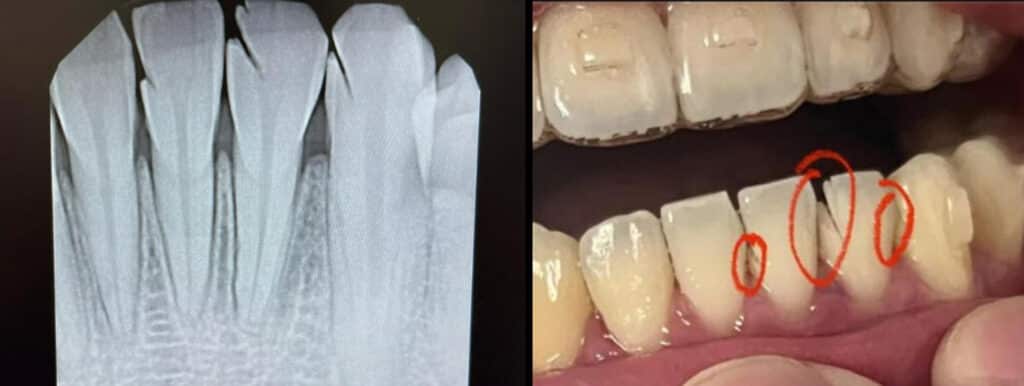
Discs provide a quicker alternative to achieving space, but if not handled properly, can cause trauma to the teeth, tongue, lips, or cheeks (Figure 1). In addition, because the discs are usually not flexible, the contact achieved may be flat, not the desired “smaller version of the tooth,” advocated by Sheridan.
Burs
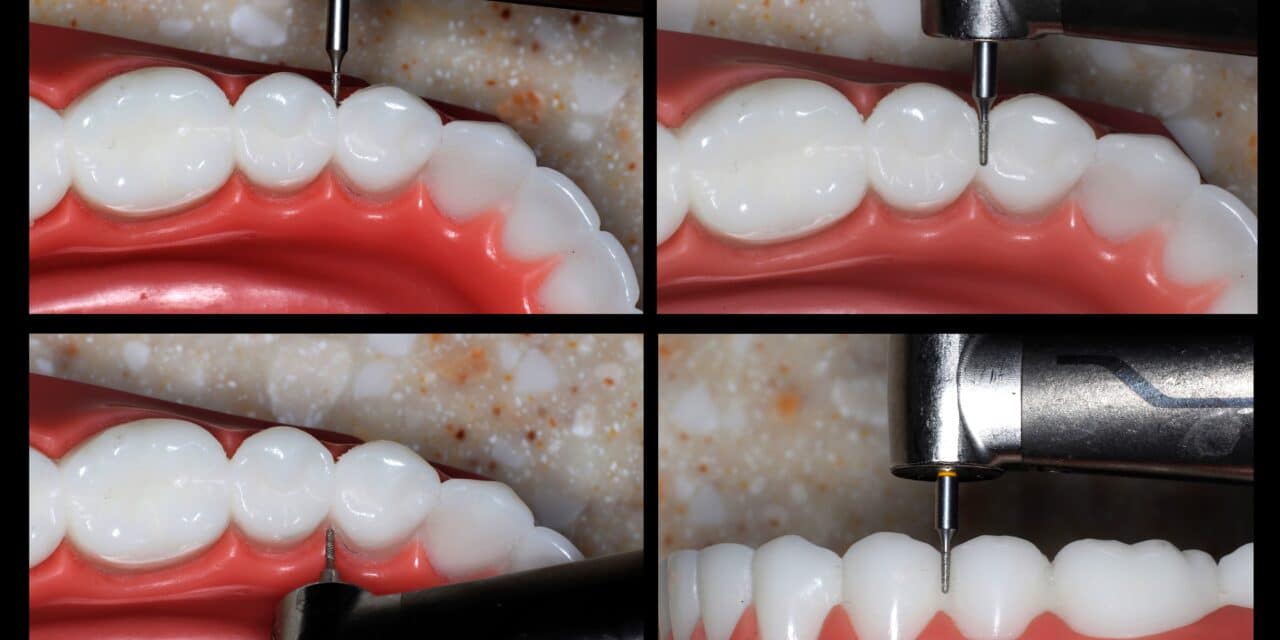
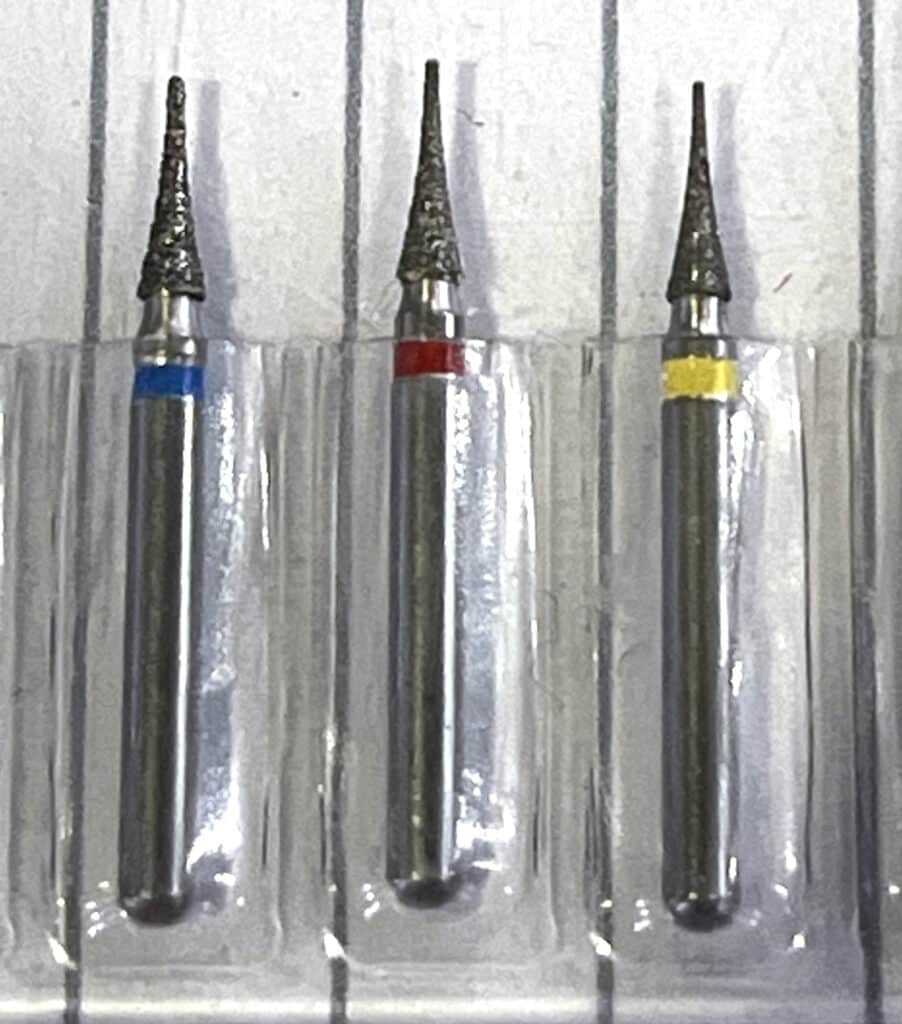
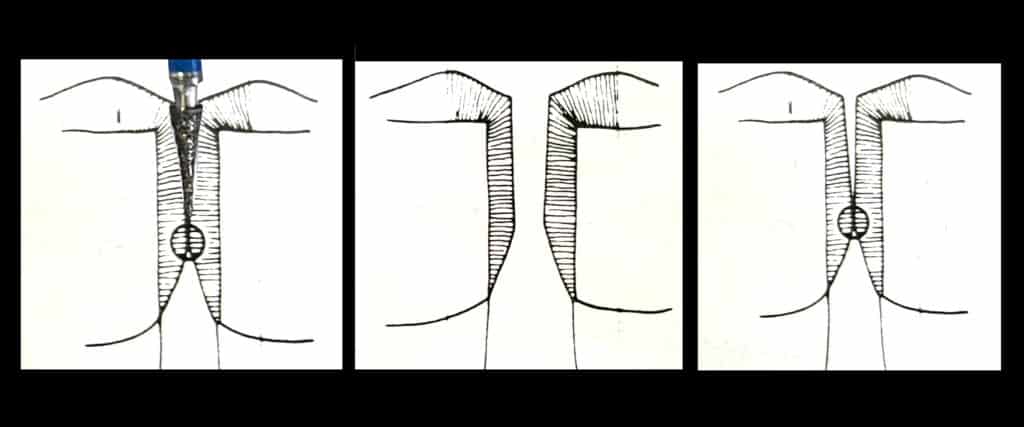
Burs offer another quick alternative to gaining space, but the typical design falls short of achieving accurate enamel reduction and an ideal contact. The typical bur used for IPR is flame-shaped (Figure 2). If it is simply swiped through the contact, it can create an anatomical problem where the incisal portion of the contact is too wide (Figure 3). In addition, bur manufacturers don’t commonly label their products with the exact diameter of the bur at each section, meaning that the tip has a smaller diameter than the base, and the practitioner typically does not know those dimensions. If aligner prescriptions call for 0.2, 0.3, 0.4, or 0.5 mm of space between the contacts, typical burs used for IPR cannot easily create those specific amounts without constantly measuring the sites.
Cali-Bur IPR Solution
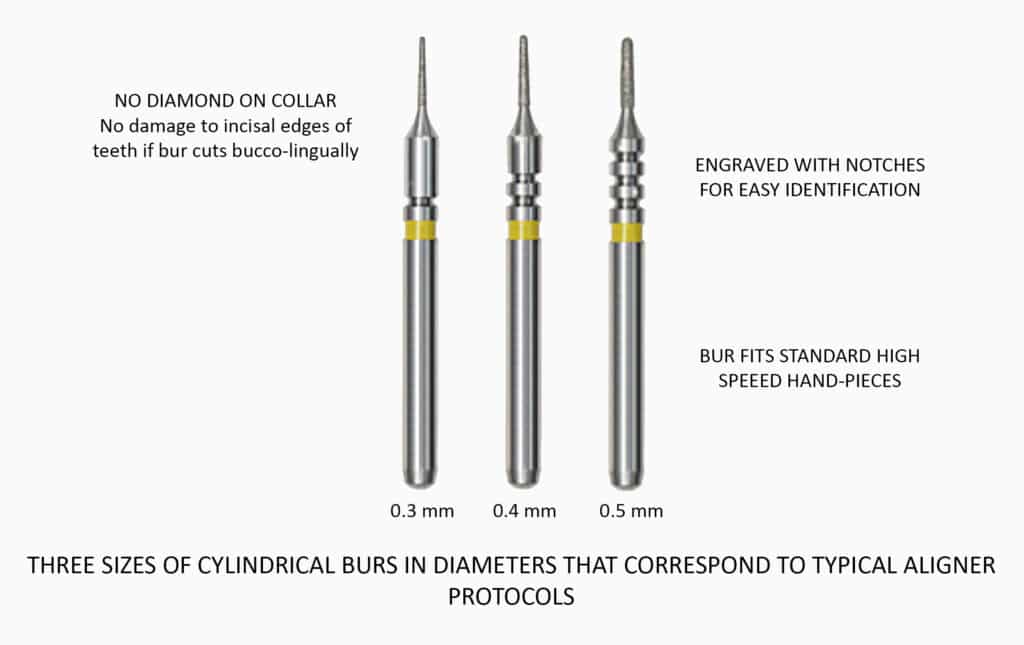
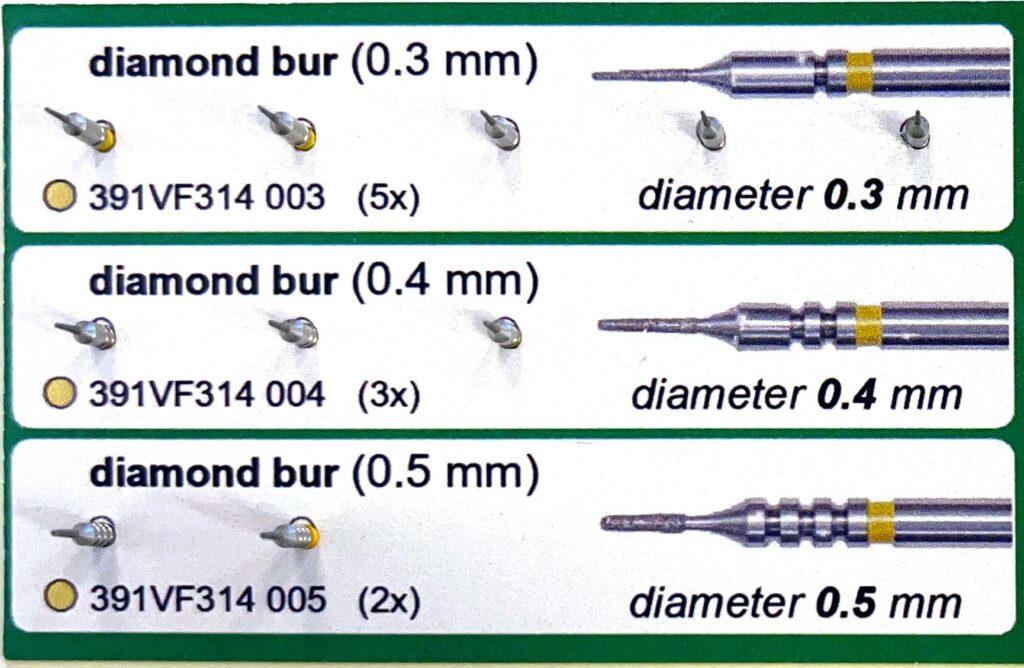
The new Cali-Bur IPR Solution from G&H Orthodontics simplifies IPR and addresses the limitations of bur-based space creation, especially when aligners are used. It is a series of three burs with the following features (Figure 4).
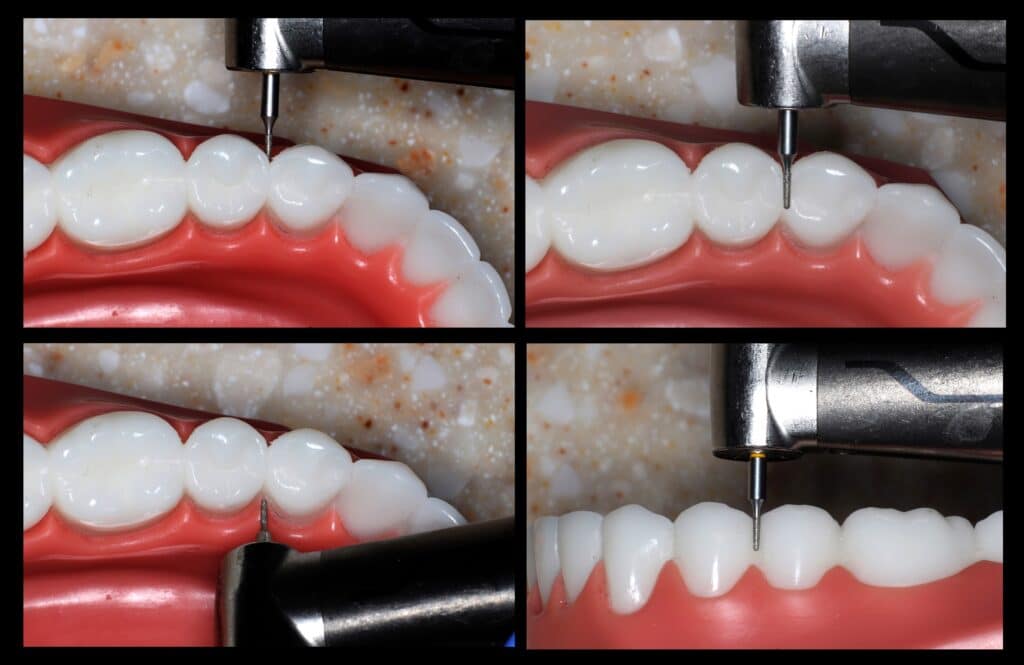
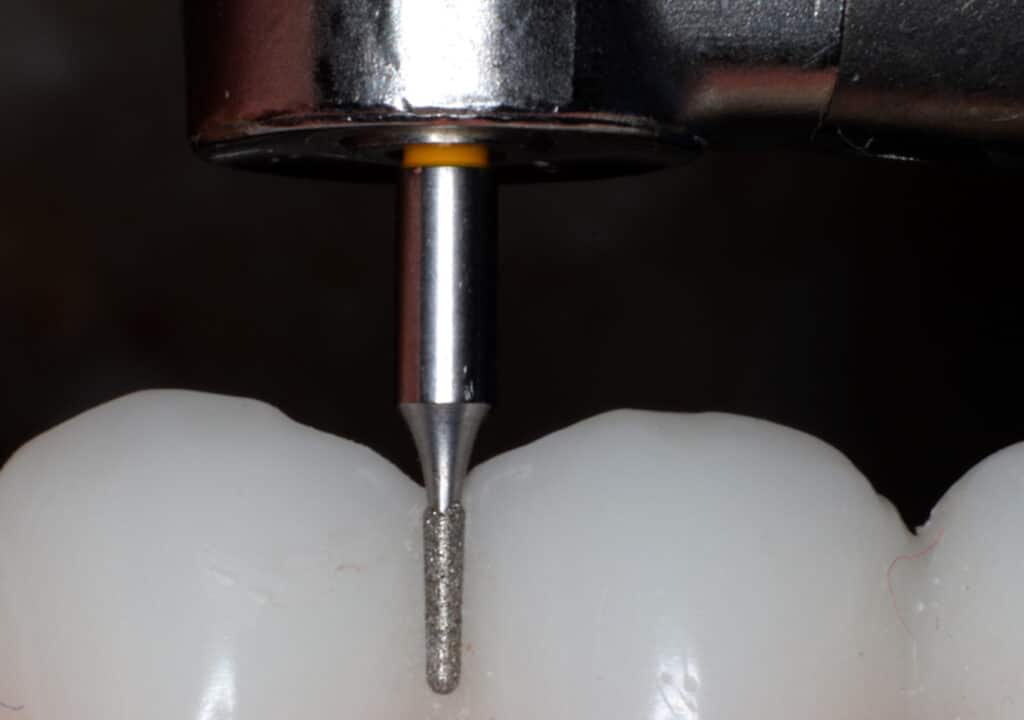
- The burs are nearly cylindrical, meaning the amount of enamel reduction is the same whether the bur is held horizontally or vertically (Figure 5). In addition, the resultant contact will be flat instead of wider incisally, making it more anatomic. Further, unlike discs, the burs can be used to contour the interproximal edges, making the tooth a “smaller version of itself,” consistent with Sheridan’s philosophy.
- The burs have diameters that correspond to the typical amounts dictated in aligner treatment protocols: 0.3, 0.4, and 0.5 mm. This means that the bur will produce the exact amount of IPR desired without the need to measure the site. Sites requiring less than 0.3 mm must still be prepared with other modalities, as a bur cannot be manufactured smaller than 0.3 mm without becoming prone to breakage.
- The burs are notched for easy identification: one notch for 0.3 mm, two notches for 0.4 mm, and three notches for 0.5 mm, to clearly identify the exact diameter.
- The burs do not have diamond on the collar, unlike other burs designed for IPR (Figure 6). This means that the bur will not cut the incisal edge as it passes through the contact point.
- The burs are designed and manufactured in Germany, a country known for precision toolmaking.
- The burs are reusable using standard sterilization procedures.
- The burs come in individual sizes or as a kit with the following configuration: five 0.3-mm burs, three 0.4-mm, and two 0.5-mm, for a total of 10 burs per kit (Figure 7).
Tips for Use
There are a few considerations practitioners should be aware of, but the learning curve is minimal.
First, the burs should be used with copious amounts of water to minimize friction and prolong the integrity of the bur. Second, the burs should be held straight to produce the desired flat contact, and the practitioner should use a swiping motion from buccal to lingual and/or gingival to incisal, to reduce friction and maintain the integrity of the bur. The bur can also be held horizontally as desired since the cylindrical shape means uniformity of diameter throughout the cutting surface of the bur. Following these guidelines will ensure accurate enamel reduction and bur integrity.
In cases requiring significant IPR, this system can be a game changer, significantly improving efficiency. It is fast, accurate, easy to use, and, most importantly, comfortable for the patient, especially in the posterior areas where the procedure can be more difficult. OP
All photos courtesy of Dr Howard Fine.

Howard Fine, DMD, MMSc, is a member of the Orthodontic Products editorial board. He is the director of orthodontics at Touro College of Dental Medicine in New York and is a consultant to G&H Orthodontics.
References:
- Sheridan, JJ, Air-Rotor Stripping. J Clin Orthod 19:43-59, 1985
- Sheridan, JJ, Air-Rotor Stripping Update. J Clin Orthod 21:781-788, 1987