
Beyond its recent Align Technology integration, the web-based practice management platform is deploying AI agents and deep integrations to tackle staffing shortages and improve the patient experience.
By Alison Werner
Late last month, Greyfinch announced a new integration with Align Technology, bringing the Invisalign System and iTero intraoral scanners directly into the orthodontic practice management platform. While the integration represents a significant step in streamlining digital workflows, it is just one piece of a broader philosophy driving the software’s development.
For Jake Gulick, CEO of Greyfinch, the goal has always been to eliminate the manual, repetitive tasks that bog down orthodontic teams. “Our philosophy is, the practice management software knows this stuff—why doesn’t it just do it?” he says.
By embedding automation, artificial intelligence, and deep third-party integrations directly into the platform, Greyfinch aims to function as a comprehensive ecosystem that addresses everything from clinical efficiency to the ongoing staffing crisis.
ELIMINATING MANUAL STEPS WITH ALIGN TECHNOLOGY
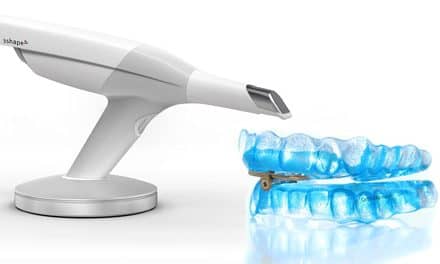
The recent Align integration targets one of the most common bottlenecks in a practice: the new patient scan. Previously, staff had to manually enter patient demographics into the iTero scanner, create an order, take the scan, download the 2D images, and upload them into the practice management software.
According to Gulick, this multi-step process traditionally took about 360 seconds and 30 clicks. With the Greyfinch integration, checking a patient in automatically creates their profile and order request in the iTero system. Once the scan is complete, images are pushed back into Greyfinch automatically. The entire workflow is reduced to two clicks and approximately 10 seconds.
The integration extends to Invisalign clear aligner treatments as well. Practices can auto-create patients in the Invisalign Doctor Site (IDS) and utilize a two-way sync to keep data current. Clinicians can write prescriptions, view ClinCheck setups, and access treatment summaries—such as attachment placement guides—without ever leaving the Greyfinch platform. Additionally, Align order statuses automatically update within Greyfinch’s built-in Kanban-style task management system, keeping staff informed of lab orders and upcoming appointments.
DEPLOYING AI AGENTS FOR EXAMS AND COMMUNICATION
While built-in automation handles routine workflows, Greyfinch is now layering artificial intelligence into its system. The company recently rolled out its new AI agents to a live beta testing group, focusing initially on optimizing the new patient exam and front-desk communications.
During a consultation, an AI agent can listen to the orthodontist’s verbal exam, automatically fill out the patient’s medical record, and generate a summary letter for the referring doctor. This listening capability removes the need for a staff member to type notes or for the doctor to spend time clicking through digital forms.
The AI agents also streamline patient communications through automated SMS drafting. When a patient texts the practice asking for their next appointment time or their current balance, the AI searches the patient’s chart and drafts a specific reply. If a patient asks about a balance, the AI can even generate and include a secure text-to-pay link. Both workflows reduce response times and free up staff bandwidth.
BUILDING AN ECOSYSTEM THROUGH DEEP INTEGRATION
Despite offering a robust suite of native features, Greyfinch operates on an “Apps model” rather than a closed system. Gulick notes that no single software can be the best at everything, making third-party integrations essential for a modern practice.
Unlike standard API connections that merely pass data back and forth, Greyfinch allows partners to integrate deeply into its interface. This ecosystem includes integrations with Mango Voice for phone systems, LeadSigma for after-hours AI scheduling, Scriptagram for patient education, and Google Analytics for end-to-end marketing tracking. The platform also supports a wide range of specialized clinical and operational tools, including EasyRX for lab management, DentalMonitoring and Grin for remote monitoring, and AI-driven cephalometric tracing via Ceph Assistant and CephX. Other integrated partners such as Culterello, Rooster Grin, and Bright Referral further extend the platform’s capabilities, allowing practices to build a tailored digital environment.
“We can’t be Invisalign. We’re not a phone system, and we’re not a monitoring company,” Gulick explains. “We integrate with these companies to create an ecosystem that makes your practice function efficiently.”
PRIORITIZING THE MODERN PATIENT EXPERIENCE
Greyfinch’s development is heavily focused on patient-facing features, operating on the premise that a seamless patient experience directly translates to practice growth. “For us, [the patient experience] is an extension of the practice software,” says Gulick.
The platform is built mobile-first, ensuring that online scheduling widgets and digital intake forms function seamlessly on smartphones. These digital forms are interactive and connected. If a patient indicates a condition like high blood pressure on their health history form, Greyfinch automatically generates a medical alert within the patient’s clinical chart, eliminating the need for staff to manually flag the issue.
The platform also features a built-in telehealth system. While some practices use it for initial lead-generation consultations, many utilize it for emergency triage or remote monitoring check-ins. Because the video calls are native to Greyfinch, they live on the practice’s main schedule, maintaining a single source of truth for the day’s appointments rather than forcing staff to manage a separate third-party calendar.
FLEXIBLE PAYMENTS AND CASE ACCEPTANCE
In today’s economic climate, giving patients control over their financing is a proven driver of case acceptance. Greyfinch’s automated billing system allows practices to offer highly customizable payment plans that go beyond the industry standard.
Instead of limiting patients to traditional monthly installments, practices can offer weekly, bi-weekly, or twice-a-month payment options that align with a patient’s payday, according to Gulick. This flexibility makes the financial commitment feel more manageable for the patient while accelerating cash flow for the practice. The software automatically processes and posts these payments without additional staff intervention.
ADDRESSING THE STAFFING CRISIS WITH A MODERN USER INTERFACE
As the orthodontic industry grapples with staffing shortages, automation provides a critical buffer. Gulick notes that automated workflows and task management boards absorb much of the daily administrative burden, easing the pressure on existing teams and providing a critical buffer when practices are short-staffed.
Furthermore, Greyfinch’s browser-based architecture and modern user interface are designed to reduce the training burden for new hires. Gulick notes that staff want an interface that mirrors what they see on their personal devices. “By using the same design systems that Apple and Google are using, we make it easier for people to use the software without needing hours and hours of training,” he says. Staff can access the software from any Mac, PC, or iPad without complex installations or server management.
To protect this cloud-based data, Greyfinch emphasizes robust cybersecurity. The company is currently undergoing SOC 2 compliance and strongly advocates for the use of two-factor authentication across all practice logins to defend against increasingly sophisticated phishing attacks.
THE FUTURE OF PRACTICE INTELLIGENCE
Looking ahead, Greyfinch plans to expand its AI capabilities beyond administrative tasks and into business intelligence. Early prototyping involves feeding practice reports into an AI engine to generate actionable dashboards.
Instead of simply presenting raw data, the AI will soon be able to compare a practice’s metrics against industry benchmarks, identify trends—such as why case starts might be down in a given month—and offer strategic guidance. “Having reports is one thing, but understanding it and getting guidance from it is really where the value comes,” Gulick says.
For Greyfinch, the ultimate objective is to continuously adapt to market changes, ensuring orthodontists have the connected, intelligent tools they need to focus on patient care. OP
Photo: ID 98056614 | Computer Automation © Alexandersikov | Dreamstime.com
Alison Werner is chief editor of Orthodontic Products.