Dr Terry Sellke shares how adopting FXClear aligners allowed his practice to minimize refinements, improve tracking, and achieve a superior clinical finish.
By Terry Sellke, DDS, MS
By 2015, clear aligner therapy represented approximately 30% of our high-volume orthodontic practice, with thousands of patients treated. However, common challenges persisted, including discomfort with aligner changes, staining, inconsistent finishes, and aligner unseats despite extensive use of attachments.
The issues we encountered brought to mind a quality control concept from the automobile industry used to describe and measure quality: “fit and finish.” During assembly, parts must come together with extremely high precision to achieve optimal fit, style, and performance. In braces, orthodontists aim to improve the fit between the bracket slot and the wire. A similar concept applies to aligner treatment, where the fit of the aligner—both at initial insertion and as teeth move—is critical to accurately express the tooth movements prescribed in the treatment plan. As new competitors entered the market, we began searching for an aligner system that better met our standards of quality.
A Performance Comparison
We evaluated five aligner brands before selecting OrthoFX in 2019. Its flagship material, FXClear, was designed to address limitations of the leading brand by delivering lighter, more controlled forces over a broader range of tooth movement. The benefits we observed (outlined below) led us to transition all new aligner starts to OrthoFX within three months.
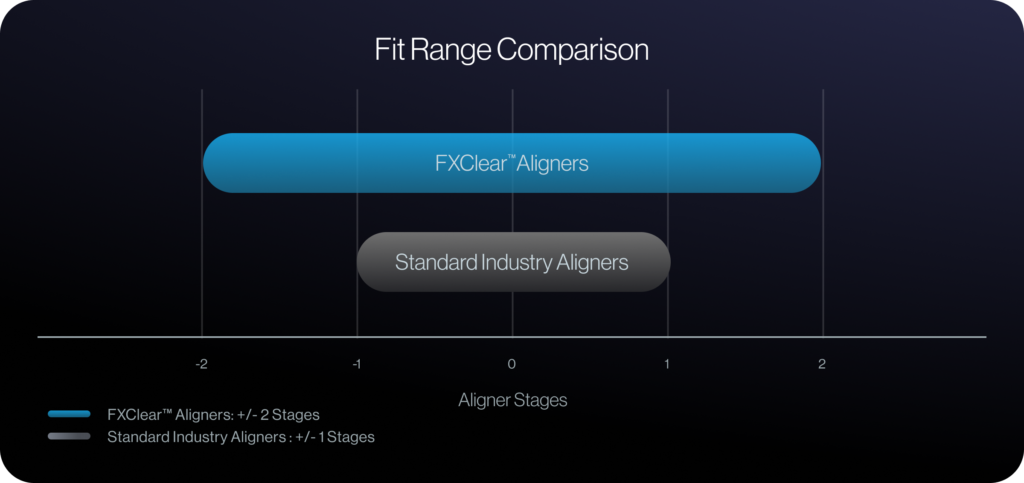
- Expanded fit range: FXClear effectively doubles the fit range compared to the leading brand, allowing a single aligner to accommodate up to two stages of planned movement (Figure 1). This means aligners continue to fit even when compliance or individual biological responses vary, helping movements stay on track.
- Improved tracking: The greater range improves overall tracking, and the material better resists permanent deformation from the stresses of repeated aligner insertion and removal.
- Improved comfort and compliance: Patients who transitioned from SmartTrack to FXClear reported increased comfort with the new aligner material. This was associated with improved compliance and, in turn, greater treatment predictability.
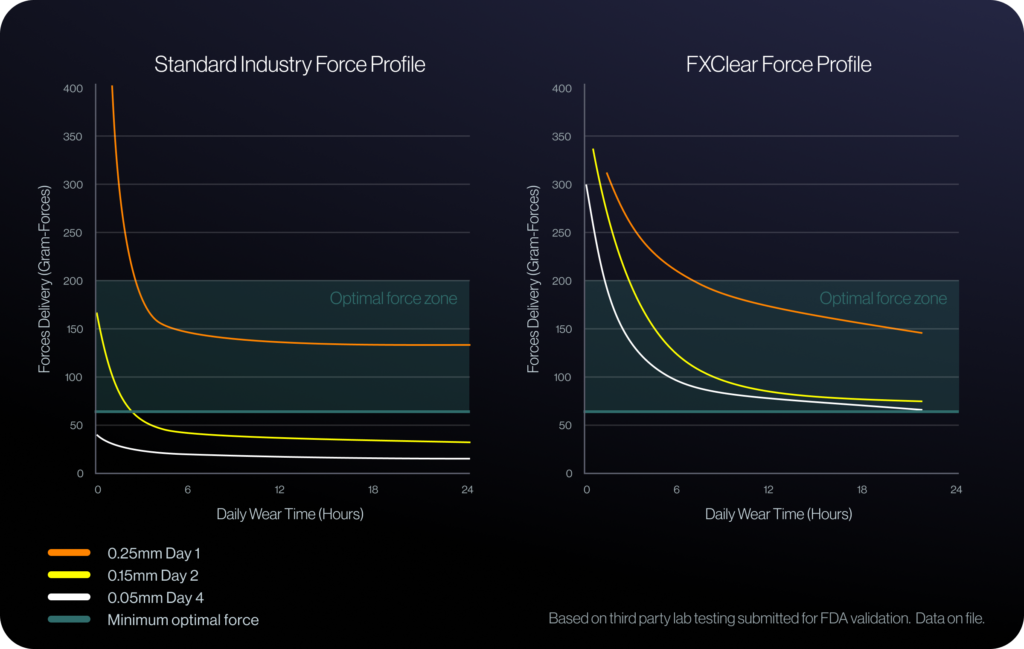
- Sustained force delivery: As documented in a third-party in vitro study (Figure 2), FXClear remains active longer to keep teeth moving to their destination for each stage.
- Minimal unseating: Almost no unseats were observed, even across a variety of case types.
Clinically, these properties translated into fewer refinements and attachments, improved treatment efficiency, and a higher quality finish.
Sustained Force Delivery—A Third Party Study
To evaluate sustained force delivery, testing conducted by an independent laboratory compared FXClear with a standard industry aligner, as shown in the side-by-side graphs (Figure 2). Each curve represents the effective force delivered by a single aligner designed for one-week wear, measured on Day 1, Day 2, and Day 4.
Optimal Force Zone—The green areas on each graph represent the force range for optimal tooth movement (approximately 60 to 200 g-f across all movement types). Forces within this range help avoid PDL hyalinization and the undermining resorption process1,2, which can lead to aligner unseating and loss of control.
Standard Industry Force Profile—In the left graph, notice the standard industry aligner exerts very high force on Day 1 (orange curve),with a rapid decline in force and activity as the teeth begin to move due to the inelasticity of the plastic. On Day 2 (yellow curve), the remaining forces now drop below the minimum forces required for tooth movement. By Day 4, the aligner is no longer active. When effective force or fit is lost, lag can occur, which can lead to refinement.
FXClear Force Profile—In the right graph, FXClear remains active for all days measured. Even on Day 4, sufficient forces remain for all tooth movement types.
Patient Compliance Factors
Because appliance performance depends on patient wear, OrthoFX also considered patient compliance in the design of FXClear aligners. One inherent advantage is the lower force profile, which enhances patient comfort. In clinical use, complaints were reduced, and a pain reliever was no longer needed at stage changes.
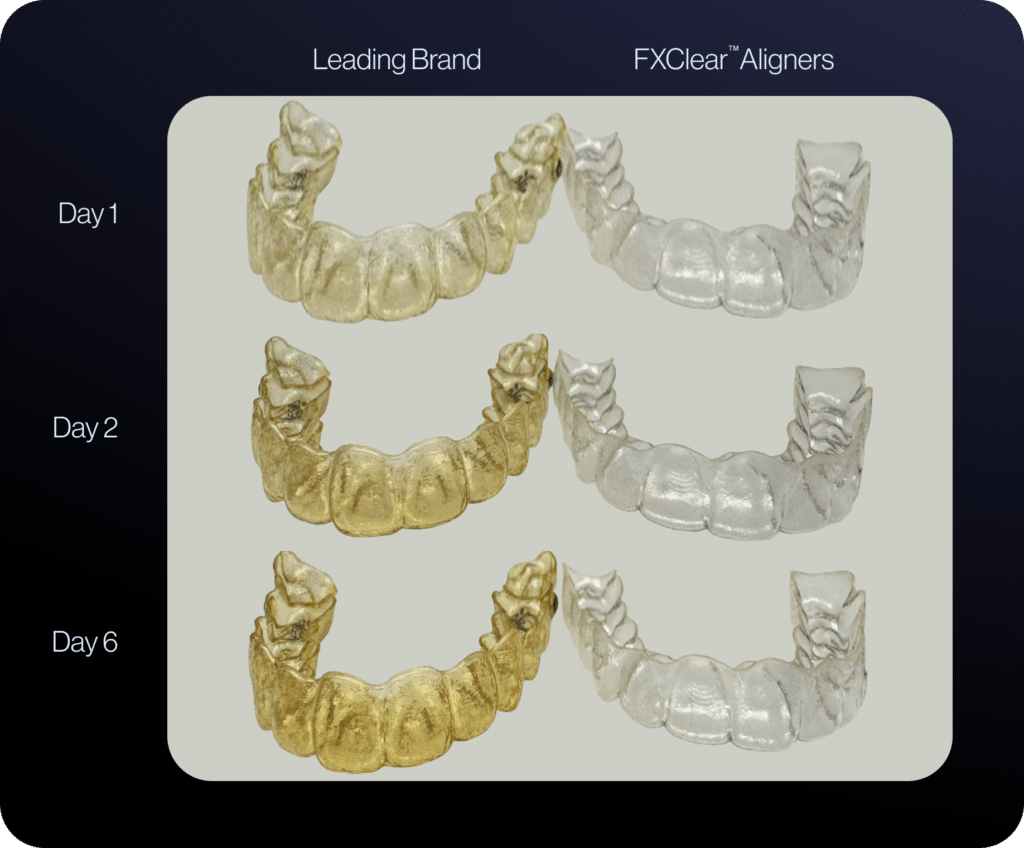
FXClear aligners also demonstrate high stain resistance, which is important to our patients. In testing with coffee, tea, and red wine, FXClear maintained excellent color stability over seven days, while the leading brand showed visible staining within 12 hours (Figure 3). Based on these results, we advise patients that they may drink black coffee (without sugar) during aligner wear.
Case Report
By 2023, patient preference in our practice had flipped relative to 2015, with approximately 70% now choosing aligners. Treatment efficiency had been optimized, with outcomes comparable to—and sometimes exceeding—those achieved with braces, allowing patients to choose either option at the same cost. The following case illustrates the rapid, stable, and high-quality outcomes achieved with FXClear aligners.
Diagnosis & Treatment Plan
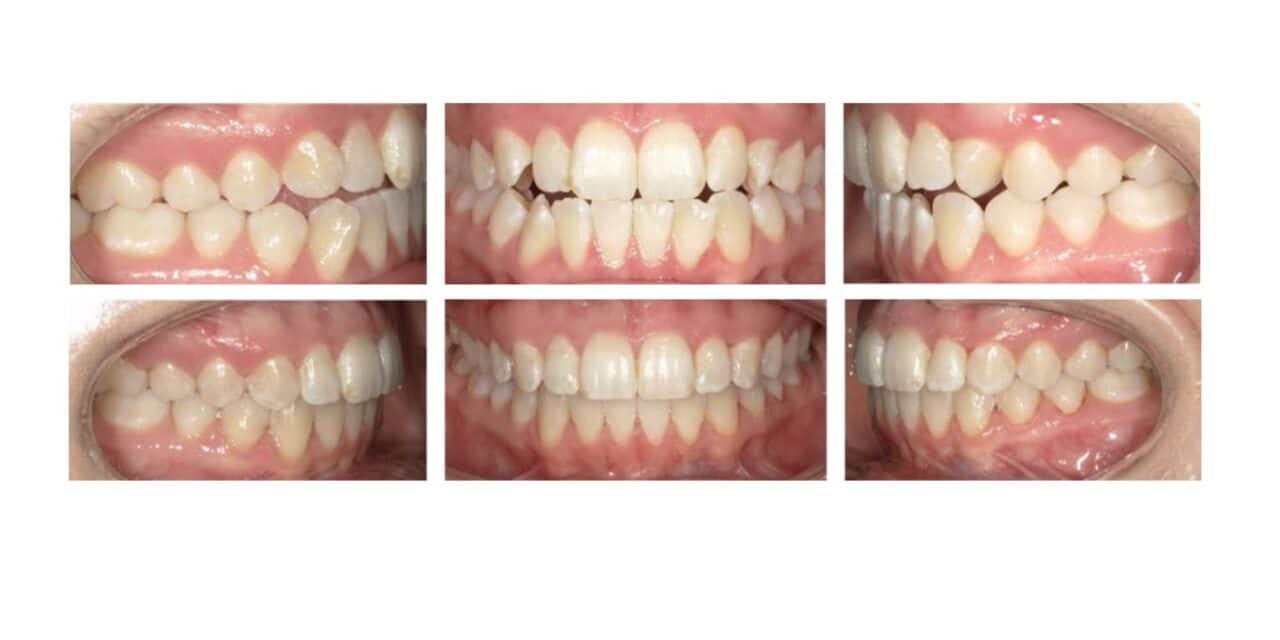
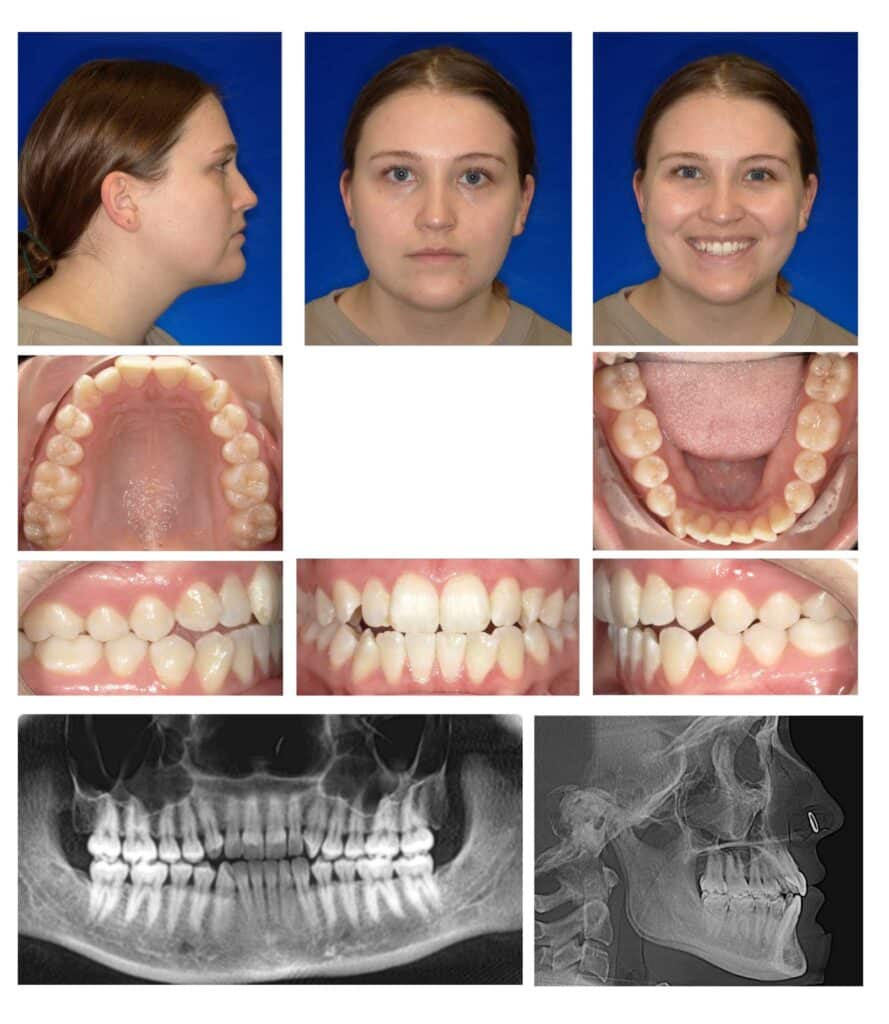
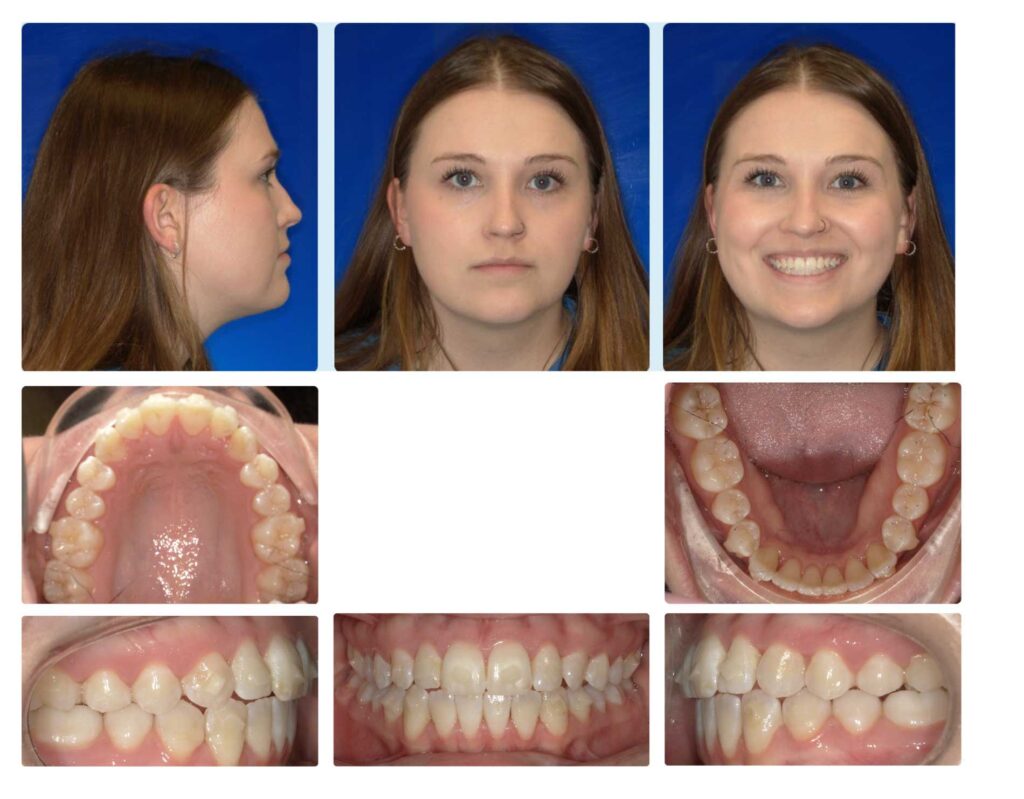
This patient was an adult Edge on Class III case with upper and lower crowding (Figure 4). Her chief complaint was jaw locking and pain, not uncommon for a patient without anterior guidance. As an adult, she preferred treatment with aligners (Figure 5), which our practice has found to be the most effective appliance for open bite cases.
Class III elastics were planned to create the needed overjet and improve condylar position in centric occlusion. With full occlusal coverage provided by aligners and resulting posterior occlusal support, Class III elastics have been well tolerated in our TMD cases. In our experience, this approach has produced more stable overbite correction than treatment relying solely on anterior vertical elastics, which has demonstrated a higher tendency toward relapse.
Treatment Plan Summary
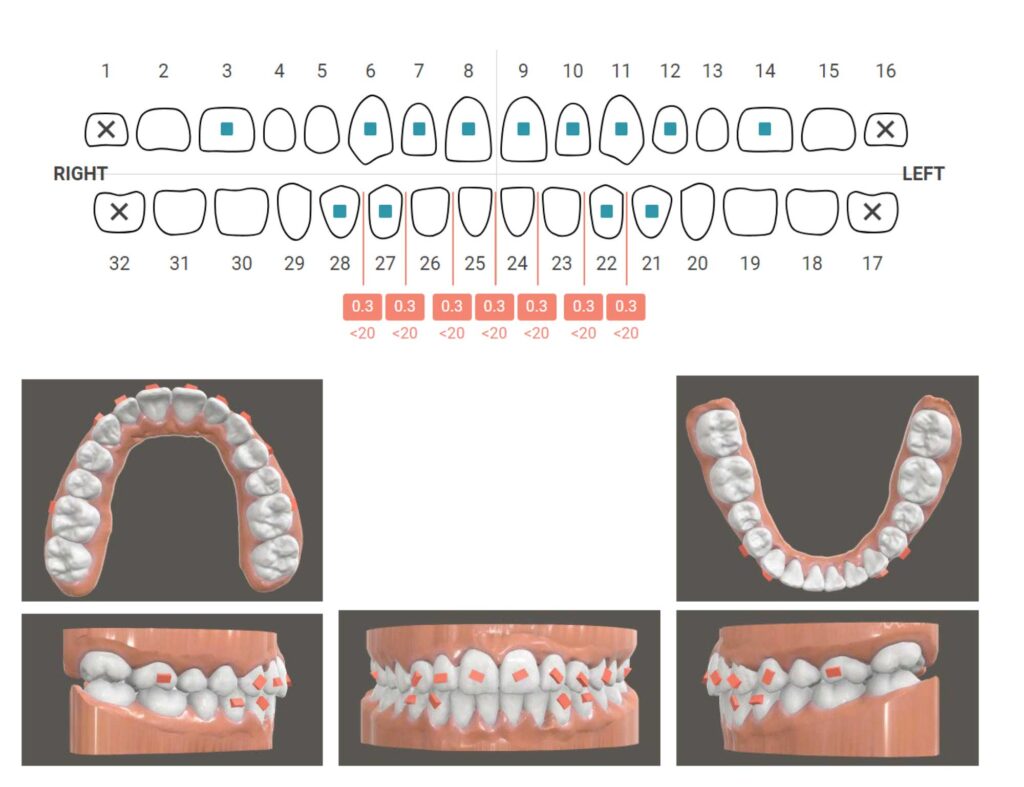
- Expansion of upper, lower arches
- IPR of lower 3-3 before stage 20
- Hooks (cut notches) at upper second molars as well as lower canines
- Rotation of canines and incisors
- Correct crossbite #7, 10, 11
- Class III elastics to resolve posterior condyles, Class I cuspid relationships, anterior guidance
- Number of stages: 31
Planned Refinement (#1)
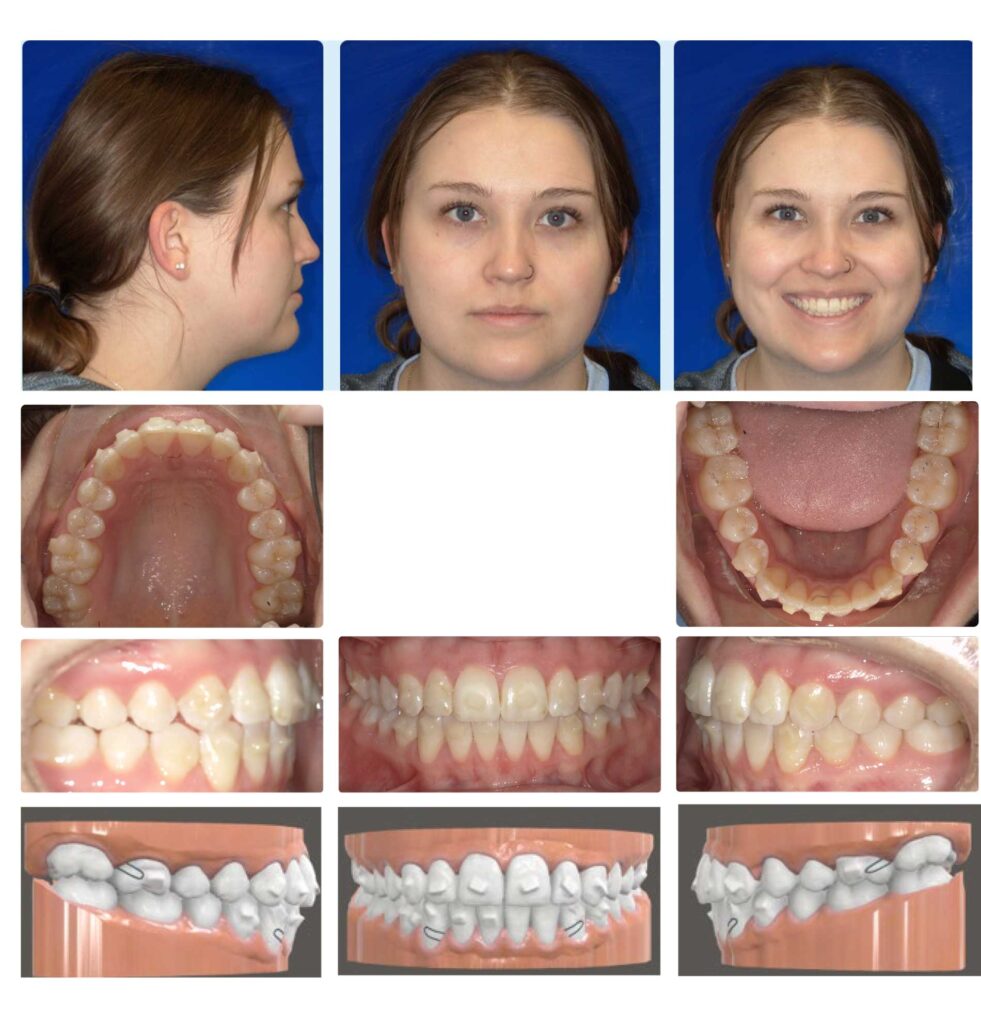
The first refinement was originally planned to occur at aligner #31. The patient’s case progressed so nicely, the first refinement began at aligner #26 to perform necessary enameloplasty sooner and achieve the best esthetic result (Figures 6 and 7).
Refinement goals:
- Continue mechanics
- Address posterior displaced condyles with additional C3 elastics
- Molar depression via aligners to create needed overbite
- Add 2 additional attachments to upper arch for retention with C3 elastics
- Number of stages: 14
Final Refinement (#2)
Refinement goals:
- Finish anterior guidance
- Final check condylar position via new tomograms
- Improve right posterior occlusion
- Number of stages: 12
Treatment Results
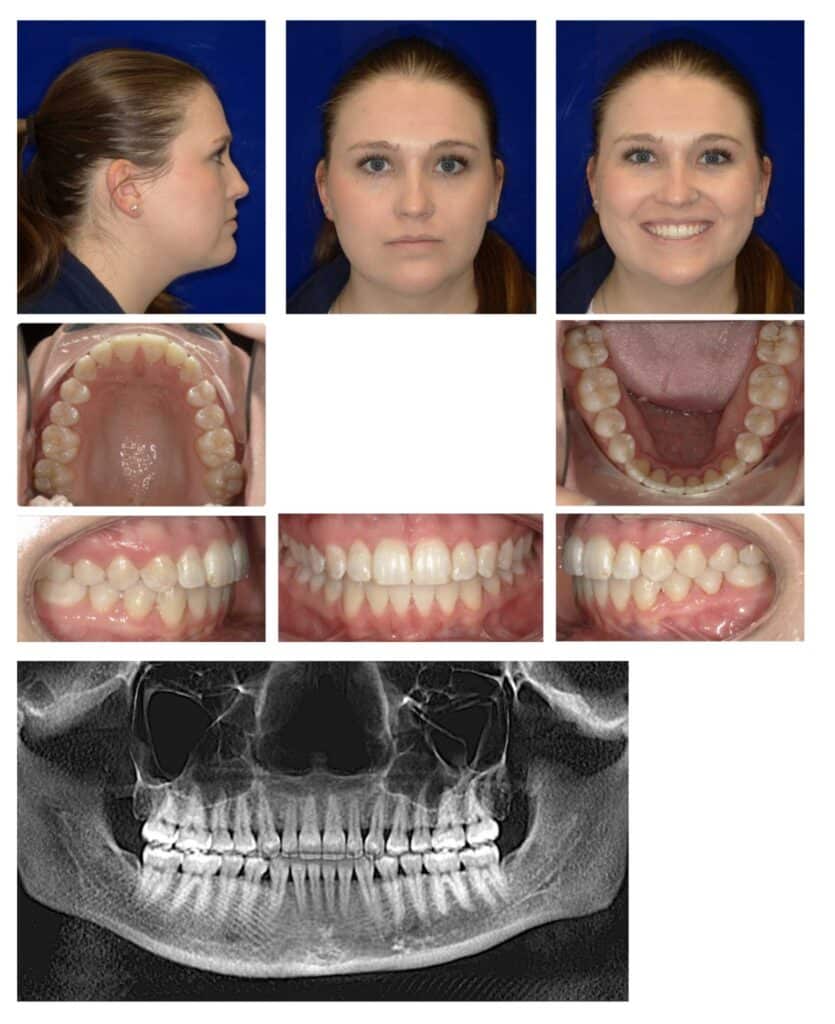
All treatment objectives were achieved (Figure 8), with the open bite resolved without the use of vertical elastics. Using FXClear aligners in this Class III open bite case provided better control of vertical, transverse, and AP compared with fixed appliances. While preventing unwanted tooth movement, all rotations were corrected and crowding eliminated efficiently to achieve a high-quality finish.
Treatment metrics:
- Treatment Time: 15 months
- Total Number of Stages: 46
- Total Number of Refinements: 2
- Total Number of Office Treatment Visits: 3
In combination with FXClear aligner treatment, the practice remotely monitors fit and progress with AI-driven technology from DentalMonitoring. Regular remote evaluations have allowed a significant reduction in the number of required in-office visits while improving clinical control and treatment quality.
Standard retention consists of a mandibular bonded retainer (3=3) and a maxillary Essix retainer. For our open-bite cases, a mandibular Essix retainer is additionally prescribed and worn over the bonded retainer for approximately 10 hours nightly to prevent posterior eruption that could result in relapse of the open bite.
Conclusion
Since adopting the FXClear aligner system from OrthoFX, we now consistently observe superior finishes in far fewer aligners and attachments. Optimal treatment outcomes appear to be strongly influenced by the characteristics of the polymer.
First, FXClear aligners deliver lighter forces that improve patient acceptance while allowing a greater range of movement per aligner. This results in better control of tooth movement in all planes and enables more movement per stage.
Second, these material properties allow substantially less overcorrection to be built into the appliance, supporting more efficient movement and more detailed finishes.
Third, the polymer hugs the teeth so well and delivers forces so effectively that refinements due to aligner unseating have essentially become a thing of the past. In an in-office review of 100 cases, refinements related to unseating occurred in only four patients, each requiring just one refinement.
Furthermore, our experience is consistent with the preliminary findings of an independent study indicating that FXClear offers fewer office visits, fewer aligners, and greater predictability than the Invisalign aligner system.3 We would also add that, in addition to the color stability and comfort our patients appreciate, we routinely finish with excellent posterior occlusion.
When combined with remote monitoring, FXClear represents a significant advancement in aligner therapy in a practice with more than two decades of aligner experience. Similar to the automotive industry’s concept of fit and finish as a way to define and measure quality, these advancements allow the best “fit and finish” for aligner treatment. OP
All photos courtesy of Dr Terry Sellke.
References
- Vijayashree, U., & Raghavan, R. (2015). Biological response at the cellular level within the periodontal ligament on application of orthodontic force – An update. Journal of International Oral Health, 7(9), 1–5.
- Wu, J. L., Liu, Y. F., Peng, W., Dong, H. Y., & Zhang, J. X. (2018). A biomechanical case study on the optimal orthodontic force on the maxillary canine tooth based on finite element analysis. Journal of Zhejiang University. Science. B, 19(7), 535–546. https://doi.org/10.1631/jzus.B1700195
- Werner A. New study finds OrthoFX aligners may offer greater efficiency and predictability. Orthodontic Products. April 14, 2026. Available at: Orthodontic Products article.
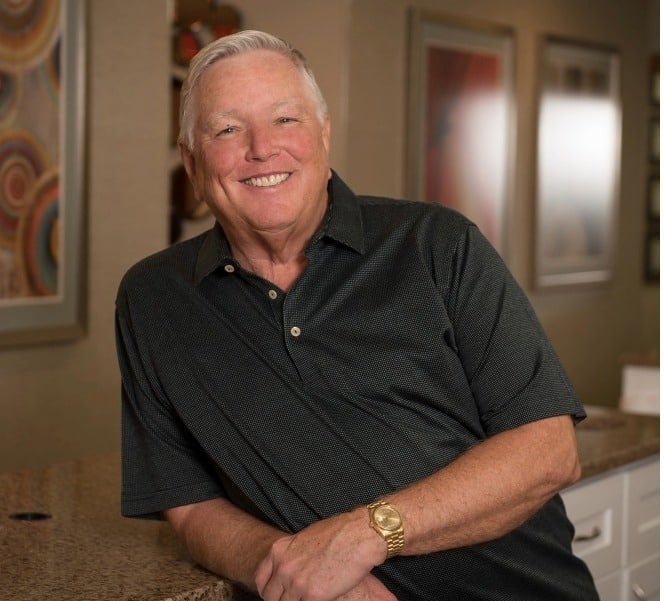
Terry Sellke, DDS, MS, has private practices in Grayslake, Antioch, and Gurnee, Illinois. He relentlessly incorporates new technologies and systems enhancements to achieve exceptional results with shorter and fewer appointments and fewer months in treatment. Sellke served as a clinical professor and co-director of the orthodontic clinic at University of Illinois at Chicago for 36 years and continues to lecture at the school and worldwide on innovations in orthodontics.