Inside the latest AAO-recognized technologies advancing the specialty—from robotic sterilization and AI-driven custom metal brackets to a novel Class II corrector, efficient TMD management, and sustainable 3D printing materials.
By Alison Werner
The American Association of Orthodontists (AAO) has named Zeeno Sterile and Celebrace as the winners of the 2026 Ortho Innovator Award. The award, part of the AAO’s Innovation & Transformation Fund, recognizes companies developing groundbreaking technologies that address key challenges in clinical and practice management workflows.
This year’s winners focus on automating historically manual processes—instrument sterilization and bracket placement—to improve efficiency, safety, and predictability. In addition, three honorable mentions were awarded to the Casper Class II Corrector, the Owen Tripod Splint, and a biodegradable 3D printing resin, each tackling distinct challenges in patient care and practice sustainability.
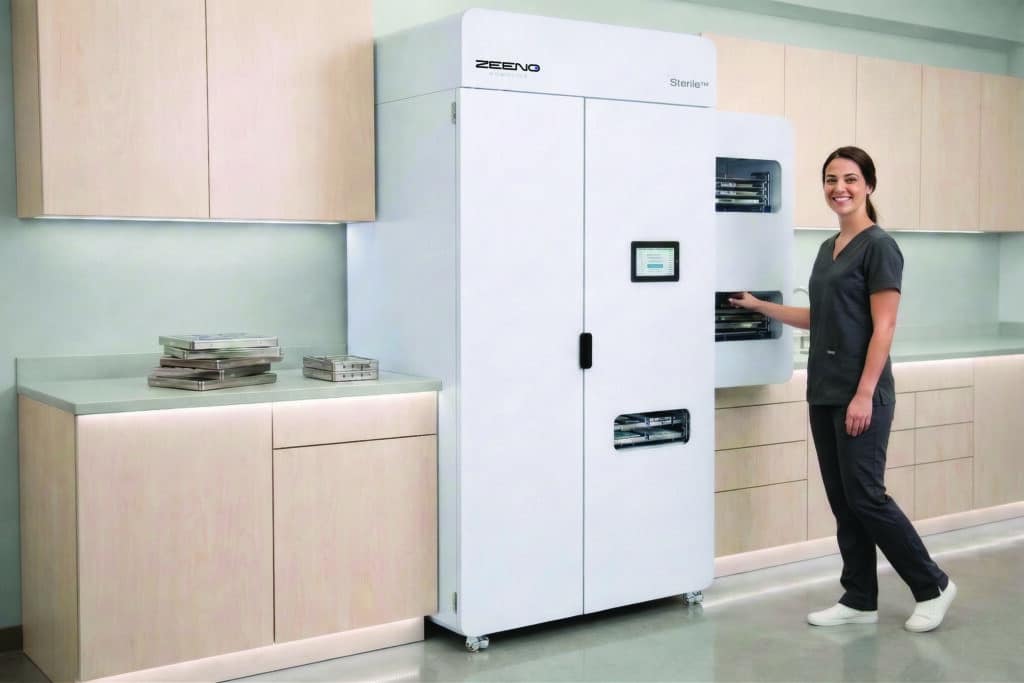
Winner: Zeeno Sterile—Automating the Sterilization Workflow
For decades, the sterilization area has remained one of the most manual, labor-intensive, and high-risk parts of an orthodontic practice. Zeeno Robotics, co-founded by Marc Lemchen, DMD, Todd Blankenbecler, and Chester Wang, aims to change that with Zeeno Sterile, a fully automated, robotic system designed to handle the entire instrument sterilization process.
The Zeeno Sterile unit is designed to manage the workflow from start to finish. A staff member places used instrument cassettes into an input slot, and the system takes over—cleaning, wrapping, sterilizing in one of its dual autoclaves, and placing the finished, sterile cassettes on a shelf, ready for use. The process is designed to keep pace with a busy practice, with the base model featuring two sterilizing units that can each hold six cassettes for a 30-minute sterilization cycle.
The system addresses several critical issues facing practices today, most notably staffing shortages. “Every orthodontist and dentist tells you it’s so hard to get staff now,” Lemchen says. “This addresses that part of our problem. It also makes us less dependent on people showing up to work every morning.”
By automating the process, Zeeno Sterile also introduces a level of documentation and consistency that is difficult to achieve manually. The system monitors and logs each cycle, ensuring that temperature and time requirements are met and documented. “We have to be able to access that and monitor it,” Lemchen explains. “We can document successful sterilization, so we don’t have a day that goes by that, oh, we thought we sterilized everything.”
Lemchen also sees the technology as a powerful practice differentiator. In an era where patients associate technology with a higher quality of care, visible innovation can have a significant impact. “Visible technology is the wow factor,” he says. “It’s the thing that makes the parent go home and say, ‘I took Danny to the orthodontist, you wouldn’t believe they’re using robots now.’ People associate technology with quality of care, and this is another way of differentiating your practice.”
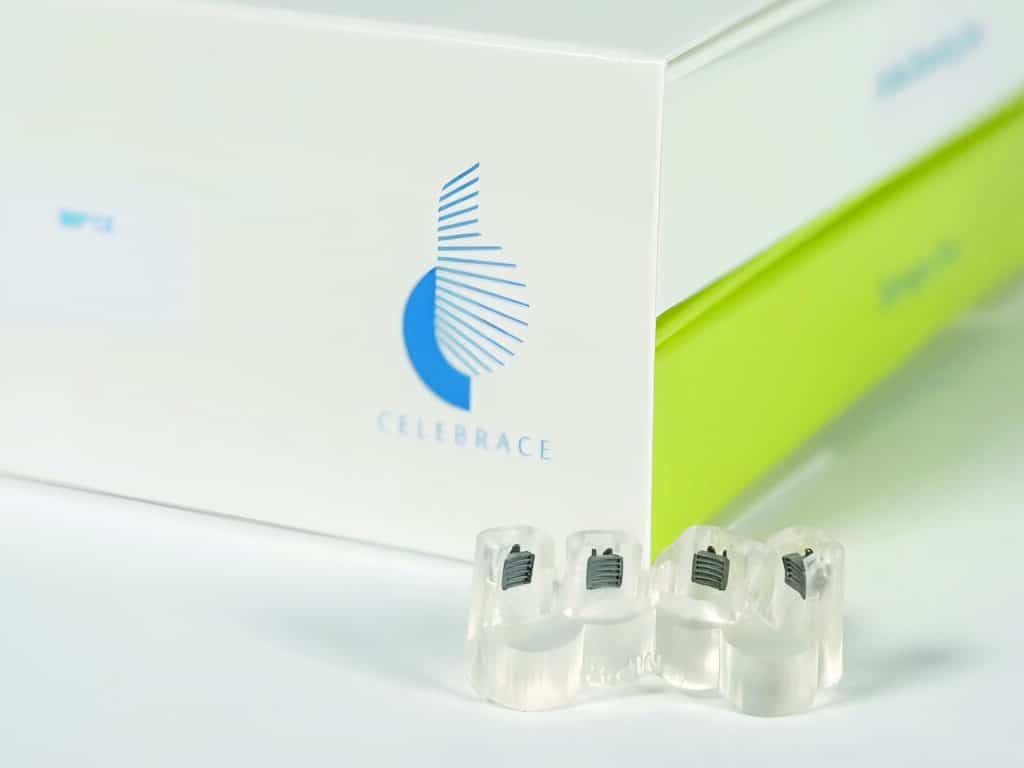
Winner: Celebrace—A Fully Digital, AI-Powered Custom Metal Braces System
The second winner, Celebrace, brings a fully digital workflow to fixed appliances with its AI-powered system for creating 3D-printed custom metal brackets. Developed by orthodontist Mehdi Peikar, DDS, PhD, MS, the system moves beyond the one-size-fits-all prescriptions of traditional bracket systems.
The Celebrace workflow begins with an intraoral scan—and an optional CBCT—to generate a virtual treatment plan. Upon approval, the software reverse-engineers the ideal tip and torque for each tooth.
Translating these digital plans into metal required Celebrace to develop a highly complex, proprietary 3D printing method. While custom ceramic brackets exist, Peikar focused on metal because it remains the industry’s overwhelming preference. Clinically, he also prefers it because “the wings don’t break” and the “friction is lower.” Furthermore, unlike traditional injection-molded stock brackets, which inherently have slightly divergent slots, 3D printing creates perfectly parallel slot walls for highly accurate wire expression. Doctors can even request custom slot sizes, such as a bi-dimensional setup.
This level of manufacturing customization offers several clinical advantages, primarily by eliminating the inherent inefficiencies of stock brackets. Because the 3D-printed bases can be made variably thick or thin, doctors can place brackets in extreme positions—such as working around severe crowding or placing them higher for aesthetics—without altering the planned torque. As a result, treatment proceeds much more directly, reducing the need for manual wire bending and mid-treatment bracket repositioning.
Finally, practice efficiency is enhanced by delivering the custom brackets in 3D-printed indirect bonding (IDB) trays, allowing assistants to place them with precision. Ultimately, Peikar sees this digital evolution as a way to give orthodontists complete control over their clinical outcomes. “The whole goal here is we don’t drop off doctors a few blocks from their destination,” he says. “We drop them off as close as possible to what they pictured from the beginning of the trip.”
Honorable Mentions
Three other innovations received honorable mentions for their unique contributions to orthodontic care and practice management.
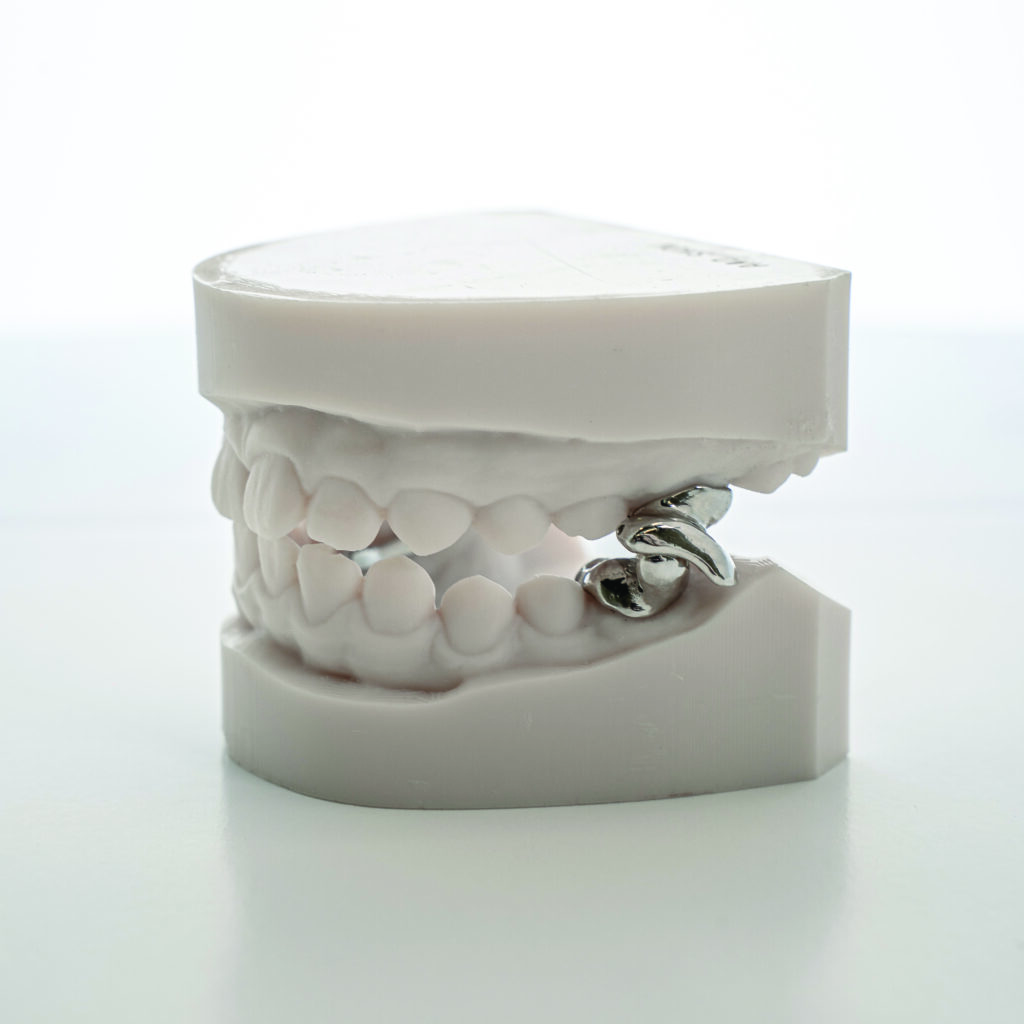
Casper Class II Corrector: Developed by Neil Warshawsky, DDS, MS, the Casper Class II Corrector is a custom, 3D-printed fixed appliance designed to address both the anteroposterior and vertical dimensions of Class II malocclusions. Inspired by the mechanics of the temporomandibular joint, the appliance guides mandibular growth with a comfort and predictability that Warshawsky felt was missing from traditional appliances like the Herbst. “Everybody talks about Class II as an AP problem. I got news for you. Class II is a vertical problem as well,” he says. The system leverages a fully digital workflow and has been used in a wide range of cases, from young children to adults with sleep apnea.
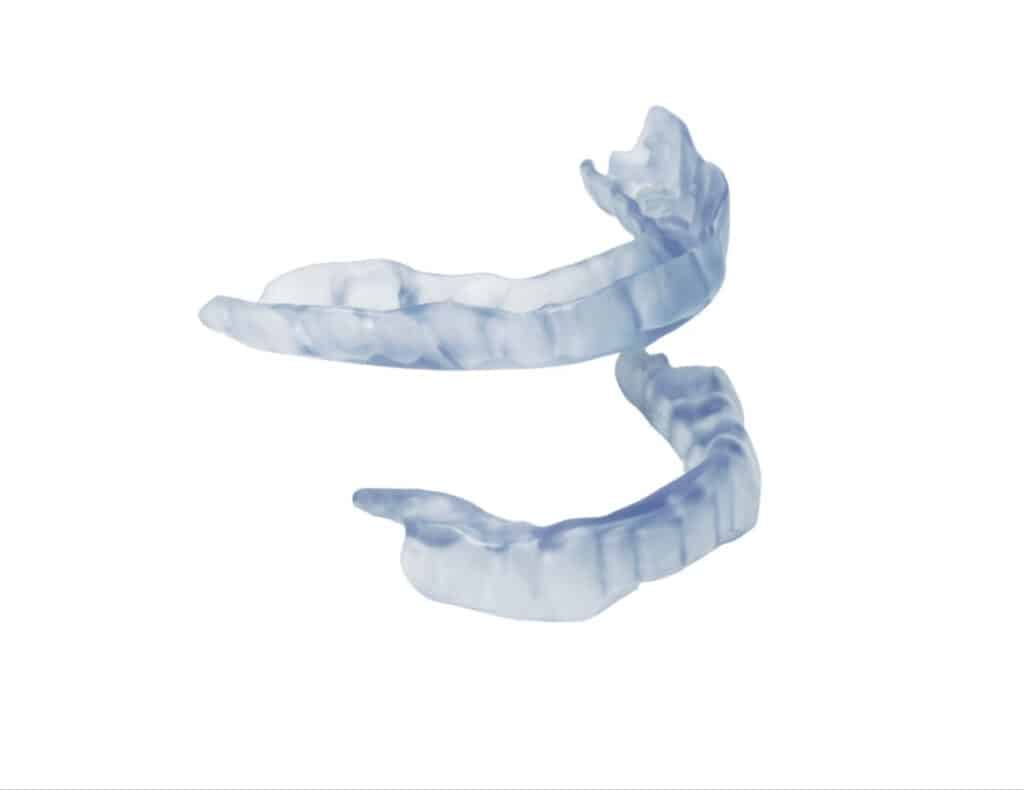
Owen Tripod Splint: Brandon Owen, DDS, MS, received recognition for the Owen Tripod Splint, a novel solution for TMD management. The 3D-printed, two-piece appliance was designed to provide the safety of a full-coverage splint with the efficiency of simpler, anterior-only deprogrammers. “I asked myself, can I figure out a way to do something that’s quick and easy to use… but that gives the protection of the full coverage splint,” Owen explains. The result is a system that dramatically reduces adjustment time, allowing orthodontists to integrate TMJ treatment profitably into their regular schedule instead of treating it as a “practice killer.”

Biodegradable 3D Printing Resin: Addressing the growing problem of plastic waste in orthodontics, Julianna Parizotto, DDS, MSc, PhD, developed Fab-to-Fry, a biodegradable 3D printing resin for orthodontic models made from upcycled waste cooking oil. The project stemmed from her concern over the thousands of non-recyclable printed models that end up in landfills. “What truly made it special for me was creating the material that actually contributes to the circular economy,” she says. The solvent-free resin has mechanical properties comparable to traditional resins, offering a sustainable alternative for fabricating aligner models without compromising clinical quality. OP
Opening photo: ID 41715278 © Bacho12345 | Dreamstime.com
Alison Werner is chief editor of Orthodontic Products.