The company’s latest wave of updates spans CBCT imaging, intraoral scanning, cloud collaboration, and hardware access models—several of which target challenges orthodontists face daily.
By Alison Werner
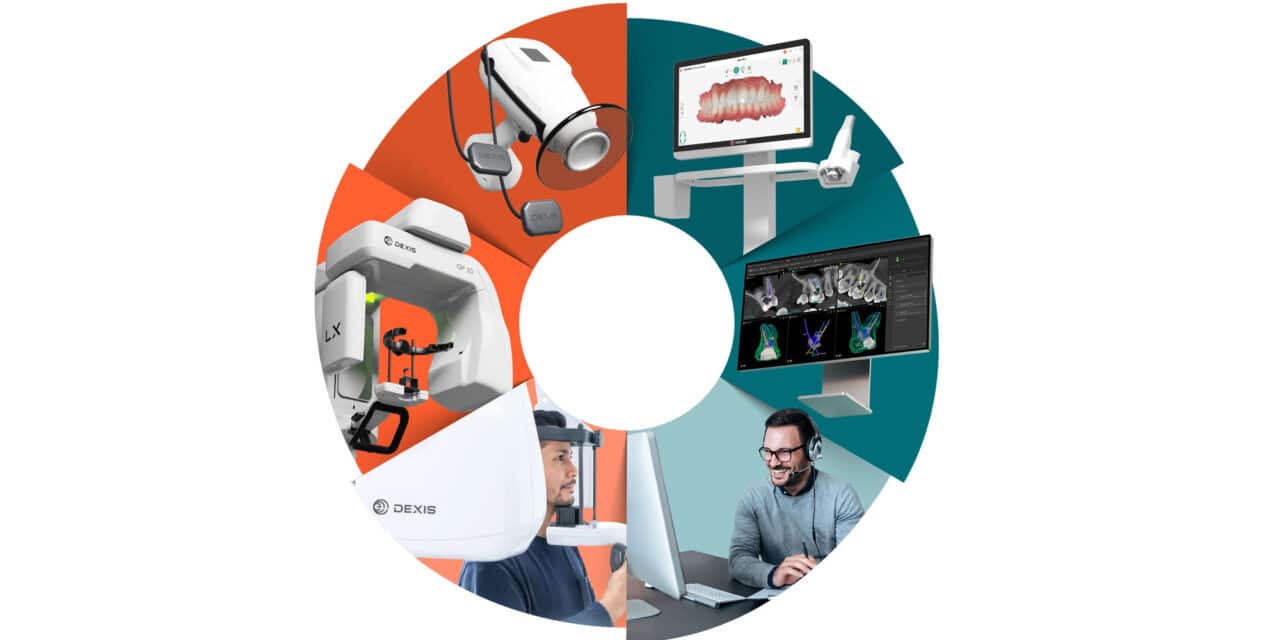
DEXIS announced a coordinated set of innovations across its connected imaging ecosystem, spanning hardware, software, cloud services, education, and new acquisition models. Unveiled during the company’s ILLUMINATE virtual keynote on September 23, the updates touch nearly every stage of the digital imaging workflow—from image capture and diagnostics to laboratory collaboration and practice support.
Among the announcements are the NOMAD Pro 3 handheld X-ray system, a Motion Correction feature for the ORTHOPANTOMOGRAPH OP 3D LX and EX CBCT units, a new SEAT Protocol within IS ScanFlow to guide scanbody-based implant workflows, a new slim tip for the DEXIS Imprevo intraoral scanner, an expanded cloud platform now called DEXIS IOS Cloud, a new Endodontic Module for DTX Studio Clinic, broader third-party integrations, and the introduction of a Hardware-as-a-Service subscription model.
While the portfolio serves a broad range of dental professionals, several of the updates carry particular significance for orthodontic practices. Robert Befidi, president of DEXIS, spoke with Orthodontic Products about where these innovations intersect with orthodontic workflows and what clinicians should know as they evaluate the new tools.
Tackling Patient Motion in CBCT Imaging
One of the most immediately relevant updates for orthodontists is the Motion Correction feature for the OP 3D LX and EX. Patient movement during CBCT scans is a persistent challenge in orthodontic imaging, particularly with younger patients who may struggle to remain still throughout a scan. Even minor motion can introduce artifacts that compromise image clarity and complicate interpretation.
“Patient movement is one of the most common challenges in CBCT imaging,” said Befidi. “During development, we focused on the real-world situations clinicians encounter every day, particularly when working with younger patients, patients who are anxious, or anyone who may have difficulty remaining completely still throughout the scan.”
The feature is designed to minimize the visual impact of motion-related artifacts and support image clarity when movement occurs. Importantly, it is delivered through a software update, meaning existing users of the OP 3D LX and EX can access the capability without purchasing new hardware or changing their scanning protocols.
Befidi cautioned against over reliance on the feature, however. “Motion Correction is not intended to replace proper patient positioning or compensate for excessive movement,” he said. “Rather, it’s an additional tool that helps address a common imaging challenge and preserve image quality when motion occurs.”
He added that well-positioned images remain essential, particularly as AI-driven diagnostic tools increasingly rely on quality input to produce meaningful segmentation and findings.
A Slim Tip Designed for Difficult Anatomies
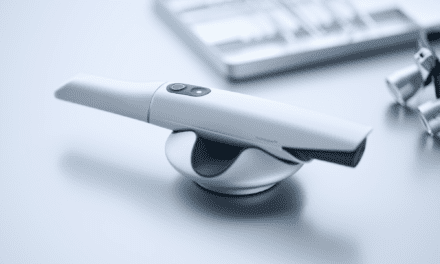
On the intraoral scanning side, DEXIS is introducing a new slim tip for the DEXIS Imprevo scanner. While intraoral scanners have become a standard tool in many orthodontic practices, scanning can still present challenges in patients with smaller mouths, limited opening, or hard-to-reach posterior areas—situations orthodontists encounter regularly, especially in adolescent patients.
“For orthodontists, that can mean easier scanning in smaller mouths, hard-to-reach posterior areas, and for patients with limited opening, helping create a more comfortable and efficient scanning experience,” Befidi said.
According to DEXIS, the slim tip is designed to provide greater access and maneuverability in these challenging anatomies without sacrificing scan quality. For practices that rely on digital impressions for aligner treatment planning, indirect bonding, or appliance fabrication, improved access in difficult cases could translate to fewer rescans and a smoother chairside experience.
Cloud Collaboration and an Open Ecosystem
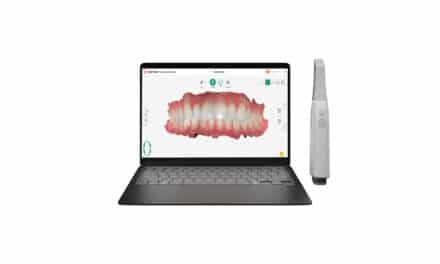
On the collaboration side, DEXIS IOS Cloud—the company’s cloud-based platform formerly known as IS Connect—is getting an expansion. The platform now features an updated user experience and new integration with 3Shape, giving clinicians and laboratory partners more flexible access to scanning workflows and data.
For orthodontists who work closely with labs on appliance fabrication or collaborate with other specialists on multidisciplinary cases, cloud-based data sharing can reduce friction in the handoff process. DEXIS is also expanding integrations with Asiga and SmileGrid, further broadening the range of third-party tools that connect to its ecosystem.
When asked what “open ecosystem” means in practice for a clinician evaluating these updates, Befidi framed it around flexibility. “Our approach to an open ecosystem is centered on helping customers connect imaging, scanning, planning, and collaboration workflows without requiring them to work within a closed environment,” he said. “In practical terms, it means enabling data and workflows to move more easily between systems, helping practices maintain the flexibility to use the technologies they prefer while benefiting from a more connected experience.”
For orthodontic practices that often use a mix of imaging, scanning, treatment planning, and practice management platforms from different vendors, this approach to interoperability addresses a real operational concern.
A Subscription Model for Hardware Access
Rounding out the announcements is a Hardware-as-a-Service model, launching first as a subscription for the DEXIS Ti2 intraoral sensor. The program combines predictable monthly payments, dedicated support, and access to the technology without a significant upfront capital investment.
Befidi noted the program is still in its early stages and is currently offered on a limited basis. “Interest has come from a variety of practice types, particularly those looking for more predictable technology spending, greater financial flexibility, and an alternative to traditional capital equipment purchases,” he said.
While the Ti2 sensor is a 2D imaging tool used more commonly in general dentistry, the subscription model itself could shift how practices acquire technology. Befidi says the company plans to evaluate opportunities to expand the model across additional parts of its portfolio over time.
A Connected Approach to Digital Dentistry
The through-line across the announcements is connectivity—between imaging modalities, between clinicians and labs, and between DEXIS hardware and third-party platforms. For Befidi, that connectivity is the point.
“These advancements reflect our focus on helping clinicians access the information they need more efficiently while supporting a connected digital workflow,” Befidi said. OP
Photo: DEXIS
Alison Werner is chief editor of Orthodontic Products.