As digital workflows become standard, experts emphasize the need for updated protocols and rigorous staff training to ensure patient and team safety.
By Jane Kollmer
Infection control is a foundational component of orthodontic practice, but the integration of digital technologies like 3D printing and intraoral scanning introduces a new layer of complexity. As practices adopt these tools, they must also adapt their protocols for disinfection, cleaning, and sterilization to protect patients, staff, and expensive equipment.
According to Jackie Dorst, a speaker, consultant, and expert on infection control, sterilization is a multifaceted process that demands constant vigilance.
“It requires trained staff who are up to date on the procedures, adequate space to separate dirty from clean to sterile so that you’re not cross-contaminating, up-to-date equipment, and tests to validate that all of that equipment and your process is working,” she said.
NAVIGATING THE REGULATORY LANDSCAPE
Because orthodontic practices are exposed to blood and saliva, they have a legal and ethical responsibility to maintain robust infection control protocols. A web of regulatory agencies at the federal and state levels oversees these standards. The U.S. Food and Drug Administration (FDA), for instance, regulates all medical equipment. Any new technology, including an intraoral scanner, must receive FDA 510k approval or clearance, a process that requires manufacturers to provide detailed instructions for use (IFU) covering proper cleaning and sterilization.
The U.S. Environmental Protection Agency (EPA) regulates the chemical disinfectants used on equipment and surfaces. Disinfectants in a healthcare setting must appear on the EPA’s Registered List S, confirming their effectiveness against bloodborne pathogens, and List TB, for their ability to kill mycobacterium tuberculosis. This is a critical benchmark, as tuberculosis is a spore-forming bacteria, and spores are among the most resilient microorganisms. Consequently, U.S. law mandates a weekly spore test on every sterilizer.
Employee safety falls under the purview of the Occupational Safety and Health Administration (OSHA), which sets guidelines for handling hazardous materials. The resin used in 3D printing, for example, is highly toxic and requires specific handling protocols to prevent skin contact or inhalation. Manufacturers must provide a safety data sheet (SDS) for these chemicals, and orthodontic offices are legally required to maintain copies and train employees on safe usage.
“If the employees don’t have training, they may use a chemical or the technology equipment inappropriately and cause harm to themselves trying to sterilize or disinfect that piece of equipment,” Dorst said.
Sterilization standards are guided by the Association for the Advancement of Medical Instrumentation (AAMI), an organization accredited by the American National Standards Institute (ANSI). Its ST79 document is the comprehensive guide for steam sterilization in healthcare facilities. Rounding out the oversight are state dental boards, which enforce each state’s Dental Practice Act (DPA) and can set their own specific infection control guidelines.
ASSESSING RISK WITH SPAULDING’S CLASSIFICATION
To determine the appropriate level of decontamination, orthodontic practices rely on Spaulding’s Instrument Classification, a system that categorizes devices based on their associated risk of infection. The system divides instruments into three primary categories: critical, semi-critical, and non-critical.
Critical instruments, such as scalpels, explorers, scalers, and band pushers, are those that penetrate sterile tissue or the bloodstream and require full sterilization. Semi-critical items, including orthodontic pliers, mouth mirrors, cheek retractors, and impression trays, come into contact with mucous membranes or non-intact skin. These also require sterilization or, at minimum, high-level disinfection to prevent cross-contamination.
Non-critical instruments are those that only touch intact skin, like X-ray heads, facebows, and patient headrests. These items require intermediate-level disinfection. However, it is crucial to follow the manufacturer’s IFU, as harsh chemical disinfectants can be corrosive and damage sensitive electronic components, wiring, or touch screens on modern equipment.
Dorst notes that there is an unofficial fourth category: single-use items. These disposable products, often made of plastic, are marked with a symbol of a number 2 with a line through it— —and must be discarded after one use. For most intraoral scanners, the sleeve that covers the wand tip falls into this category.
THE CRITICAL ROLE OF STAFF TRAINING
Orthodontic assistants are the frontline defense in infection control, but effective training can be a significant challenge. Dorst points to the issue of “legacy errors,” where incorrect procedures are passed down from senior team members to new hires. Conversely, new staff may bring improper habits from previous offices, or they may encounter resistance when trying to correct outdated protocols.
To combat these issues, Dorst recommends that every practice designate an orthodontic assistant as the Infection Control Coordinator. This individual should be responsible for staying current on regulations and best practices, training new team members, and ensuring all checklists and records are properly maintained.
“The Infection Control Coordinator can be the IC leader, so that when questions come up, they know where to research it and find the answers,” Dorst said.
Professional organizations can be a valuable resource. Dorst suggests the designated coordinator join the Association for Dental Safety to receive its bimonthly newsletter and access monthly webinars. The Dental Assistant National Board also offers a certification in infection control, while the AAO Staff Club provides educational resources on OSHA and infection control.
ESTABLISHING CONSISTENT AND EFFECTIVE PROTOCOLS
At Toothman Orthodontics in Hagerstown, Md, compliance coordinator Renee McNally, CDA, COA, CPFDA, CDIPC, RDA (AMT), BS, serves as the practice’s infection control leader. She stresses the importance of documenting everything and ensuring the entire team understands the rationale behind each protocol, which builds resilience in case a key team member is absent.
Consistency is paramount. Dorst advises creating detailed, step-by-step checklists for every disinfection and sterilization process. These checklists, combined with an annual training review and frequent testing of all processes, help prevent legacy errors and ensure protocols are followed correctly.
Visual aids can also be powerful training tools. Dorst recommends using manufacturers’ training videos or having staff record a video on their phones during a new equipment installation to capture the exact procedure. She also stresses that IFUs should be readily available in the sterilization area, either in print or digital format. McNally is currently working to digitize all IFUs and protocols at her practice, noting that modern autoclaves are also helping by automatically monitoring and documenting sterilization cycles.
ADDRESSING THE CHALLENGES OF NEW TECHNOLOGIES
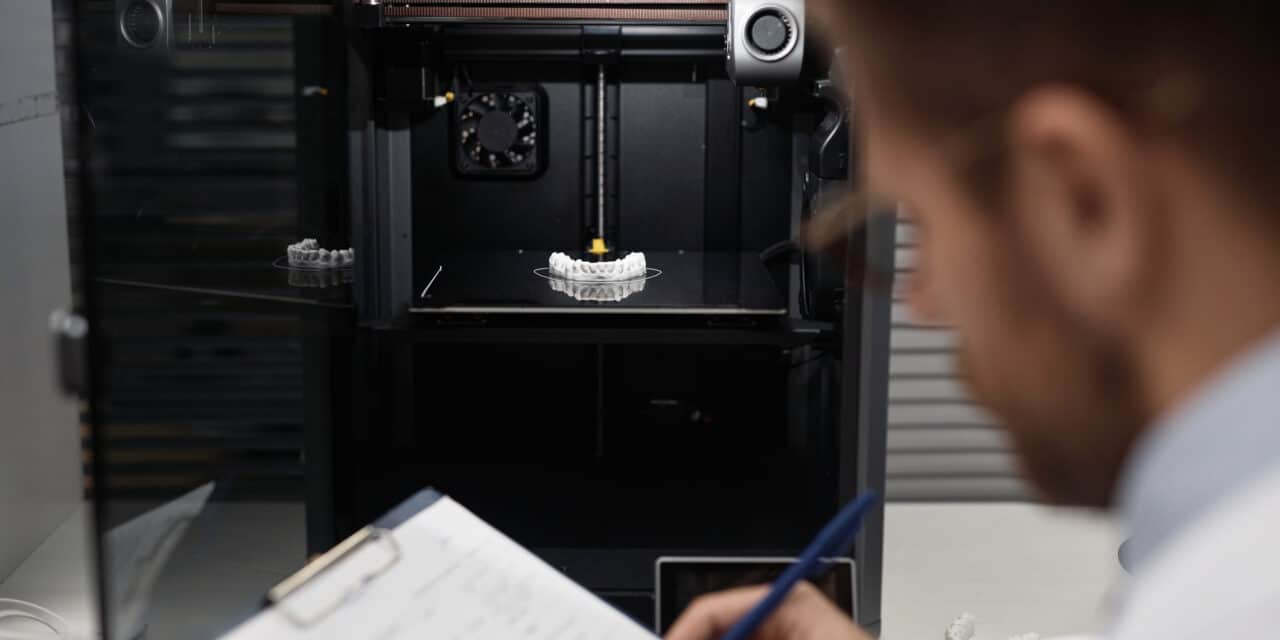
While many dental assisting programs now include robust infection control training, the rapid evolution of digital orthodontics presents a learning curve for everyone. McNally identifies 3D printing as a primary area of concern. Her office maintains a clean lab for its two 3D printers, but the main challenge is not contamination from patients but rather the safe handling of the chemical materials involved.
“I’m finding out for the first time about how to handle some of the different liquids and how they should be stored and what precautions the lab techs need to take, such as wearing a mask and gloves,” McNally said.
Proper disposal of these chemicals also requires a clear understanding of regulations. “There’s just a lot of things that can be made 3D, and as a field we’re not really up as much on the hazards to the dental assistant and the lab techs when we’re introducing those new technologies,” she added.
As digital workflows become more integrated into daily practice, a proactive and educated approach to infection control is no longer optional—it is essential. By staying informed, investing in continuous staff training, and adapting protocols to meet the demands of modern tools, orthodontic practices can ensure the safety of their patients and team while protecting their investment in technology. OP
Photo: ID 304844404 @ Seventyfourimages | Dreamstime.com
Jane Kollmer is a contributing writer for Orthodontic Products.