

Once the domain of expanders and partial braces, early interceptive care is being transformed by clear aligners designed for the unique challenges of mixed dentition.
By Alison Werner
Phase I orthodontic treatment has long been a foundational part of the specialty, a critical window to intercept developing malocclusions, guide growth, and simplify future comprehensive care. For decades, the tools for this work were familiar and tangible: metal expanders, partial braces, and functional appliances. But a significant shift is underway. Clear aligners, once reserved for older teens and adults, have decisively entered the early treatment space, offering a digital-first alternative that is reshaping clinical workflows, patient experiences, and practice dynamics.
This evolution is driven by a convergence of technological advancement and changing patient expectations. The same benefits that fueled the adult aligner boom—aesthetics, comfort, and improved oral hygiene—are proving equally compelling for young patients and their parents. The removability of aligners eliminates dietary restrictions and simplifies brushing and flossing, addressing common challenges associated with fixed appliances in children. For a generation of parents who may have experienced traditional orthodontics themselves, the appeal of a less invasive, more lifestyle-friendly option is powerful.
Yet, the adoption of Phase I aligner therapy has not been without clinical skepticism. The primary concern has long centered on compliance. Orthodontists accustomed to the fixed nature of brackets and wires initially questioned whether children between the ages of 6 and 10 could be trusted to wear removable appliances for the prescribed 20 to 22 hours a day. The unique anatomy of mixed dentition—with its combination of primary and permanent teeth, short clinical crowns, and ongoing eruption—also presented formidable biomechanical challenges that early aligner systems were not designed to address.
However, as more clinicians have integrated these systems, a surprising consensus has emerged: young patients are often exceptionally compliant, in many cases more so than their teenage or adult counterparts. Dan Lill, DDS, an orthodontist practicing in Winchester, Va, notes that success is rooted in effective education and parental involvement. “Parents, who may initially have questions and doubts about their child’s compliance, frequently realize that younger patients are actually the most compliant,” Lill says. This sentiment is echoed by practitioners across different aligner platforms, who attribute the high adherence rate to a combination of factors: younger children’s eagerness to please, the novelty of the technology, and the active role parents play in the treatment process.
Supporting this clinical confidence is a new generation of aligner systems specifically engineered for the biomechanical challenges of mixed dentition. Manufacturers have optimized R&D to address eruption management, arch expansion, and retention on short primary crowns. From eruption-space “domes” and specialized attachments to protocol-driven staging, these advances have shifted Phase I aligner therapy from a limited use case to a standard early treatment option. Moreover, digital planning platforms now provide the precision to visualize and sequence movements in a growing mouth with a level of control previously unattainable.
This digital workflow is also enhancing communication and case acceptance. Visualizing a proposed treatment plan on a screen helps parents understand the clinical goals and motivates young patients by showing them the expected outcome. For practitioners, the transition brings significant operational advantages. Phase I aligner cases often require fewer and shorter appointments, with a marked reduction in emergency visits for broken brackets or poking wires. This increased efficiency allows for more flexible scheduling and can improve a practice’s overall productivity.
As the market matures, leading aligner companies are differentiating their offerings with unique features, from integrated Class II correction systems to habit-breaking auxiliaries and flexible in-office fabrication models. In the following pages, representatives and clinical users from four key players in the space—Align Technology, Angel Aligner, Ormco, and uLab Systems—share their approaches to this burgeoning field, detailing the technologies they’ve developed and how orthodontists are using them to set a new standard for early interceptive care.
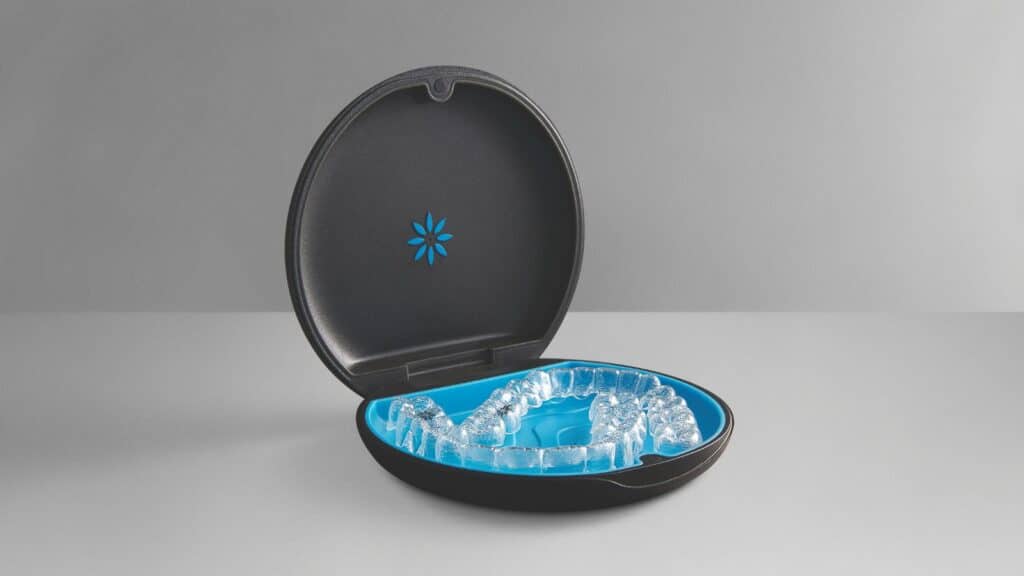
Align Technology: Pioneering the Phase I Aligner Market with Invisalign First
When Align Technology introduced Invisalign First in 2018, it created a new category in clear aligner therapy. The system was the first of its kind designed specifically for the anatomical and clinical needs of younger patients in early mixed dentition. The move was a direct response to the challenge of applying an adult-focused technology to the dynamic environment of a child’s mouth. “Younger patients have shorter clinical crowns and anatomical differences that benefit from specific features for Phase 1 treatment,” says Mitra Derakhshan, DDS, executive vice president and chief clinical officer at Align Technology. Invisalign First was engineered to provide those features, aiming to intercept and prevent more severe issues while creating a proper foundation for erupting permanent teeth.
The system is built on a suite of proprietary technologies tailored for patients ages 6 to 10. To address retention on short clinical crowns, it uses optimized retention attachments that are automatically placed and sized by the software based on the doctor’s prescription. For predictable dental arch expansion, SmartStage technology and SmartForce attachments work in tandem to produce the precise contacts and forces needed. Perhaps most critically, the system features expanded eruption compensation capabilities, including an advanced algorithm that creates and maintains space for erupting incisors, canines, and premolars. These clinical tools are integrated into the ClinCheck Pro software, which includes Phase I-specific features like primary tooth grids to streamline the digital treatment planning process. The goal, Derakhshan notes, is to address a broad range of common Phase I needs, including arch development, expansion, spacing and crowding, and aesthetic alignment.
For Dan Lill, DDS, an early adopter who has since treated more than 1,500 cases, Invisalign First has become his primary tool for early intervention. “The predictable clinical results from early intervention provide a first-line option for patients to realize the benefits of using aligners as the best tool even in the most challenging cases,” he says. He finds the system particularly effective for managing crowding, crossbites, and incisor protrusions, noting that a well-developed plan can predictably guide eruption, improve arch coordination, and modify growth imbalances.
This early treatment, he adds, has a significant downstream impact, often reducing the complexity and duration of Phase II treatment. “Integrating Phase I aligner treatment provides a path for predictable clinical outcomes from start to finish using simplified mechanics under more hygienic conditions compared to traditional analog methods,” says Lill.
Align has continued to build out its early treatment portfolio with the recent launch of the Invisalign Palatal Expander System, its first direct 3D-printed orthodontic device. This addition, intended to work in conjunction with Invisalign First aligners, is designed to give doctors a comprehensive solution for both skeletal and dental expansion. This ecosystem approach, combining advanced hardware like the iTero scanner with sophisticated planning software, is central to Align’s strategy.
“Digital treatment planning starts with an iTero scanner that provides the orthodontist with a high-resolution, interactive image and scan of the child’s teeth,” Derakhshan explains. “This is a great way to ‘show and tell’ for all, including patients and their parents or guardians, to understand the process.”
By aligning clinical predictability with a focus on the patient experience, Invisalign First has effectively catalyzed the industry-wide shift toward digital early intervention, becoming Align Technology’s fastest-growing product offering in the process.

Angel Aligner: Streamlining Phase I with Integrated Auxiliaries
At the 2025 AAO Annual Session, Angel Aligner showcased Angel Aligner KiD, its Phase I system featuring a suite of innovative features designed to tackle the specific challenges of early interceptive treatment. The company’s approach is distinguished by its focus on integrating auxiliaries directly into the aligner design and a highly collaborative relationship with its clinical users.
For orthodontists like Tyler Holt, DDS, MS, who practices in Sacramento, Calif, the switch to Angel Aligner was driven by a search for a product that was not only cost-effective but also clinically advanced. A former high-volume Invisalign First user, Holt transitioned his practice to Angel Aligner after being impressed by its intuitive software and the performance of the aligners.
When it comes to Angel Aligner KiD, Holt points to aligner-integrated tongue tamers—small plastic spurs built into the aligner that are present only when the aligner is worn—and the angelButton as standout auxiliaries. The angelButton is an aligner-integrated elastic attachment that allows orthodontists to use elastics without bonding traditional metal buttons to the teeth. He also highlights the system’s aligner-integrated hook, which can be used to attach elastics or extraoral orthopedic appliances, including headgear or facemask therapy, directly to the aligner without placing partial braces. For Paula Alvarado, DDS, head of clinical excellence at Angel Aligner, this capability proved particularly valuable in treating a young Class III patient. “When I got the option to see the benefits of having an angelHook, using aligners in combination with a face mask and without the need of having braces, I thought that is an amazing idea,” she recalls.
Clinicians also point to the physical properties and design of the aligner as a key advantage. Holt describes a distinct “snap fit” that provides both the clinician and the patient with confidence that the aligner is fully seated. “The plastic is a little stiffer, and so when you put it on, there’s no question that’s on,” he says. Alvarado also highlights the availability of a higher trim line, noting that clinical literature suggests this design facilitates more effective arch expansion than a traditional scalloped trim. This secure fit and structural design, combined with a protocol of placing attachments on nearly every tooth, helps Holt achieve predictable movements and often complete Phase I treatment over 8 to 9 months.
Like clinicians using other systems, both Holt and Alvarado report high compliance among their youngest patients. Holt says his Phase I cohort is often the most cooperative in his practice, with teens less consistent and adults the least. Alvarado, who was initially convinced to try Phase I aligners on her own children, now uses her personal experience to reassure parents. “I think adults are the ones that are less compliant than a kid,” she says. This positive clinical experience is helping to overcome one of the main historical barriers to adoption.
Holt also points to Angel Aligner’s responsiveness to clinician input as an important part of his experience with the system. He describes a development process in which orthodontist feedback is actively incorporated into both the product and the software workflow, reinforcing his confidence in adopting it more broadly across his practice. Paired with what he characterizes as an intuitive planning platform, that responsiveness has made Angel Aligner a system he considers clinically reliable and practical for daily use, particularly in early treatment cases.

Ormco: Spark Junior and the Integration of Class II Correction
Ormco entered the Phase I aligner space in fall 2025 with its Spark Junior system, a solution designed not only to address early mixed dentition but also to integrate Class II correction directly into the aligner workflow. The system was developed in response to clinician demand for a Spark aligner tailored to younger patients, providing a continuous care pathway from childhood to adulthood. “Our customers asked for a Spark aligner designed for early treatment and mixed dentition, with the optional BiteSync integrated Class II correction system,” says Jay Issa, vice president of portfolio management and global marketing at Ormco. This focus on integrated functionality and flexible, two-phase treatment planning defines the Spark Junior approach.
A key differentiator of the system is BiteSync, which synchronizes mandibular advancement with maxillary distalization and dental alignment using an Occlusion Guide and SideBar powered by elastics. This built-in mechanism is designed to reduce or eliminate the need for separate functional appliances, streamlining both the clinical protocol and patient compliance. For Mark N. Coreil, DDS, practicing in Lafayette, La, this feature is a significant advantage. “BiteSync synchronizes mandibular advancement with maxillary distalization and dental alignment via elastics, replacing many separate functional setups in appropriate cases,” he explains. He finds it particularly effective for Class II cases with dental or small mandibular advancement needs.
The Spark Junior system is structured as a distinct two-phase program. Phase I, for patients under 13, includes up to 25 initial stages with unlimited refinements over 1.5 years. Crucially, it allows for a deliberate pause before initiating Phase II, giving clinicians the flexibility to wait for optimal dental development without losing program eligibility. “Phase I with aligners adds scheduling latitude,” Coreil notes. “I can achieve early sagittal/dental goals, stabilize hygiene and habits, and then deliberately pause until eruption is favorable for comprehensive finishing.” This structure provides both clinical and operational predictability, supporting case flow and simplifying parent communication.
The system is supported by Ormco’s broader technological ecosystem, including the Spark Approver digital planning platform. Leveraging StageRx, the software provides modular, color-coded staging protocols to streamline communication with technicians when planning movements around erupting teeth. The platform emphasizes doctor-led control, allowing clinicians to manage potential root collisions, refine sequencing, and adapt the treatment plan to a child’s unique biology. The aligners themselves are made from Ormco’s TruGen material, which, according to the company, is engineered for clarity, comfort, and efficient force delivery.
For orthodontists considering Phase I aligner therapy, Coreil advises a methodical approach focused on case selection. “Start with mixed-dentition cases needing dental alignment, eruption guidance, and mild-to-moderate Class II correction amenable to elastics,” he suggests, while reserving cases requiring heavy skeletal expansion for traditional appliances. By leveraging the system’s integrated mechanics and flexible planning, he says, clinicians can achieve predictable outcomes while enhancing the patient experience. “For families, it’s a cleaner journey with clearer expectations and fewer lifestyle compromises,” he adds.
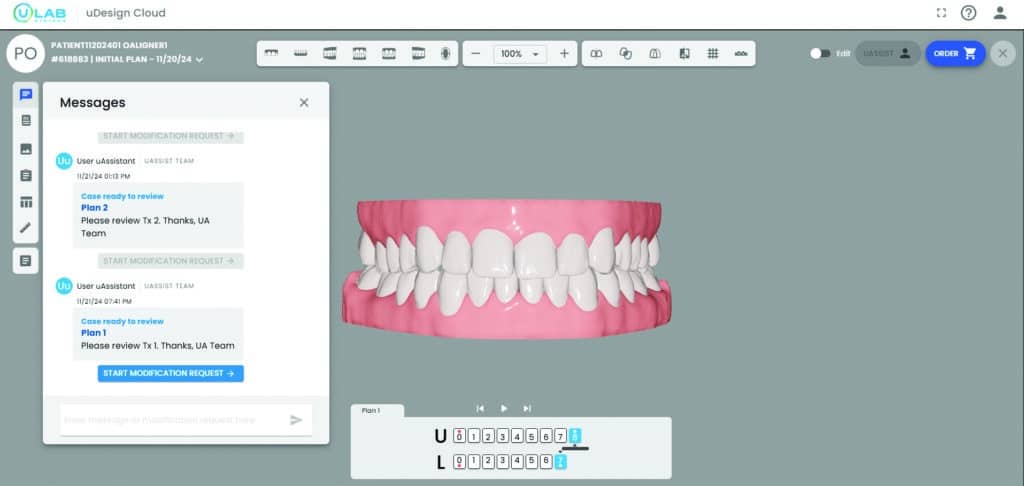
uLab Systems: A Flexible, In-Office Approach to Phase I
Unlike companies offering a dedicated Phase I product, uLab Systems provides orthodontists with a flexible software platform, uDesign, that empowers them to create and produce their own aligner solutions for early treatment. This approach is rooted in providing clinicians with maximum control over both the treatment plan and the production workflow. “We provide offices the ability to really do things how they want to do it,” says Jennifer Bigelow, senior manager of clinical training and product development at uLab. “We don’t really put them in a box.” This philosophy translates into a system where orthodontists can treat Phase I cases with as few or as many aligners as needed, with the option to print them in-office or order them from uLab on an a la carte or bundled basis.
The uDesign software is equipped with several features that are valuable for mixed dentition cases—for example, eruption domes, which function like larger pontics placed over primary teeth to create and preserve space for incoming permanent teeth. “The orthodontist can really go in and treatment plan that case, putting in those eruption domes to create that path of eruption and help to reduce the crowding,” explains Bigelow. The software also allows for the addition of bite ramps to open the bite for crossbite correction, as well as cutouts for buttons and elastics. Furthermore, clinicians can adjust the aligner trim line to accommodate other appliances, such as expanders.
Elsie Tafur Chang, DDS, manager of uLab’s uAssist treatment planning service and a private practitioner, emphasizes the clinical efficiency these features offer for common Phase I malocclusions. She finds that for specific indications, the digital aligner workflow allows for corrections that are often faster than with traditional appliances. “[If I have an anterior crossbite], if I have to cross a tooth, I use the bite ramps and just cross it,” she explains. “I find that very helpful.” She also points to deep bite correction and lower incisor intrusion as movements where the system is particularly effective.
The platform also addresses the dynamic nature of mixed dentition through its flexible refinement capabilities. Because early treatment often involves rapid changes—such as unexpected tooth loss or eruption—clinicians can rescan and replan a case mid-treatment directly within the existing patient record. “You need that facility, that flexibility of a software that can actually let you do that,” says Tafur Chang, noting that while features like eruption domes aim to minimize mid-course corrections, the ability to adapt is essential when “a lot of things can happen” in a growing mouth. Bigelow adds that this workflow allows offices to address tracking issues or compliance lapses immediately, with the option to print refinement aligners in-house to avoid lab delays and keep treatment timelines tight.
The uLab platform is designed to support a seamless two-phase treatment workflow. A clinician can create a Phase I case for a patient and, when the time is right, take a new scan and create a separate Phase II case under the same patient record, keeping all historical data organized and accessible. For doctors who prefer assistance with treatment planning, the uAssist service offers a solution where orthodontists can submit a prescription and have the uLab team of orthodontists and technicians prepare the digital setup for their review.
Ultimately, uLab’s strategy centers on empowering the orthodontist. The ability to print aligners in-office gives practices control over turnaround times and costs, while the software’s versatility allows them to tailor treatment to the specific needs of each young patient. Bigelow sees this flexibility as the core advantage. “We want to put that control in their hands,” she says. “This way they can actually do what they want to do.” OP
| Remote Monitoring in Phase I Aligner Care |
|---|
| Remote monitoring has become a key asset for managing Phase I cases, though implementation varies. Some practices leverage photo-based platforms to catch tracking issues early and reinforce compliance, allowing for extended intervals between office visits. Others opt for a lower-tech approach, spacing appointments 12 to 16 weeks apart and relying on parental vigilance to flag loose attachments or fit changes. Regardless of the method, successful workflows share common priorities: • Set Expectations: Define clear protocols for when parents should report fit concerns. • Align Timing: Schedule reviews—virtual or in-person—around eruption milestones. • Enable Triage: Provide quick access for suspected tracking issues to prevent compounding errors. • Simplify Records: Use photos to track adherence and eruption changes over time. Whether technology-enabled or parent-led, proactive oversight ensures early interceptive goals are met without burdening families with unnecessary chair time. OP |
Opening photo: ID 226429623 © Aaron Amat | Dreamstime.com
Alison Werner is chief editor of Orthodontic Products.