
Orthodontists share how integrated auxiliaries, intuitive software, and Phase I solutions are driving more predictable clear aligner outcomes.
By Jessie Gainor
As clear aligner therapy evolves, orthodontists are seeking systems they say offer greater control, fewer refinements, and simplified biomechanics. Four practitioners—Bryan Lockhart, DDS, Tara Emerick, DDS, MS, Isaak Yelizar, DDS, and Willy Dayan, DDS—shared their clinical experiences with the Angel Aligner system, describing how specific hardware features and digital planning tools are shaping day-to-day efficiency and patient outcomes.
A Natural Transition to iOrtho Software
For many orthodontists, the barrier to adopting a new clear aligner system lies in the digital treatment planning software. Learning a new interface can disrupt established workflows, but the transition to Angel Aligner’s iOrtho software was surprisingly seamless, the doctors said.
“For me, when I was approached with Angel Aligner iOrtho software, it felt natural. I felt like I knew the software from the get-go,” said Yelizar, who has been using Angel Aligner for three years, describing the platform as simplistic and intuitive enough to navigate without external technical support.
Lockhart, who had stepped away from commercial clear aligners to manufacture his own in-office for four years, said the software combined with the system’s hardware was compelling enough to bring him back, calling the decision a “no-brainer.”
The aligner material also shapes how these doctors approach digital setups. Emerick said she alters her treatment planning based on the physical properties of the plastic. “I build in fewer overcorrections and overcompensations,” she said, attributing that to the increased stiffness of the Angel Aligner trays. Because the aligners express force effectively, she plans setups that look much closer to the true desired end result rather than over-engineering movements like leveling a curve of Spee.
Rethinking Biomechanics with the angelButton
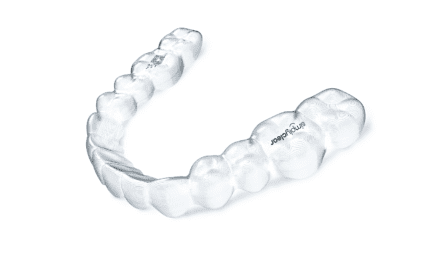
A recurring theme among the four was the clinical utility of the angelButton. Manufactured directly into the aligner, the feature provides a built-in anchorage point, eliminating the time-consuming step of bonding metal or composite buttons to the teeth for elastic wear.
Emerick pairs the integrated button with the Carriere Motion appliance, attaching heavy elastics directly to the angelButton to support expansion and crossbite correction. It works well, she said, as long as there are substantial retention attachments proximal to the button so it doesn’t dislodge the tray.
For Yelizar, the built-in anchorage has opened doors for complex vertical control, particularly in treating gummy smiles without orthognathic surgery. angelButtons connected to TADs, he said, offer “unlimited capability and potential to create different force vectors that were not possible before.”
Lockhart echoed that point. While intruding teeth with TADs and aligners is not new, he said, the angelButton simplifies execution. Traditional methods often require cutting slits into the aligner or bonding buttons to the lingual surfaces of the teeth. “I don’t have to get cute with my design or my treatment plan,” he said. “I just add the buttons and it just makes it so much easier for me to carry out the treatment.”
Dayan added a biomechanical rationale for the integrated design. When clinicians cut into an aligner to accommodate bonded buttons, he said, they are “reducing the amount of geography that you’re holding the teeth with,” which can compromise rotational and tipping control. An integrated button preserves the full “integrity of the aligner wrapped around the tooth” while still delivering the necessary anchorage.
Lockhart offered a few placement pearls for getting the most out of the feature. He plans angelButtons interproximately rather than mid-buccal on the tooth, and flanks them with retentive attachments on either side to keep the aligner from lifting. He also adds unfilled occlusal tabs to the digital plan so patients don’t bite directly on the buttons, which he said can otherwise cause the buttons to fatigue and pop off.
Addressing Mixed Dentition with Angel Aligner KiD
Early interceptive care has historically been dominated by fixed expanders and sectional fixed braces, but clear aligners have decisively entered that space. The doctors described how they use Angel Aligner KiD for Phase I patients.
Emerick recalled a highly sensitive special needs patient who needed Phase I treatment for ectopic upper canines but could not tolerate fixed appliances. Despite the mother’s initial concerns about compliance, the patient “did amazing,” she said, and Emerick was able to guide the canines into position—a result that ultimately led the family to bring in the patient’s siblings for treatment.
Yelizar noted the system means “less material in their mouth,” which is particularly beneficial for young patients. He also uses the system’s Intelligent Ceph System (ICS) to address skeletal discrepancies in growing patients, whether he’s pairing angelHooks with face mask protractions or using an A6 Mandibular Advancement appliance for Class II corrections. “It all comes with just one appliance,” he said.
Pursuing Predictability and Fewer Refinements
Asked to describe the system in a single word or phrase, each doctor chose something that reflects a desire for clinical efficiency: Yelizar said “transformational,” Emerick chose “easy,” Lockhart selected “predictable,” and Dayan pointed to the system’s “comprehensive modification tools,” which he said give him everything he needs in the software “to make those aligners look and act on the teeth exactly as I really want to.”
Predictability, Lockhart said, directly impacts a practice’s overhead and the doctor’s workload. “If I have a software that’s giving me a good setup from the beginning, I’m not doing a ton of back and forth,” he said. Because the aligners express the planned movements accurately, he avoids the fatigue of multiple refinement stages. “I’m not doing this fourth and fifth refinement to get there, which again decreases my workload.”
Emerick attributed much of that predictability to the quality of the initial digital setups. The technicians handling the cases are highly trained, she said, which “shines through in the setups that you get back,” allowing her to reduce treatment times, perform fewer refinements, and finish cases more efficiently.
For these clinicians, the appeal of the system comes down to how its hardware and software work together—an integrated design that reduces chair time, simplifies biomechanics, and delivers the kind of consistent tracking that shortens the path from setup to finish. As clear aligner therapy continues to mature, they said, that alignment between planning and execution is what turns a system into one worth building a practice around. OP
Photo: Angel Aligner
Jessie Gainor is a contributing writer for Orthodontic Products.
NOTE: Drs Isaak Yelizar, Tara Emerick, Bryan Lockhart, and Willy Dayan are paid consultants for Angel Aligner. The opinions expressed are those of these doctors. Clinicians should use their own judgment when treating patients.