Driven by digital workflows, remote monitoring, and subscription models, orthodontic practices are transforming retention from a chair-time drain into a lifelong patient relationship.
By Alison Werner
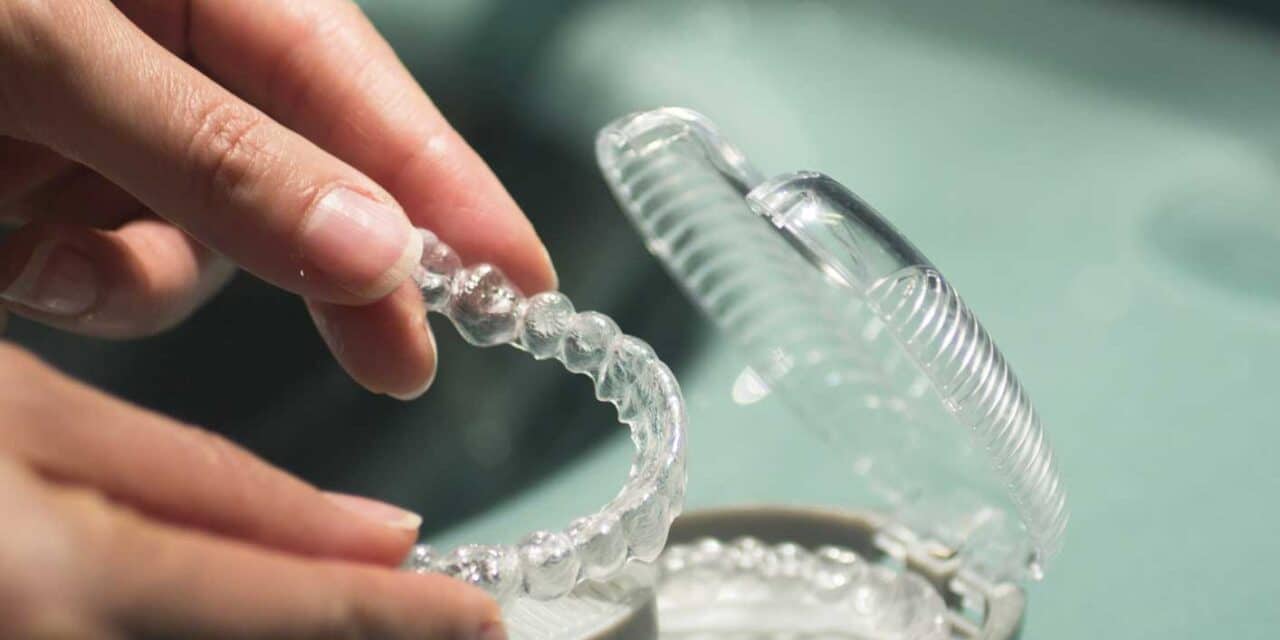
For decades, the retention phase of orthodontic treatment was viewed as a necessary but operationally frustrating endpoint. Orthodontists strived for clinical perfection, yet the standard protocol for preserving that perfection often amounted to handing a patient a thermoformed or Hawley retainer and wishing them well. Follow-up appointments were scheduled for six weeks, six months, and sometimes up to two years post-treatment, cluttering the schedule with non-revenue-generating visits while relying entirely on patient compliance.
Today, that paradigm is shifting. The integration of intraoral scanning, 3D printing, remote monitoring, and structured subscription models is turning retention into a proactive, digitally connected ecosystem. Rather than a distinct, low-tech phase bolted onto the end of active treatment, retention is increasingly viewed as a continuous, multi-transactional relationship that benefits both the patient’s long-term oral health and the practice’s bottom line.
Shifting Patient Expectations
The evolution of retention is driven in part by changing consumer behaviors. Patients today expect the ease, comfort, and convenience of technology-enabled services, a shift Sean Holliday, DDS, MS, an orthodontist in Pearl City, Hawaii, notes has risen sharply due to the direct-to-consumer (DTC) market. “The DTC companies taught patients that a small correction or a fresh set should be low-friction and affordable—so they expect their orthodontist to be able to do that too,” Holliday says.
He adds that patients expect their orthodontist to keep their digital records on file, making a replacement retainer a simple reorder rather than a logistical hurdle. This digital convenience has paved the way for a broader change in how patients perceive this final phase of care. “I believe the biggest shift is mindset: patients no longer see retention as the boring end of treatment,” Holliday says. “They see it as protecting an investment they care about, and they want a practice that treats it with the same care.”
The doctors at Bovenizer & Baker Orthodontics, located in Cary, North Carolina, agree, noting that modern visual culture has changed the patient dynamic. “I would say the iPhone camera and social media have really accelerated the desire to protect smiles long term,” says Todd Bovenizer, DDS, MS, speaking on behalf of himself and his colleagues Chris Baker, DDS, MS, and Tonya Spangler, DDS. Their patients actively want to preserve their results, and they embrace replacement programs that provide new retainers on a regular basis. By meeting these expectations with streamlined, digital workflows, practices are finding that patients are more willing to invest in long-term care.
Three Paths to the Retainer
The foundation of modern retention is the digital workflow. The same intraoral scan that finishes a case now powers the retention program. From that single digital record, orthodontists have three broad options for supplying retainers to patients—each with its own economics, workflow, and clinical trade-offs.
Option 1: Retainers as an Extension of the Treatment Planning Platform
The first option is to lean on the treatment planning platform the practice is already using. Companies such as Align Technology and Ormco have built retainer programs directly into their digital ecosystems, allowing clinicians to move seamlessly from active treatment into retention without rebuilding the workflow.
Align Technology’s Vivera Retainer Subscription (VRS) operates within the broader Doctor Subscription Program (DSP), letting orthodontists order retainers from the same digital records used during Invisalign treatment. A doctor-enabled direct-ship feature sends repeat retainer orders straight to the patient’s home, reducing office foot traffic and the need to store retainers on site. VRS can also be used alongside Invisalign Virtual Care and remote engagement, and the end-to-end platform handles patient sign-up, reminders, payment processing, renewal, and inventory—letting practices scale retention protocols with minimal administrative overhead.
Holliday describes Vivera as the “backbone” of his long-term retention strategy. “It’s a durable material made straight from the patient’s digital record, and the subscription lets us provide multiple sets affordably… It lets us turn retention into a real program instead of a series of one-off remakes,” he says.
Ormco’s Spark Retainers function similarly through the Spark DTX ecosystem, pulling from existing digital patient files to streamline ordering and reduce manual data entry and clinical clicks. Spark Aligner providers can move existing patients into retention inside the same familiar interface, but the DTX platform is also open to non–Spark Aligner providers, who can onboard for standalone retainer ordering within minutes.
Bovenizer & Baker Orthodontics uses Spark Retainers for the practice’s 10-year retainer insurance program because of the material’s performance. “We have tried all the plastics available on the market for in-house fabrication, and nothing has compared to Spark’s material in terms of durability and clarity,” says the practice’s three doctors, noting that the retainers are scalloped to the gingival line for retention and that patients respond to the fit, feel, and packaging.
For practices already invested in these platforms, the retainer phase becomes a natural continuation of the case rather than a separate process—commercial-grade materials, predictable turnaround, and direct-to-patient logistics handled by the manufacturer.
Option 2: In-Office 3D Printing and Thermoforming
The second option puts manufacturing inside the practice. Orthodontists with 3D printing labs on site can print models from the final scan and thermoform retainers in the office, often within hours of debond. Rooz Khosravi, DMD, PhD, MSD, who practices in Washington, says thermoforming over a printed model remains the “current gold standard,” even as direct 3D printing of retainers advances.
By keeping the workflow fully digital on a SprintRay 3D printer, Khosravi’s practice can reprint models on demand and generate replacement sets without the complexity of traditional lab operations—giving patients multiple retainers right from the start. Software platforms such as uLab Systems help streamline that in-house fabrication workflow.
For Khosravi, the patient experience is what makes the in-office workflow worth the investment. “From the patient lens, it has to be an appliance that is easy—easy to wear at night, easy to maintain, and easy to replace. And all of that comes with the 3D printing technology in our lab where we can easily print the new sets,” he says.
Direct printing is gaining ground, however. Platforms from companies such as SprintRay now make it possible to produce a retainer directly from a digital file, skipping the model then thermoform steps entirely. As materials mature, in-office direct printing may shorten the workflow further and reduce the consumables footprint of an in-office lab.
Option 3: Subscription Programs Built on the Digital Workflow
The third option keeps fabrication off the practice’s plate entirely by handing it to a dedicated retention platform. Rather than ordering through a treatment-planning ecosystem or running an in-house lab, orthodontists upload a digital file once and let a subscription service handle ongoing replacement, patient communication, and billing. One such platform, Retain, was built by an orthodontist who grew frustrated with how the profession was handling the retention phase. Geoff Sudit, DDS, MS, an orthodontist in Minneapolis, opened his own practice in late 2017 and watched his patients pay a significant fee, finish a beautifully engineered case, and then walk out with a single retainer and an open invitation to call if they needed a new one. “It was ‘Here’s the retainer, and good luck. Let me know if you need a new one,’” he says. “I wanted a better solution.” After trying a handful of existing options and finding the patient experience, team workflow, or financial structure wanting in each one, he built Retain.
Retain is built to plug into whatever a practice is already doing. The orthodontist uploads the STL file and invites the patient to the web-based platform; from there, the patient can order a retainer on demand or sign up for a recurring plan that ships replacements on a regular cadence. Every order asks the patient whether they have been wearing their retainer, whether their teeth have shifted, and whether they have had dental work—flagging cases that need a rescan before fabrication. Practices set their own pricing, can layer Retain on top of an in-house retainer program as the low-cost replacement engine, or hand the whole retention phase to the platform.
For Sudit, that shift—from a one-time appliance handoff to an always-on service—is the point. “Retention used to be reactive,” he says. “Patients lost retainers, called the office, maybe got replacements weeks later, or disappeared entirely. Now retention can be proactive, automated, digitally connected, reoccurring, and patient-centered, and that changes both the patient experience and the business model of orthodontists.”
Remote Monitoring: Empowering the Patient
Perhaps the most significant operational shift in retention is the adoption of remote monitoring. For years, orthodontists scheduled in-office retention checks out of a sense of obligation, filling their chairs with brief appointments that often revealed no clinical issues. Platforms like DentalMonitoring have changed the calculus, letting practices track post-treatment outcomes through patient-captured scans rather than chair time. To make that long-term oversight financially predictable, DentalMonitoring introduced its DM Cap Fee, a pricing model that sets a maximum fee per patient and covers observation and interceptive care, active treatment monitoring, and up to two years of retention monitoring—removing the disincentive of incremental billing for following a patient well past debond.
Ed Davis, DDS, MS, an orthodontist whose Columbia, South Carolina, practice recently celebrated its 25th year, recalls a retention protocol that ran on autopilot—with six week, six month, one year, and two year post-debond checks. “We were gluttons for punishment to fill our chairs to make it look like we were working,” Davis says. “But then you realize that you didn’t need to see them that long.” What’s more, Davis says, patients didn’t really want to come in.
After adopting DentalMonitoring, his practice compressed the in-office retention timeline to a single check 6 weeks after debond to confirm bonded retainers were intact and removable retainers fit, then released those patients who opt in to use DentalMonitoring to scan from home. “We are now empowering [patients] to be in charge of their own destiny,” Davis says. Roughly 90% of his patients are currently on DentalMonitoring, and the platform’s DM Cap Fee made it economically feasible to extend that oversight well into retention without per-scan billing eroding the margin.
Terry Sellke, DDS, MS, an orthodontist and educator based in Illinois, arrived at a similar conclusion from a different direction. Where Davis was looking to clear low-value checks off the schedule, Sellke wrestled with the opposite instinct—he wanted to follow his finished cases for years and guarantee his work, but knew that seeing patients for free was financially unsustainable. “For orthodontists, retention has always been an issue of when do you let go, when do you kick them out of the nest,” he says. “Every orthodontist wants to see [their] finished results for years and know that it’s perfect. That’s what we strive for—perfection. And yet when we see them, there’s no revenue.” Remote monitoring resolved that tension. Retention patients who opt into his 10-year guarantee program scan every three months, with a brief in-office check at six months, letting him follow finished cases for years and catch minor relapse or compliance issues before they require comprehensive retreatment.
Structuring the Retention Guarantee
With remote monitoring providing the clinical safety net, practices are wrapping the retention phase in structured programs that redefine the financial relationship with the patient.
Jonathan L. Nicozisis, DMD, MS, an orthodontist in Princeton, New Jersey, sees the program as a way to address something patients didn’t previously think to ask for. “Patients spend a lot of money to get the smile that they love, and now we can address their unmet need of preserving their smile long term,” he says. “The traditional model of one set of retainers didn’t address that need.”
Nicozisis frames his retainer assurance program with a cell phone insurance analogy—but as the favorable comparison. Cell phone insurance, he tells patients, charges a monthly fee for the privilege of a $150 to $200 co-pay on a used or refurbished phone if you break yours; his program charges a single upfront fee in exchange for a $45 co-pay per brand-new Vivera retainer over the next five years. Nicozisis builds the program on the Align Doctor Subscription Program, and the upfront fee typically runs 8% to 12% of the original treatment fee—a small ask at debond from a patient who already trusts the practice, and a meaningful new revenue line at scale.
Sellke has pushed the concept further with a 10-year guarantee on his work. For a flat $1,200 fee, patients are covered for any retainer replacements (lower bonded and upper Essix retainer)—or full retreatment—for a decade, provided they keep up with their quarterly DentalMonitoring scans. Miss the scans and the guarantee is void. That single requirement, Sellke says, hands the decision to the patient rather than the doctor. Since launching the program in 2018, he says only five enrolled patients have required retreatment, because the quarterly scans surface relapse early enough that a fresh retainer almost always resolves it.
Davis takes a tiered approach. His standard Retainer Club offers up to three sets of Essix retainers per year over five years for $1,500. For an additional $500, his Retention+ option adds on a year of retainer checks via monthly DentalMonitoring scans and two additional sets of Essix retainers shipped directly from an outside lab.
The Economics of Retention: From Loss Leader to Profit Center
Historically, orthodontic practices lost money on retention. The appliance, the chair time for follow-up checks, and the staff hours all came out of the original treatment fee, and the patient was rarely seen again unless something went wrong. Structured retention programs invert that math. The same digital workflows that let practices fabricate and ship retainers without impressions also let them charge a predictable recurring fee for the privilege—turning a cost center into one of the few revenue streams in orthodontics that compounds with every finished case.
The numbers add up quickly. Davis estimates his retention programs cleared roughly $17,000 in a single quarter as the model ramped up, while freeing about 10 appointment slots a week that used to be consumed by low-value retention checks. Sellke, after pricing out his per-case cost at about $250 for the full 10-year guarantee, says the $1,200 fee is largely profit—and that he provides a service no one else in his market offers. Sudit, who now has more than 2,000 of his own patients actively managed on the Retain platform, says his practice generates several hundred thousand dollars a year from retainer replacements alone, a figure he expects to approach over $500,000 to $1 million within the next few years as the patient base compounds.
Holliday points out that the operational wins stack on top of the recurring revenue: no physical impressions, fewer remakes, less chair time, and a workflow the team already knows. More importantly, the long-term relationship is itself a marketing engine. Patients enrolled in retention programs are the ones who come back for minor touch-ups, request whitening, and refer friends and family. “Cost is no longer the barrier to giving a patient another set,” Holliday says, “so our follow-up becomes generous rather than transactional.” In a specialty where the patient pipeline has traditionally reset with every debond, retention has become the long tail—small per transaction, but reliable, recurring, and self-reinforcing.
The Future: Data-Driven Orthodontics
As retention transitions from a static phase to an active digital workflow, the specialty is beginning to harness the power of long-term clinical data. Remote monitoring platforms are amassing massive databases of post-treatment outcomes, tracking how teeth settle and shift over time across diverse demographics and treatment modalities.
Sellke, who is working with the University of Illinois to analyze remote monitoring data, believes this information will establish new best practices. By understanding exactly how and why cases relapse years after debond, orthodontists can refine their initial treatment plans. Sudit envisions a future where this data directly influences digital setups. If data reveals that lower anterior teeth are highly likely to shift five to seven years after a specific extraction protocol, orthodontists can program a few degrees of overcorrection into their initial aligner or custom bracket setups to compensate.
Retention is no longer an afterthought. By embracing digital workflows, remote monitoring, and structured subscription models, orthodontists are reducing administrative burdens, preserving clinical outcomes, and unlocking entirely new avenues for practice growth. As Holliday notes, in the modern orthodontic practice, “debond is a milestone, not the finish line.” OP
Photo: ID 55339233 © Edward Olive | Dreamstime.com
Alison Werner is chief editor of Orthodontic Products.