
From direct-print retainers to the future of chairside bracket production, SprintRay is focusing on workflows that deliver immediacy and efficiency without adding to the staff’s workload.
By Alison Werner
When evaluating the role of 3D printing in the orthodontic practice, it is easy to get caught up in the hardware. However, for Amir Mansouri, PhD, co-founder and CEO of SprintRay, the conversation is no longer just about the printer itself. Instead, the focus has shifted entirely to the workflow that the hardware enables. As the adoption of chairside 3D printing expands in orthodontics, the technology must evolve from a supplemental device into a streamlined tool that delivers immediate solutions, maximizes practice efficiency, and ultimately drives faster clinical outcomes.
Mansouri’s roots in the dental industry trace back to 2012 during his PhD studies in 3D printing, where his very first dental project involved writing an algorithm for indirect bonding (IDB) trays. This early exposure to the orthodontic space shaped the trajectory of SprintRay, a company that initially catered heavily to the forward-thinking orthodontic market. Today, Mansouri sees 3D printing as an essential instrument in the modern practice’s toolbox, designed to handle specific, urgent tasks rather than functioning as a mass-production factory.
Rethinking the In-Office Production Facility
In the early days of orthodontic 3D printing, the industry experienced what Mansouri describes as a “gold rush” mentality. Around 2016 and 2017, the prevailing message was that practices should print every aligner in-office to save on lab fees. While the cost-saving logic was sound on paper, the practical application proved burdensome.
“Everyone quickly figured out that doing your aligners in the office essentially turned the practice into a production facility, which is just not efficient,” Mansouri says, adding that the sheer volume of printing required for a moderate or complex aligner case placed an unsustainable load on both the printers and the practice staff. Unless an office was prepared to purchase a fleet of printers and dedicate staff solely to manufacturing, the fully in-office aligner model was simply not efficient for the early majority of users.
This realization prompted a shift in strategy. While SprintRay still supports aligner and IDB tray workflows, the company has heavily centered its current orthodontic focus on the workflow as a whole—as evidenced by their new retainer workflow.
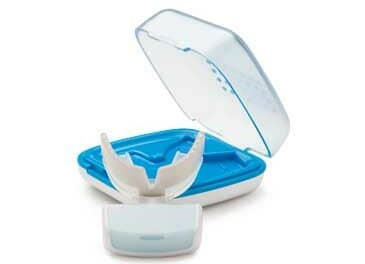
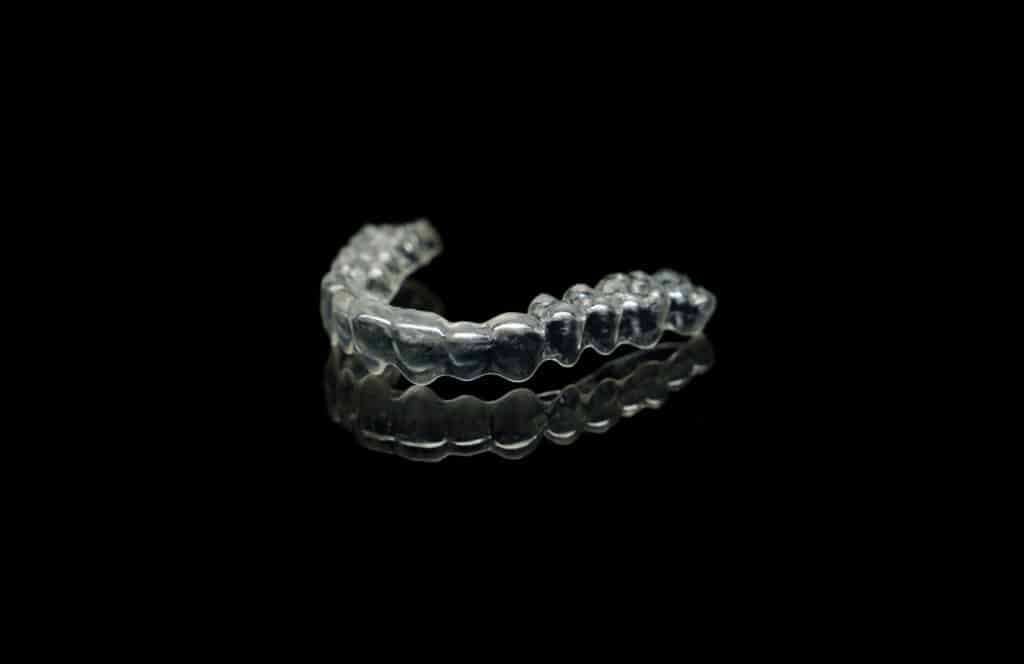
Retainers present a much more manageable production volume, typically requiring only two prints per patient. SprintRay recently introduced an integrated, direct-print retainer workflow that allows practices to move seamlessly from a digital impression to a finished, biocompatible appliance. Featuring one-click scanner integration and Cloud AI, the system can automatically generate upper and lower retainer designs in just five minutes. From there, the end-to-end printing process—which utilizes SprintRay’s specialized resins, the Pro 2 3D printer, and automated wash and post-curing stations—produces a final retainer formulated for high impact strength and translucency. By printing the appliance directly rather than thermoforming it over a printed model, the workflow also significantly reduces material waste. This streamlined approach represents a deliberate move toward procedures that offer high value, such as same-appointment delivery, without overwhelming the clinical team.
Delivering Immediacy and the DoorDash Model
For Mansouri, the true value of a chairside 3D printer lies in its ability to provide immediacy. He encourages orthodontists to view the printer not as a mandatory step for every single patient, but as a specialized tool for when speed is non-negotiable.
Mansouri equates the presence of a 3D printer in an orthodontic practice to having both a kitchen and a food delivery app. A practice might use traditional lab services for routine, bulk manufacturing, much like cooking a standard meal at home. However, when an emergency arises, or a patient is willing to pay a premium for a same-day replacement, the practice needs the equivalent of DoorDash—a system that delivers immediate, on-the-spot results.
This capability is no longer just a luxury; it is becoming table stakes in a consumer-driven market where patients expect rapid solutions. “You really can’t afford to not have the option to create an appliance on the spot in under an hour,” Mansouri says. The ability to fabricate a custom retainer or a replacement aligner on-demand provides a significant competitive advantage, facilitating same-day starts and preventing prospective patients from shopping around for other quotes. Ultimately, it acts as a powerful practice builder that allows the office to control its own schedule and offer white-glove service when it matters most.
The Synergy of Software, Hardware, and Materials
To deliver this level of immediacy without complicating the staff’s daily routine, the underlying workflow must be entirely frictionless. If a new technology adds more steps or requires extensive training, it will fail to gain traction in an environment where efficiency is paramount.
Achieving this seamless experience requires a highly integrated ecosystem. “Our philosophy is that we need to deliver a workflow; we’re not just selling you a printer,” says Mansouri. “To be successful with that mission, you have to control your own software, hardware, and materials.” Through this complete, end-to-end solution, SprintRay ensures that every step of the process is figured out, removing the implementation burden from the practice, as with their retainer workflow.
By integrating AI-driven design software that automates the creation of retainers, specialized curing and washing stations, and proprietary resins, the company ensures that the end result is predictable and efficient. This closed-loop approach removes the guesswork for practice staff, allowing them to initiate a print with minimal intervention and focus their attention back on patient care.
The Next Frontier: Chairside Bracket Production
While direct-print retainers and up-and-coming direct-print aligner materials represent the present, Mansouri’s vision for the near future involves a much more disruptive workflow: the chairside 3D printing of custom brackets.
Currently, the digitization of traditional bracket and wire therapy has been slow compared to clear aligners. While some companies offer custom 3D-printed brackets, the ability to manufacture them directly in the practice remains an unsolved challenge. Mansouri believes this capability is only one to three years away, and it represents the ultimate convergence of efficiency and clinical customization.
From an operational standpoint, printing one set of custom brackets for a patient is exponentially more efficient than printing dozens of individual aligner trays. Once the brackets are printed and placed, the manufacturing burden for that patient is complete for the duration of their treatment.
The technological bridge to this future is currently being built in the restorative dentistry sector. SprintRay has made significant breakthroughs in printing highly filled, high-viscosity composite materials for permanent crowns and full-arch prostheses designed to withstand years of chewing forces and moisture in the mouth. “If we didn’t have the chemistry currently being used for restorative dentistry, I would be much less confident,” Mansouri says of his one to three year timeline. He points out that if the industry can successfully print a permanent crown that lasts for years, applying that same advanced chemistry to print an orthodontic bracket chairside that needs to hold up for six to eighteen months is well within reach.
By connecting the dots between restorative material advancements and orthodontic treatment planning, the possibility of fully customized, same-day bracket starts becomes a tangible reality. For the orthodontic practice, this means faster treatments, increased same-day billing, and a highly personalized patient experience—all driven by a single, efficient chairside workflow. OP
Opening photo: ID 208818763 © Nicoelnino | Dreamstime.com
Alison Werner is the chief editor of Orthodontic Products.